

About this variety
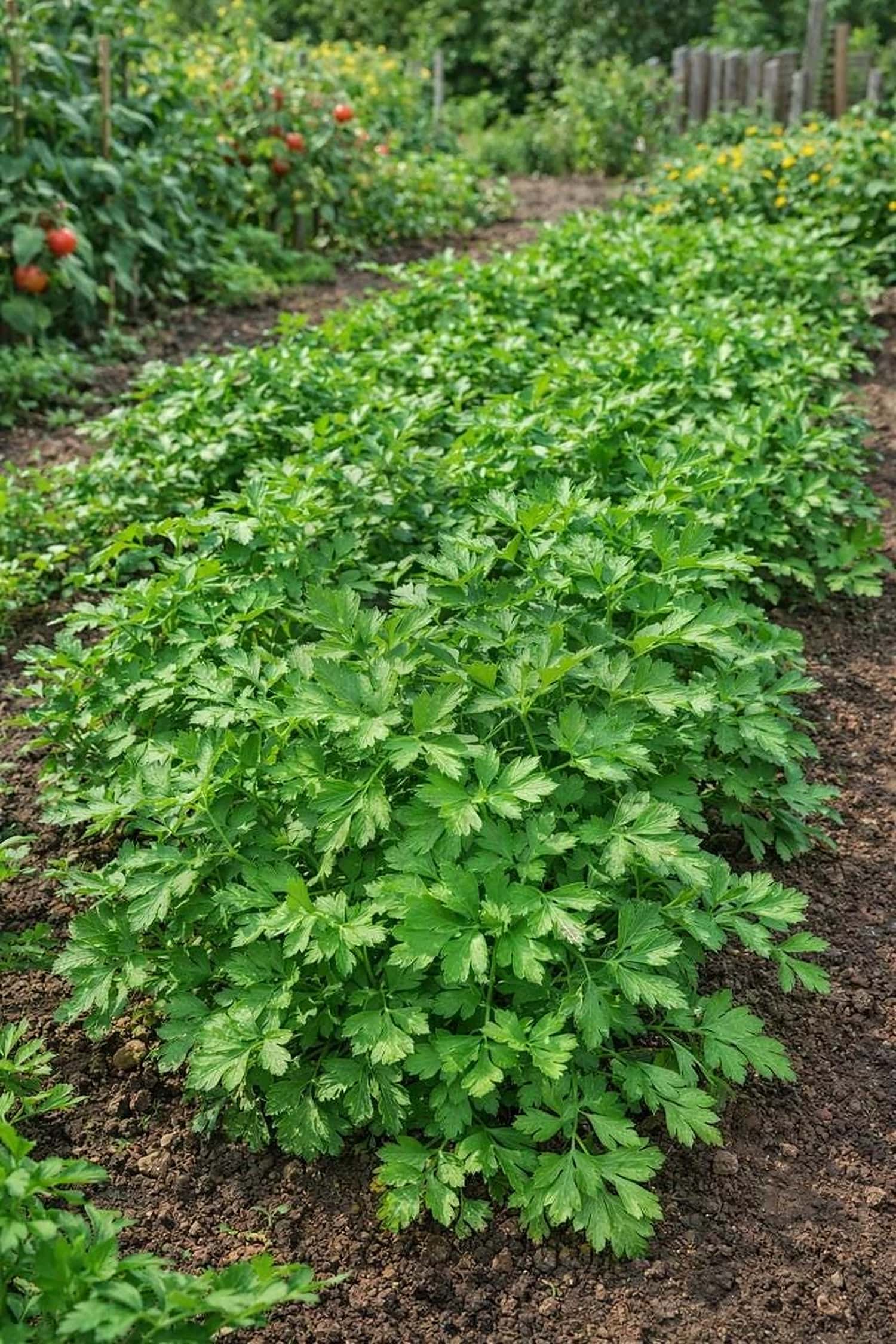
Italian flat-leaf parsley (Petroselinum crispum) is a biennial grown as an annual for its broad, divided green leaves, the type preferred for cooking. The seed is slow: emergence commonly takes two to five weeks, and soaking it in water overnight is suggested to speed it up.
Also known as: Flat-leaf parsley, Italian parsley, Continental parsley, Plain-leaf parsley, Persil plat (French), Glatte Petersilie (German), Perejil (Spanish), Prezzemolo (Italian), Peterselie (Dutch), Pietruszka (Polish), Petrushka.
Why flat-leaf
Illinois Extension calls flat-leaf the preferred parsley for cooking because of its flavour, while curled parsley is mainly a garnish. Parsley is a hardy biennial: in its second year it bolts and the leaves turn tough and bitter, so most growers sow fresh plants each season.
Sowing
- Soak the seed in water overnight (up to 24 hours in warm water) before sowing.
- Direct sow at a locally suitable time, covering with about 3 mm (⅛ in) of soil. Soil of 10–29 °C suits germination (approximate species value).
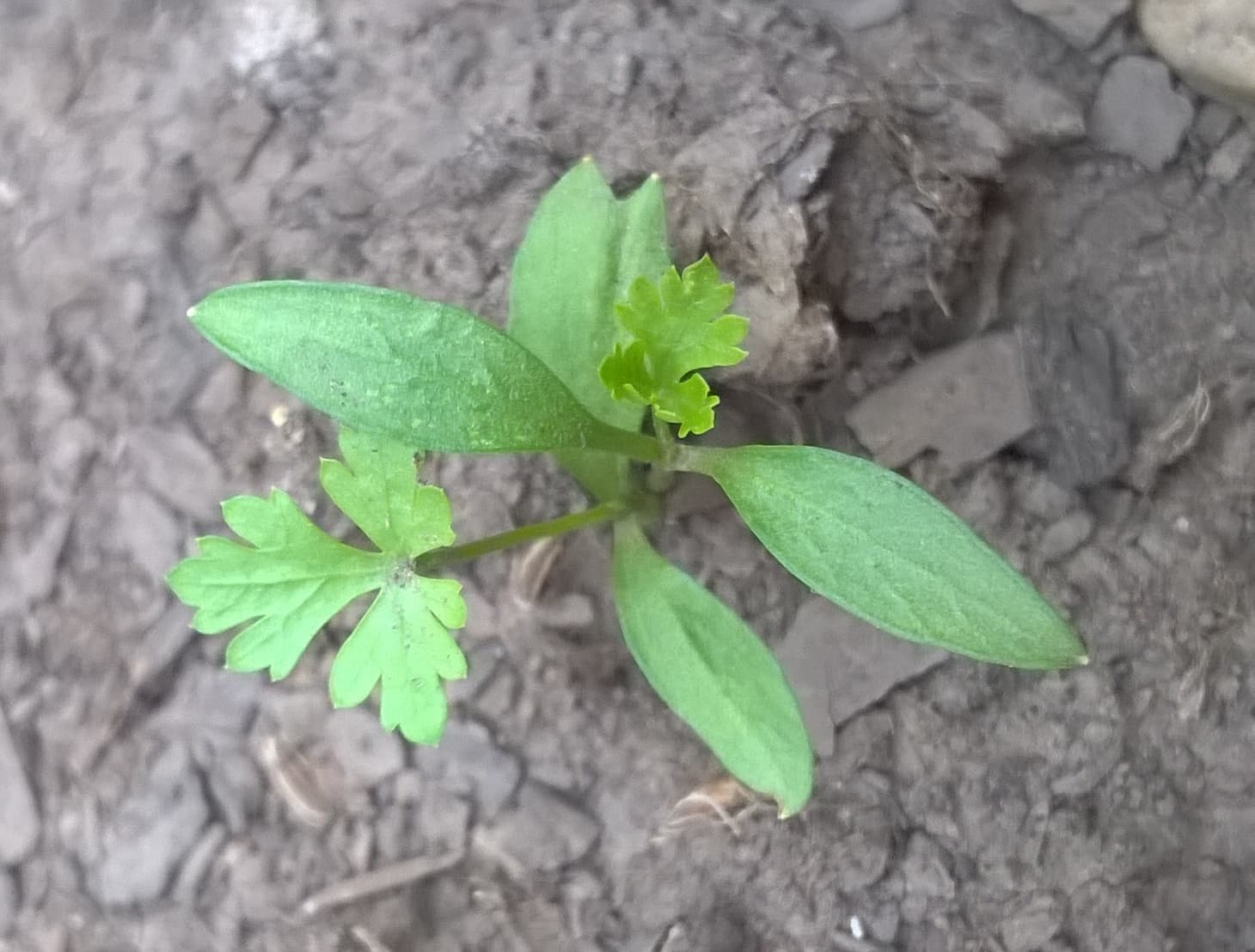
- Keep the surface evenly moist for the whole slow emergence. Sowing a few radish seeds in the row marks it, because radish emerges quickly.
- Choose a sunny spot with six to eight hours of direct light; light shade is tolerated. Use well-drained soil rich in organic matter.
Growing on
Thin or transplant when seedlings are 5–8 cm high, leaving 25–30 cm between plants. Take care not to damage the taproot when transplanting. Parsley also grows in a bright container with drainage holes. Seed is small: the species runs to roughly 530–635 seeds per gram, and leftover seed keeps about 2 years in cool, dry storage (approximate values).
Harvest
Snip sound outer stalks close to the ground and leave the centre to keep growing. Use fresh as a garnish or flavouring in salads and cooked dishes.
FAQ
How long does parsley seed take to germinate?
Commonly two to five weeks, depending on seed freshness and conditions. Keep the seedbed moist and mark the row.
Can flat-leaf parsley grow in a container?
Yes, in a bright position with a drained container and regular watering, without leaving the roots waterlogged.
Will it come back next year?
It overwinters, but in the second year it bolts and the leaves become tough and bitter, so sow new plants each season.