
About this variety
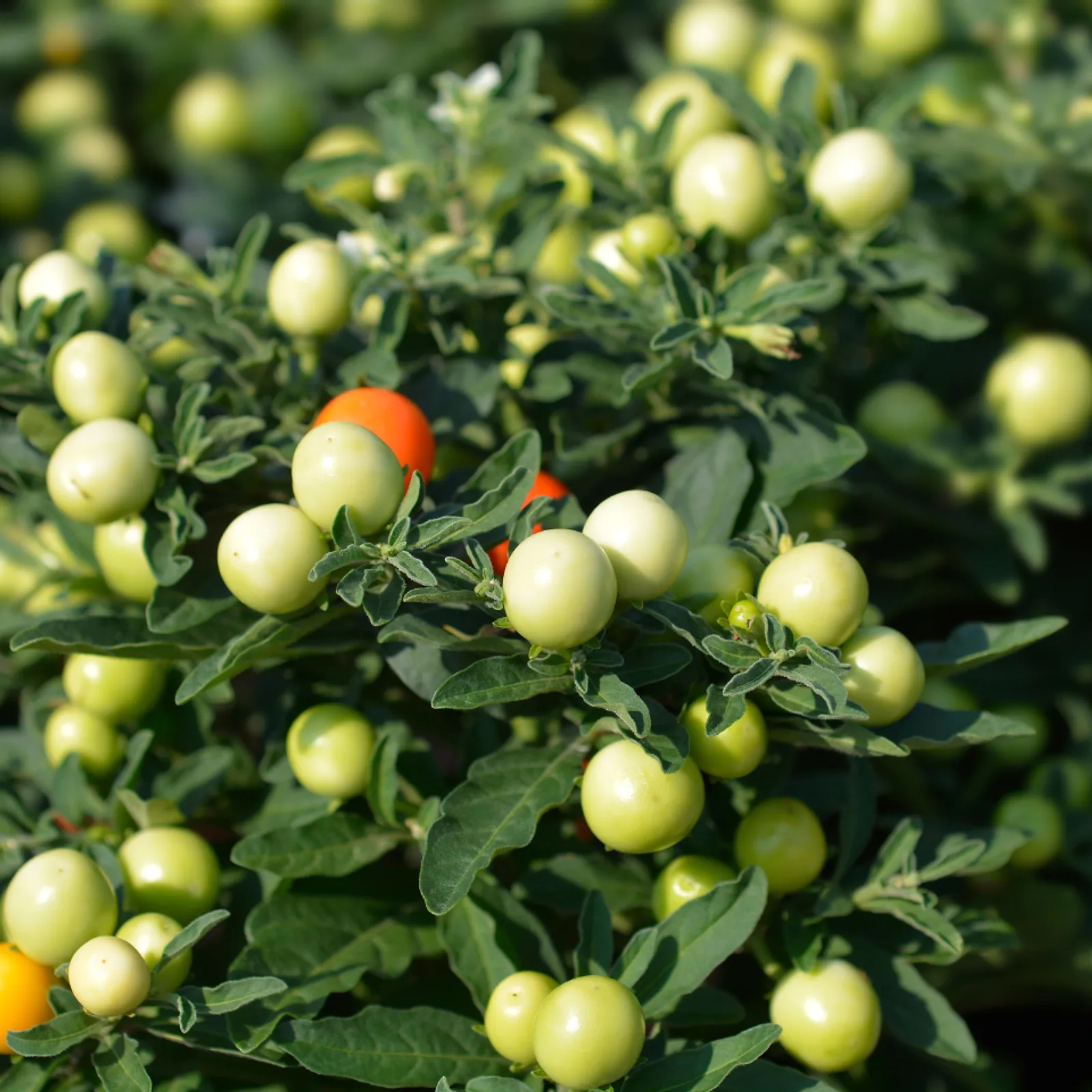
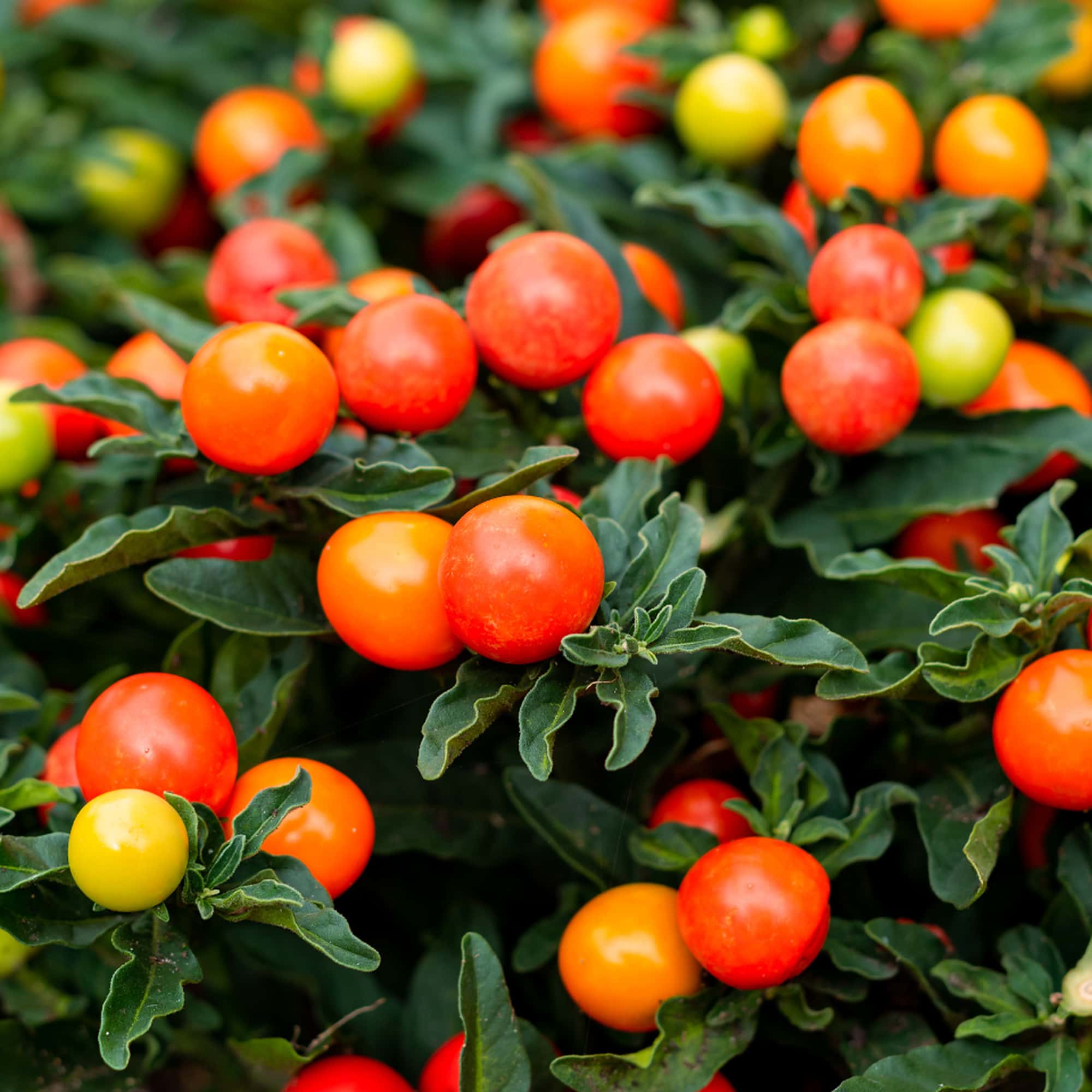
Jerusalem cherry (Solanum pseudocapsicum) is an evergreen shrub of 40–120 cm grown for glossy orange-to-scarlet berries that last for months. Every part is poisonous if eaten, and the plant is frost-tender, so it is usually kept in a container that can be moved indoors.
Also known as: Jerusalem cherry, Madeira winter cherry, Christmas cherry, Korallenkirsche (German), Korallenbäumchen (German), Cerisier d'amour (French), Paslen lozhnoperechny.
Safety first
The berries look like cherry tomatoes and are easily mistaken for food. Keep plants and seeds away from children and pets, and expect skin irritation from contact in sensitive people (NC State). Seeds are supplied for ornamental growing only.
Growing
- Seed is about 3 mm across.
- Sow shallowly in clean, free-draining seed compost, cover lightly and keep evenly moist. Warm, bright conditions support germination; we have no sourced germination temperature or time and do not state one.
- Pot seedlings on individually once they can be handled.
- Full sun or very bright light, a fertile well-drained mix; water when the surface begins to dry and never leave the pot standing in water.
- Outdoor plants must come indoors before the first frost; NC State lists USDA zones 8–9 for outdoor growing.
Flowers and fruit
Small white star-shaped flowers open in summer and are followed by round fruits that ripen through yellow and orange to red. Seed-grown plants usually fruit in their second or third year. Indoors, flowers need hand pollination for berries to form (NC State).
Keeping it from escaping
Birds spread the seeds. The species is listed as an environmental weed in New Zealand (NZPCN, 2024) and is a weed in parts of Australia, South Africa and India, so keep it in a pot and do not let berries drop where birds can carry them.
FAQ
Are the berries edible?
No. All parts of the plant are toxic if eaten.
When will a seedling carry berries?
Usually in its second or third year, then every year after that.
Can it stay outdoors all year?
Only where frost does not occur. NC State lists zones 8–9 and advises bringing outdoor plants in before the first frost.
Local names
Morelle, Morelle faux piment, Pommier d'amour, korallbär, Jerusalem cherry, Madeira winter cherry, Christmas cherry, Korallenkirsche, Korallenbäumchen, Cerisier d'amour, Paslen lozhnoperechny, False Jerusalem Cherry, Jerusalem cherry (EN).
Common names of Solanum pseudocapsicum
All 45 names, languages and regions
Local names
| France | |
|---|---|
| French | Morelle, Morelle faux piment, Pommier d'amour |
| Sweden | |
| Swedish | korallbär |
| United States | |
| English | Jerusalem cherry |
| Other places | |
| German | Korallenkirsche, Korallenbäumchen, Jerusalemkirsche, Korallenstrauch |
| French | Cerisier d'amour, Pommier d'amour |
| English | False Jerusalem Cherry, Madeira Cherry, Madeira Wintercherry, Natal Cherry, Winter-cherries, false capsicum, winter cherry |
| Portuguese | Cereja-de-jerusalém, Peloteira, berradura |
| Spanish | Collar de reina, Mirto, Revienta Caballos |
| Turkish | Herdemtaze, Kudüs Kirazı |
| Afrikaans | Jerusalemkersie, bosgifappel |
| Zulu | Nomeme |
| Dutch | Oranjeboompje |
| Polish | Psianka koralowa |
| Italian | ciliegia di Gerusalemme |
| Finnish | huonekoiso |
| Czech | lilek ozdobný, lilek višňový |
| Japanese | タマサンゴ (Tamasango) |
| Chinese | 玉珊瑚 (yù shānhú), 珊瑚櫻 (shānhú yīng) |
| Korean | 옥산호 (oksanho) |
| Simplified Chinese | 珊瑚樱 (shānhú yīng), 珊瑚豆 (shānhú dòu) |
| Jerusalem cherry, Madeira winter cherry, Christmas cherry, Paslen lozhnoperechny, Jerusalem cherry (EN), Korallenstrauch (DE) | |