

About this variety
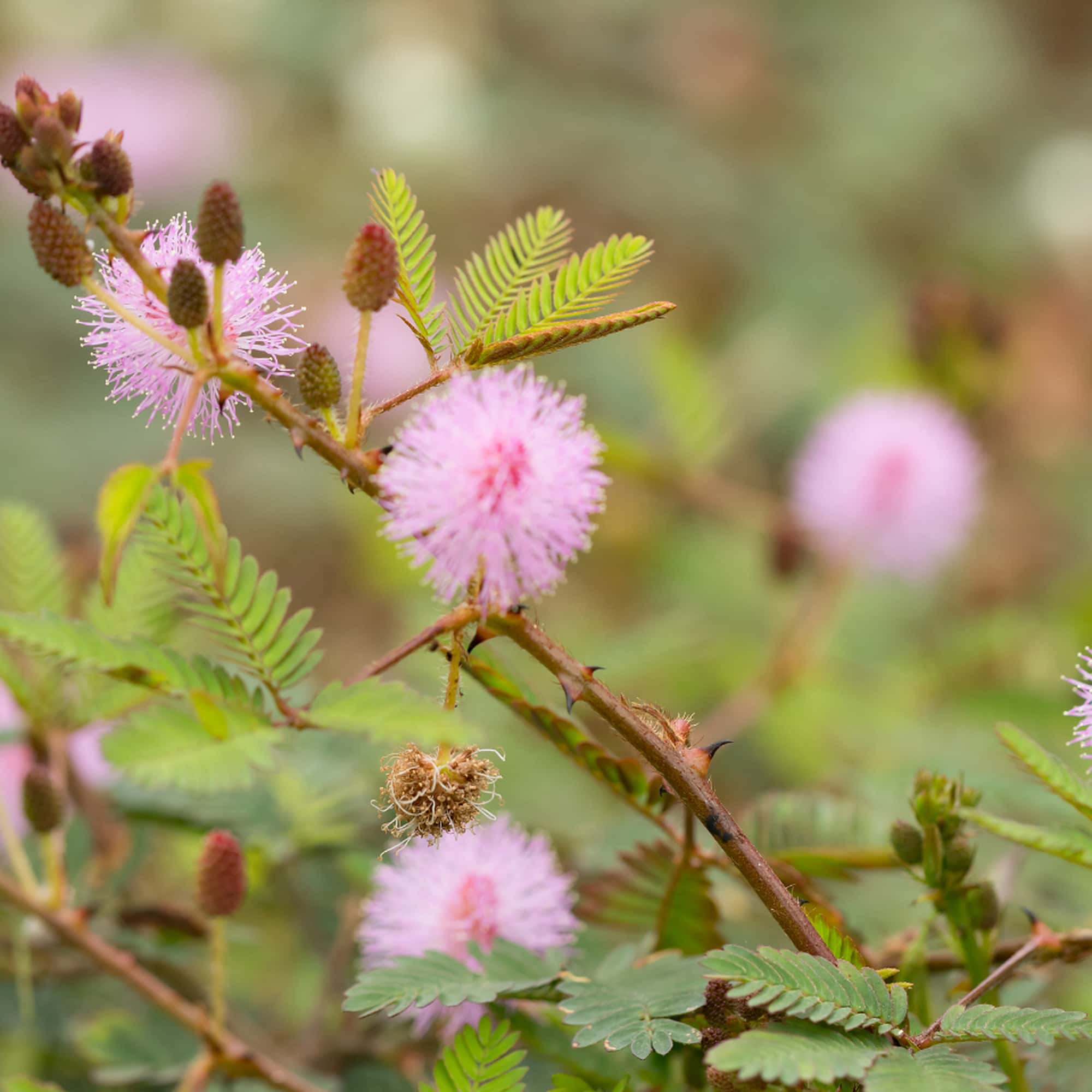
Touch-me-not (Mimosa pudica) is a prickly, creeping annual or short-lived perennial whose leaflets fold inward when touched and reopen a few minutes later.
What the plant does
Touch, shaking, warmth or a puff of air sets off an electrical signal that travels to the joints (pulvini) at the leaflet and leaf bases. Cells there lose water pressure and the leaf collapses; the leaflets also fold at night. The plant stays low: erect height is usually around 30 cm, while trailing stems can reach about 1.5 m.
Flowers, pods and seed
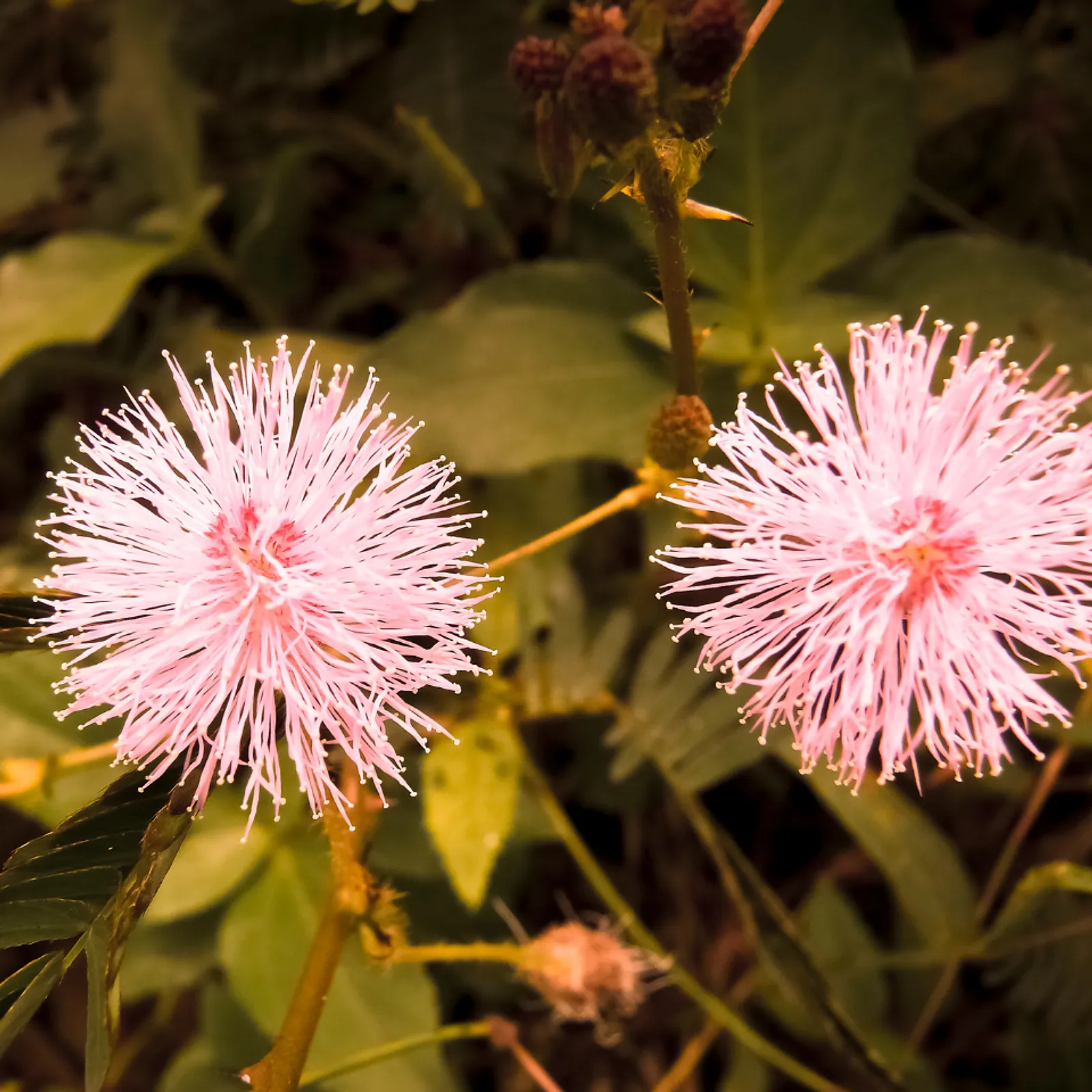
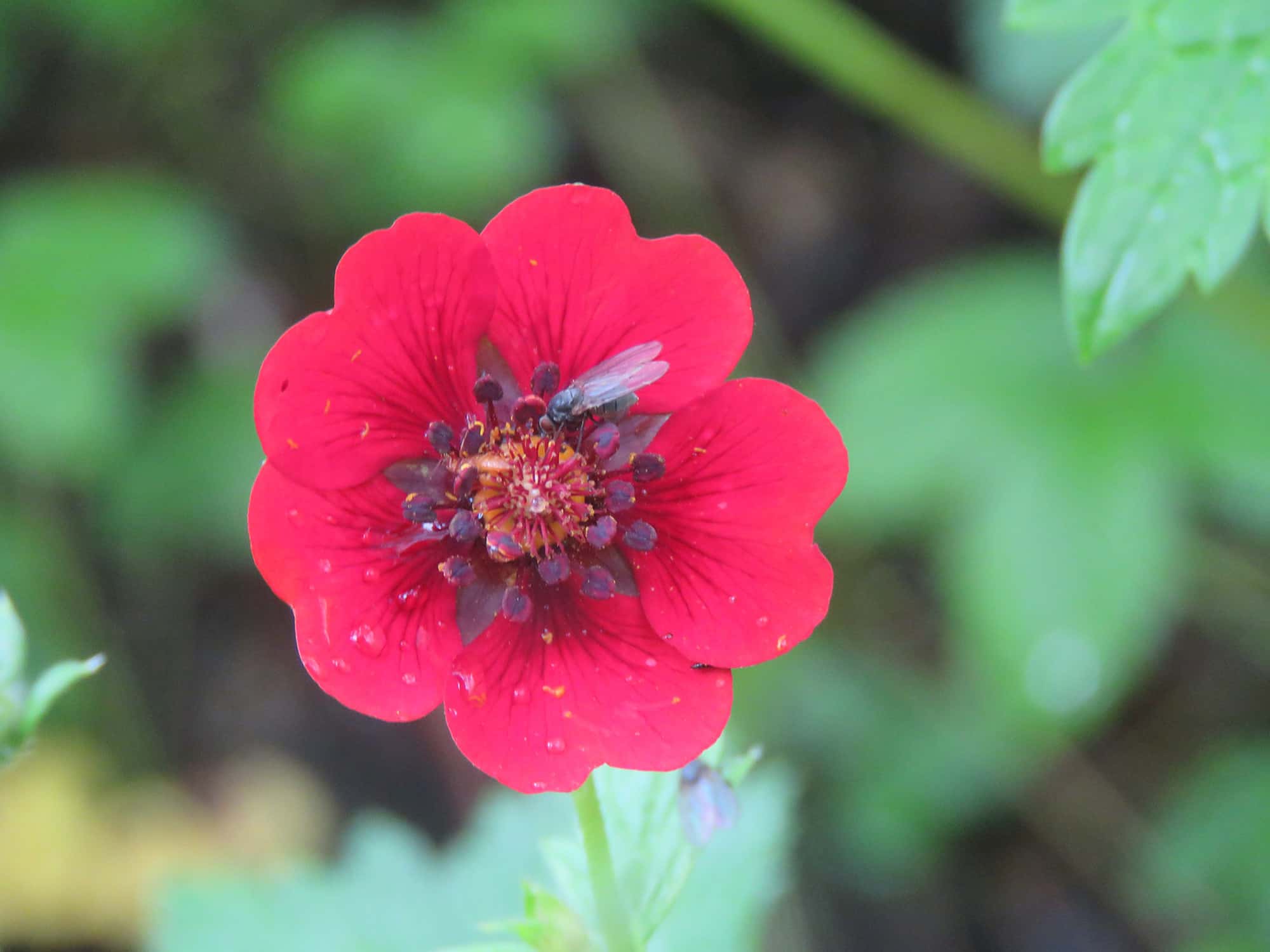
- Pale pink to purple, pom-pom flower heads; flowering starts about 3 months after germination.
- Prickly pods in clusters of 2–8, each 1–2 cm long, that break into one-seeded segments.
- Seeds are light brown, flat and about 2.5–3 mm long, with a hard coat.
Sowing
- Soak the seed in water for 24 hours.
- Sow into a clean, well-drained mix and keep it warm; laboratory tests use alternating 20/30 °C (16 hours at the lower value, 8 hours at the upper).
- Expect seedlings in roughly 2–3 weeks.
- Give stronger light gradually once leaves open.
The 20–30 °C range and the soaking step are approximate seed-testing values for the species, not a result for a specific lot.
Before you grow it
Stems, leaf stalks and pod edges are prickly, so handle plants with care. The species is a declared or invasive weed in parts of Australia, Southeast Asia and the Pacific, so in warm climates keep it in pots and check local rules; in cool climates it is usually grown indoors.
FAQ
Why do some seeds stay dormant?
The hard seed coat restricts water uptake. Heat is the main natural trigger for ending dormancy, and seed that does not take up water after soaking needs scarification, such as nicking or light abrasion of the coat.
Is touch-me-not an annual or a perennial?
It behaves as either: an annual in places with a cold season, and a short-lived perennial when kept warm or grown indoors.
Local names
Balabalamatso, Chibalamatso, M'zungutsuo, M'zungu, Fatsiki ambili, Fodia rafino, Sensitive plant, Sensitive Grass, Humble Plant, Sleepy plant, Sleeping grass, Shy plant, Shameplant, Shame Bush, Shame F, Shameplant, Sensitive plant, Shy plant, Sleepy plant, Humble plant, Shame plant, Action plant, Lajwanti, Chui mui.
Common names of Mimosa pudica
All 46 names, languages and regions
Local names
| Mayotte | |
|---|---|
| Balabalamatso, Chibalamatso, M'zungutsuo, M'zungu, Fatsiki ambili, Fodia rafino | |
| United Kingdom | |
| English | Sensitive plant, Sensitive Grass, Humble Plant, Sleepy plant, Sleeping grass, Shy plant, Shameplant, Shame Bush, Shame F |
| United States | |
| English | Shameplant |
| Other places | |
| English | Action Plant, Dormilones, Sensitive, Sensitive Plant, Sensitive weed, Shame Lady Shame, Shy Plant, Sleeping Grass, Sleepy Grass, Sleepy Plant, Wild Tantan, Zombie Plant, common sensitive plant |
| Sensitive plant, Shy plant, Sleepy plant, Humble plant, Shame plant, Action plant, Lajwanti, Chui mui, Lajjalu, Thottavadi, Dormilona, Dormideira, Almindelig mimose, Dikáglë, Dormidera, Gemeine Mimose, Jabe-jabe, Kruidje-roer-me-niet, Lajaalu, Pua-hilahila, Raktapaadi, Sinnpflanze, Tundik Lukus, atangaow, attaapatti, betguen sosa, choben, co gadrogadro, dorme, fombalikoko, han xiu cao, hilahila, honteuse | |