Seed preparation
Luffa seeds are flat and dark with a fairly tough coat. Germination is often sporadic, so sow a few extra seeds per pit and thin later.
Vegetable growing guide
Ridge gourd (Luffa acutangula) and sponge gourd (Luffa aegyptiaca, often sold as L. cylindrica) are fast tropical climbers grown for tender young fruit. They need warm soil, a strong trellis and regular picking.
Luffa seeds are flat and dark with a fairly tough coat. Germination is often sporadic, so sow a few extra seeds per pit and thin later.
Not recommended. In a North Carolina State University trial, sanding the seed coat lowered emergence (63%) compared with untreated seed (72%).
Not needed. Both species are frost-sensitive tropical annuals with no cold requirement.
Optional. Soaking for about 24 hours in water is widely practised and gave the best emergence in the same trial (80%), although the difference from dry seed was not statistically significant. Sow soaked seed at once into moist soil.
Sow only when soil is warm. Luffa grows best in the hot, humid lowland tropics, and in laboratory tests sponge gourd seed germinated best at 35°C (95°F), so it suits the Indian summer and monsoon. In cool soil emergence is slow and patchy.
Sow 2-3 cm (0.8-1.2 in) deep, 3-5 seeds per pit, and thin to 2 healthy seedlings about 15 days after sowing.
Well-drained, fertile soil with plenty of organic matter. In India pits of 30 x 30 x 30 cm (12 x 12 x 12 in) or larger are filled with topsoil and well-rotted manure.
Keep the soil moist but not waterlogged until seedlings emerge; standing water rots soaked seed.
Not needed for germination; give seedlings full sun.
Seedlings normally emerge 4-7 days after sowing in warm soil.
Where seasons are short or cool, sow 2-3 seeds per cell, thin to one after the first true leaf, and grow at about 18-21°C (65-70°F) for 4-6 weeks. Transplant only after all frost risk and without disturbing roots.
Build a trellis or pandal about 2 m (6.5 ft) high. Sponge gourd must be grown on strong supports; ridge gourd can trail on the ground, but fruit on a trellis is straighter and cleaner. Indian spacing is about 2-2.5 m between pits.
Flowering starts 6-10 weeks after sowing. Lower nodes carry only male flowers, female flowers appear higher up the vine. Young fruits are ready about 12-15 days after fruit set, roughly 9-13 weeks from sowing.
In Tamil Nadu ridge gourd is sown in July and January. In general, sow at the start of the hot season or the monsoon so the crop grows in warm, frost-free weather.
Removing the first four side shoots from the base of the vine improves airflow and channels growth up the trellis.
Luffa is insect-pollinated and crosses easily. If you save seed, grow only one variety of each species, or keep varieties about 450 m (1,500 ft) apart.
For bath sponges, leave sponge gourd fruits on the vine until they turn yellow-brown and dry, about 4-5 months after sowing, then peel and shake out the seeds.
Grow long green ridge gourd and dark green sponge gourd from Deodar Seeds for tender gourds all through the warm season.
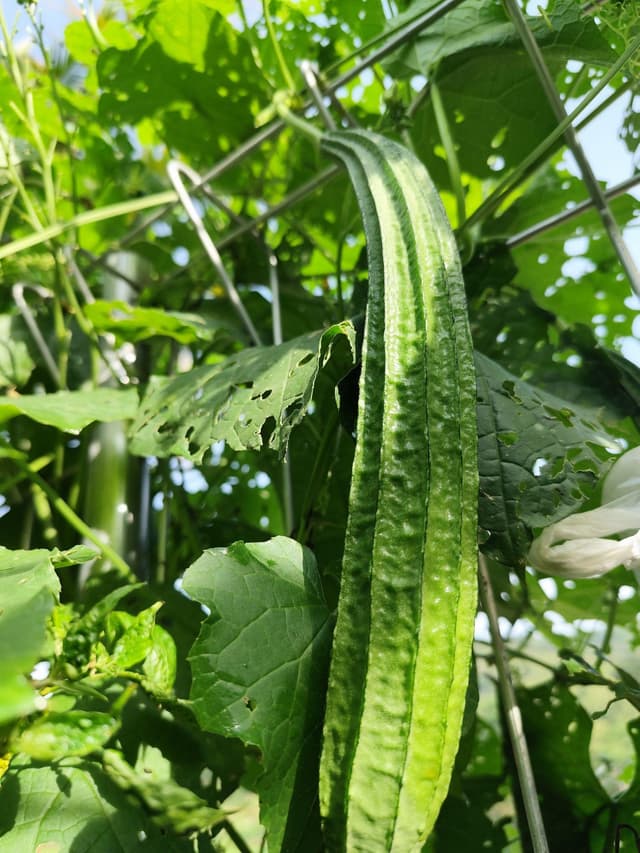
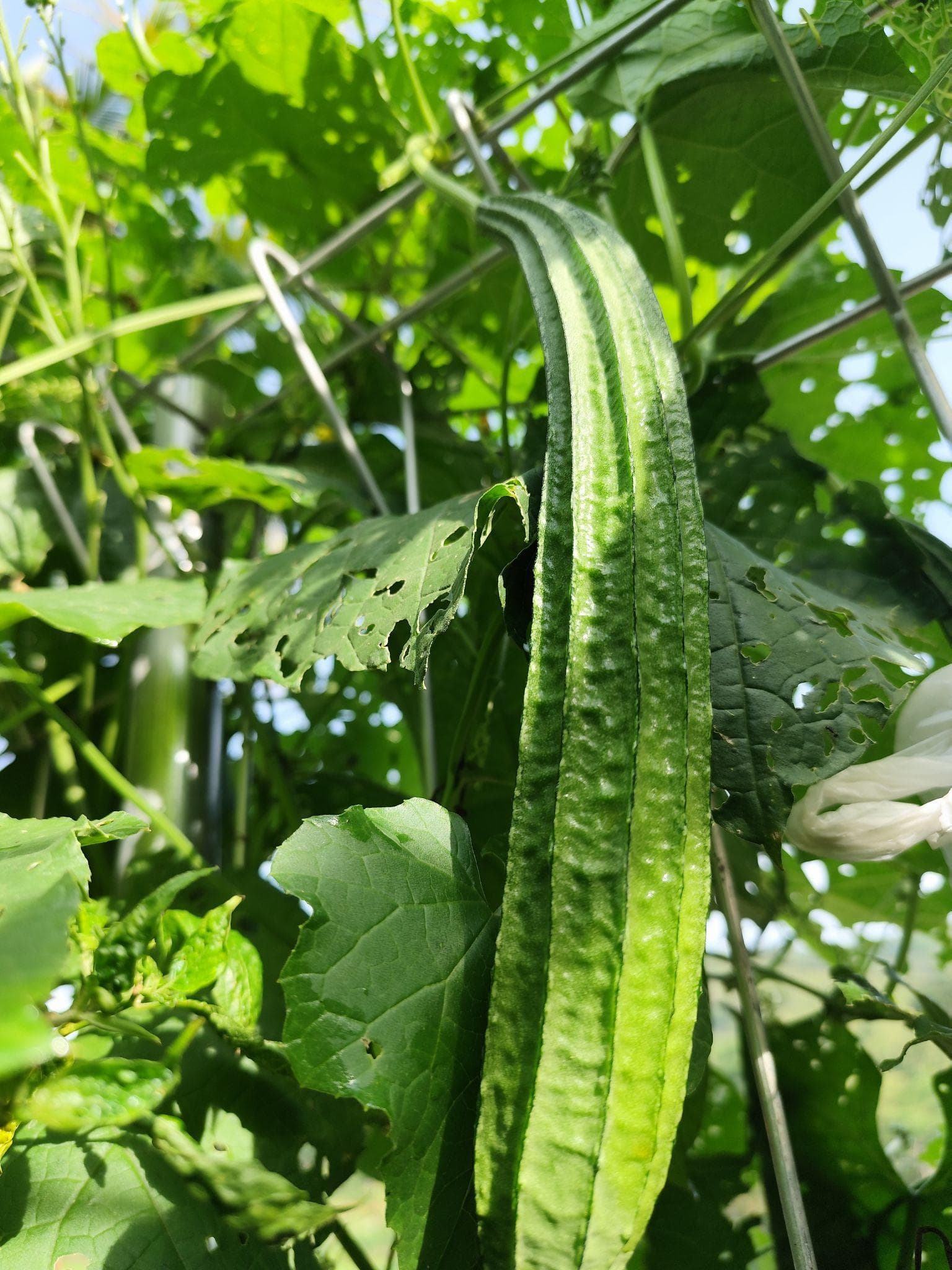
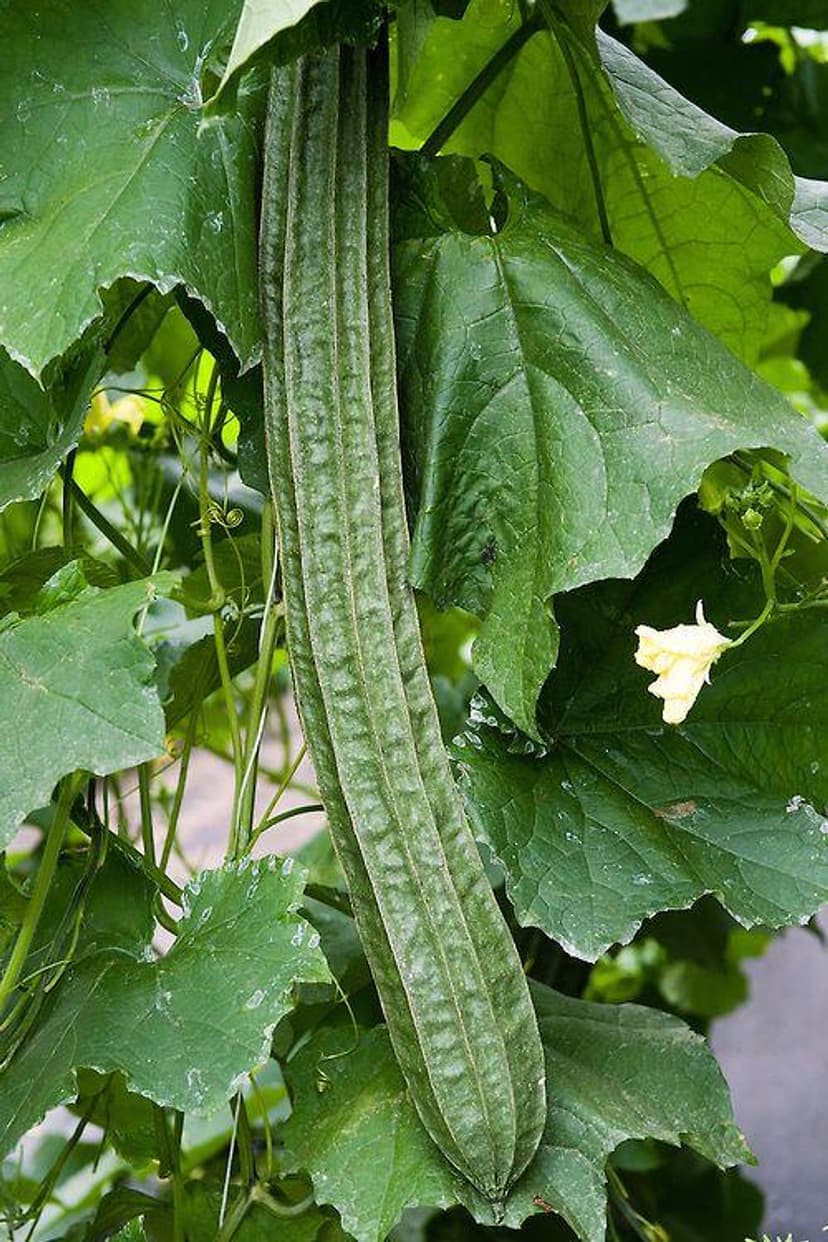
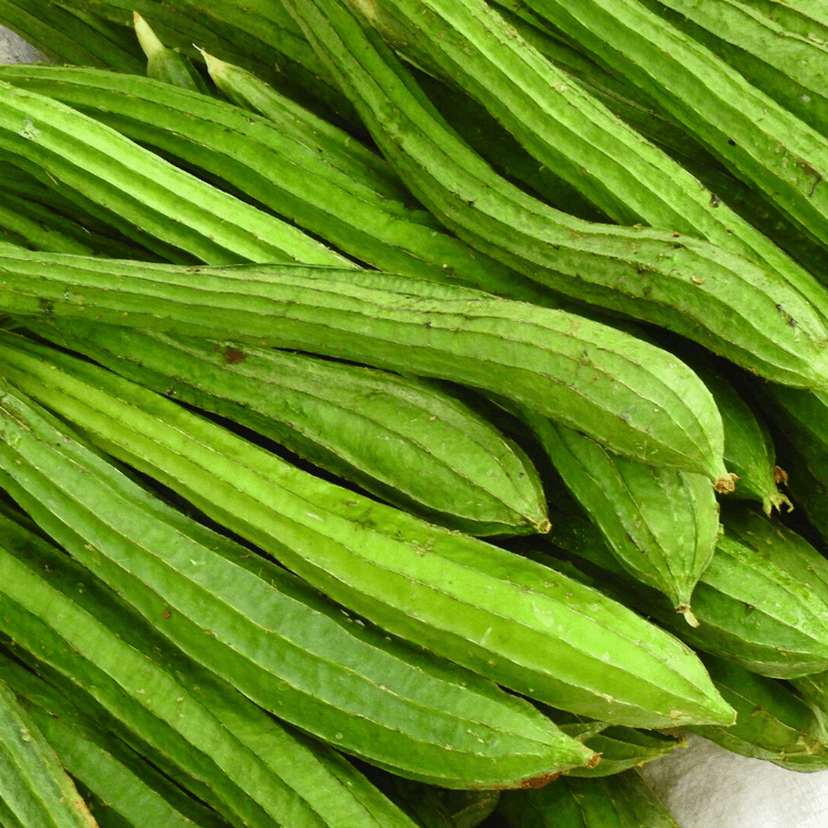
Ridge gourd (Luffa acutangula) has sharp lengthwise ridges and flowers in the evening. Sponge gourd (Luffa aegyptiaca, often sold as L. cylindrica) has smooth skin, flowers in the daytime and, when fully mature, gives the familiar loofah sponge. Both are grown the same way.
A 24-hour soak is optional and may help slightly. Avoid nicking or sanding the seed: in trials scarification reduced emergence.
The first flowers are male and drop after opening. Female flowers, with a small fruit behind them, appear higher on the vine a little later. If they fail too, hand-pollinate at the time the flowers open.
Pick about 12-15 days after the fruit sets, while it is about half its mature size and still tender.