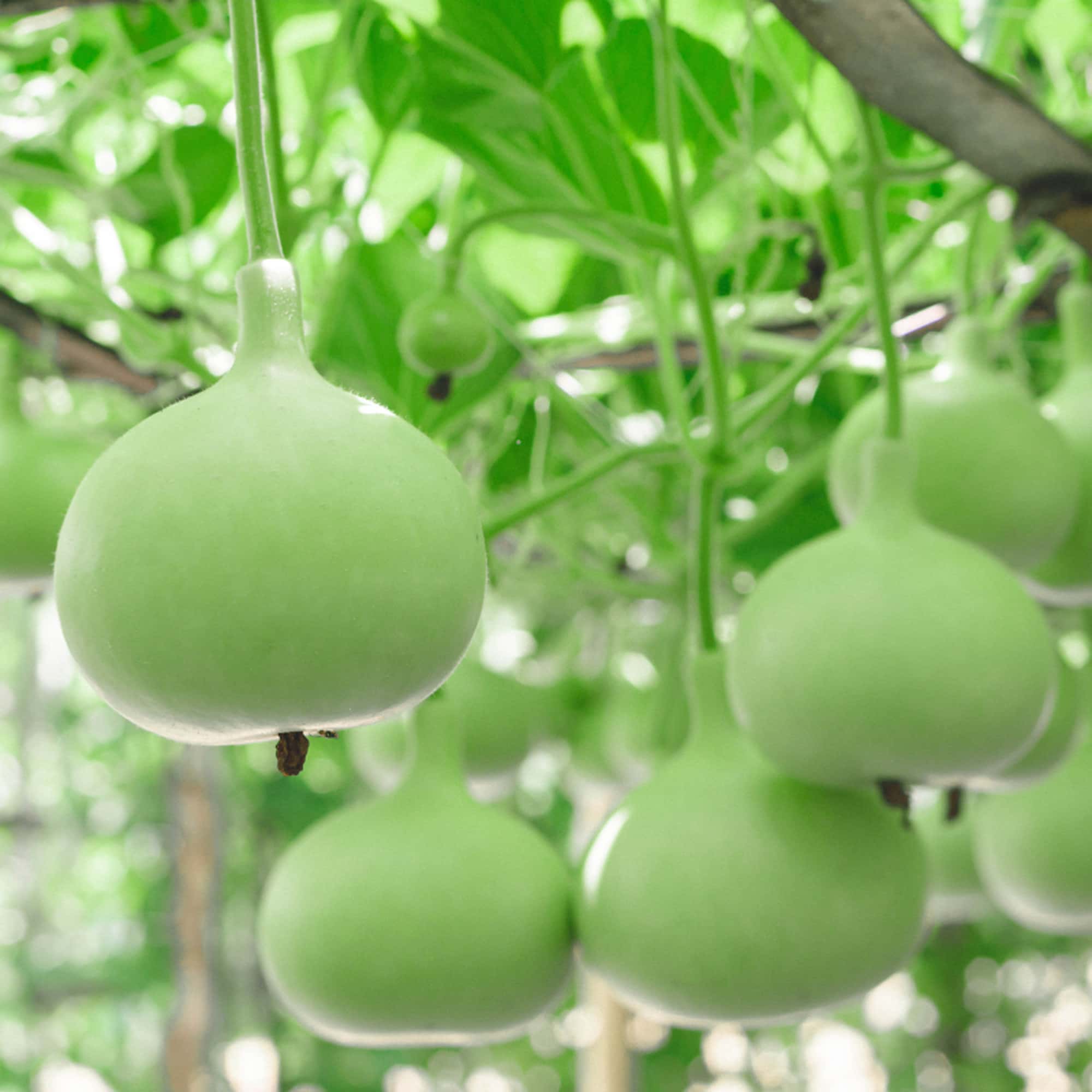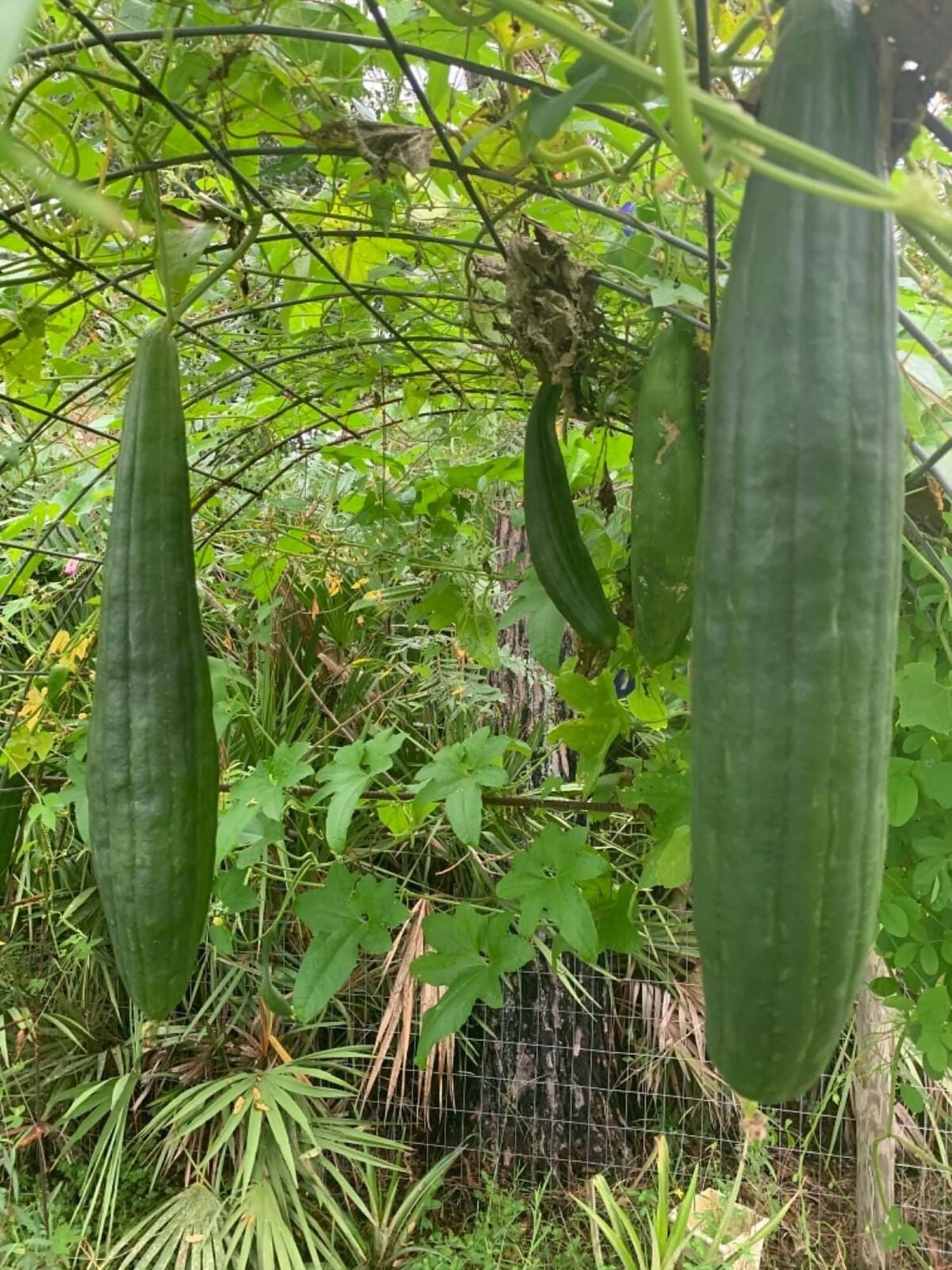


About this variety
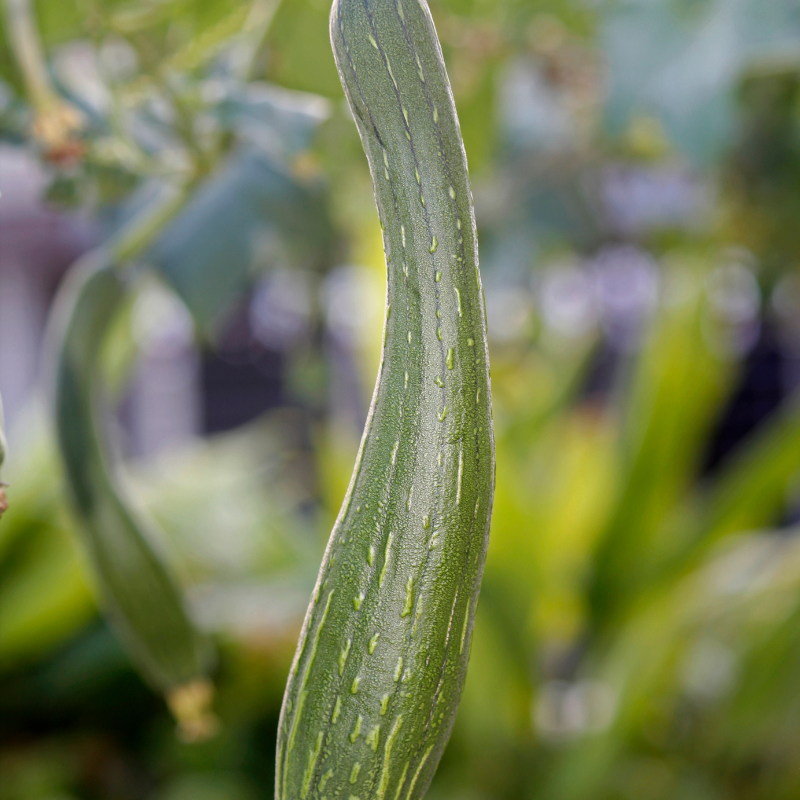
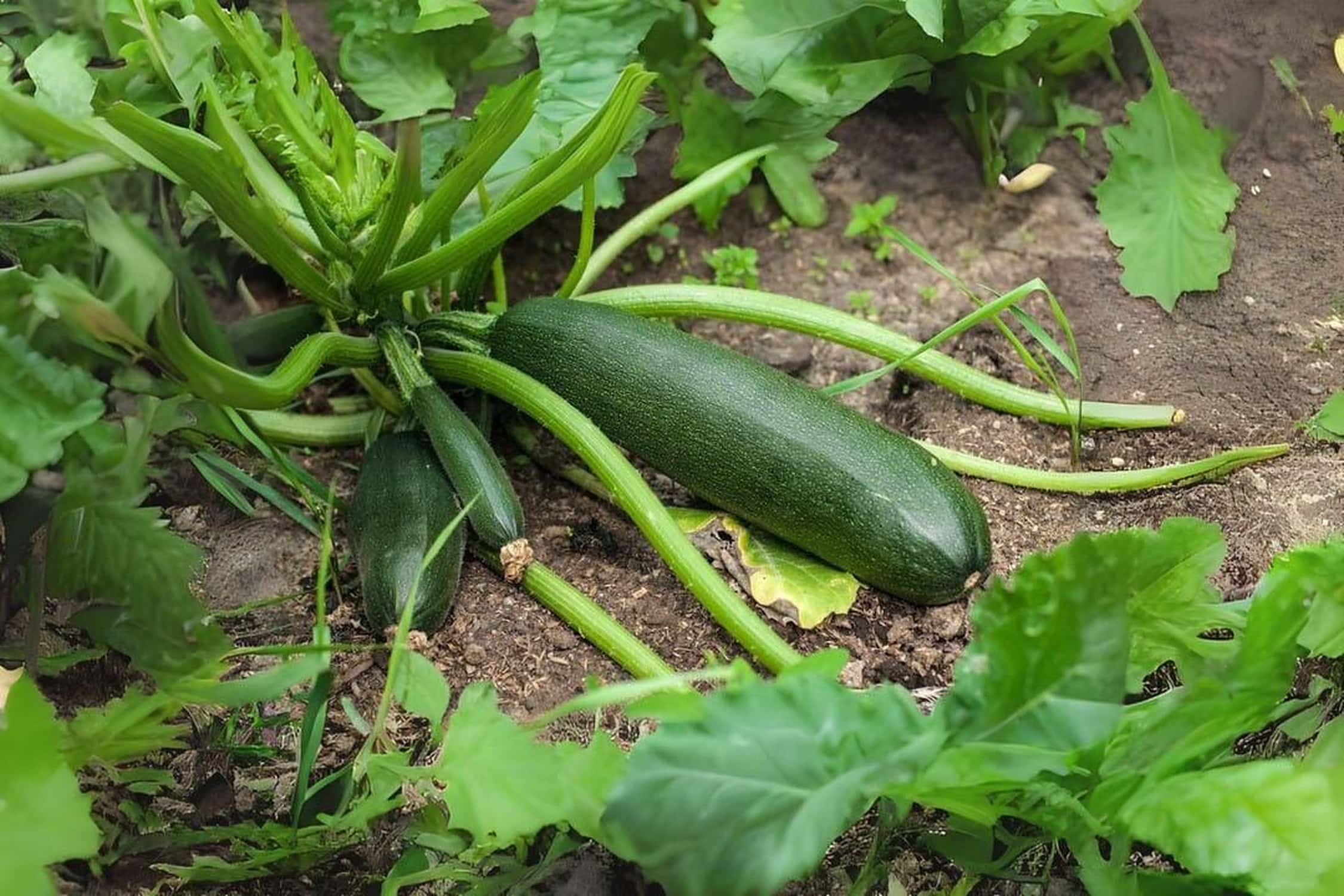
Sponge gourd (Luffa aegyptiaca) is a frost-tender tropical climber that gives two crops: dark green young fruit to eat, and fully dried fruit whose fibrous interior is the loofah sponge. It needs a long warm season, so start it indoors 4–6 weeks before transplanting; young fruit follow in 60–90 days and dry sponge fruit in 100–140 days, depending on the variety.
Also known as: Luffa, Nenua, Loofah, Gilki, Tori, Dishcloth gourd, Smooth luffa, Egyptian cucumber, Vegetable sponge; scientific synonym Luffa cylindrica.
Vegetable or sponge: decide before harvest
To eat the fruit, pick it young while the skin is dark green and tender. For a sponge, leave it on the vine until it is brown, light and rattles when shaken; alternatively pick green fruit just as it starts to turn yellow and the skin begins to loosen. Do not leave drying gourds hanging in wet weather, because the sponge discolours.
Sowing
- Soak the seed in warm water for 24 hours. One trial found no significant gain in emergence (80% soaked against 72% unsoaked), so treat soaking as optional.
- Sow two or three seeds per cell about 2.5 cm deep, then thin to one plant per cell at the first true leaves.
- Grow seedlings for four to six weeks at about 18–21 °C and move them out only after the last frost.
- Do not sow in open ground until the soil is 15 °C or warmer. In a laboratory study germination was best at 35 °C out of 20, 30 and 35 °C tested; this is an approximate single-study species value, not a result for this lot.
Support, spacing and pollination
Give each vine a sturdy trellis and keep fruit off the ground to avoid rot and misshapen gourds. Plants stand 30–45 cm apart in the row. Most luffa types are monoecious: male flowers open on the lower nodes and female flowers higher up, so fruit set depends on insects visiting both.
FAQ
Can I grow luffa where summers are short?
Only with an indoor start. The plant needs 60–90 days to young fruit and 100–140 days to a dry sponge and is killed by frost, so count your frost-free days before aiming for the sponge crop.
Why does my vine flower but set no fruit?
The first flowers on the lower nodes are male only. Female flowers appear later and higher on the vine and need pollinating insects.
Does the name "Dark green" identify a cultivar?
No. It describes the fruit colour of this seed lot. We do not state a cultivar, fruit length or yield.
Local names
Loofah, Plant sponge, Sponge gourd, Luffa, Nenua, Loofah, Gilki, Tori, Dishcloth gourd, Smooth luffa, Egyptian cucumber, Vegetable sponge, Luffa cylindrica.
Common names of Luffa aegyptiaca
All 40 names, languages and regions
Local names
| Cambodia | |
|---|---|
| តើមជាន់ (Ter chan) | |
| United Kingdom | |
| English | Loofah, Plant sponge |
| United States | |
| English | Sponge gourd |
| Other places | |
| Latin | Luffa cylindrica |
| English | Luffa Sponge, Native Towel-gourd, Smooth Luffa, Wild Pumpkin, dishcloth gourd, dishrag gourd, loofah, rag gourd, smooth loofah, vegetable-sponge |
| Indonesian | Blustru |
| Portuguese | Bucha |
| French | Courge éponge |
| Spanish | Musú |
| Filipino | Patola |
| German | Schwammgurke |
| Dutch | Sponskomkommer |
| Japanese | hechima |
| Slovak | lufa valcovitá |
| Finnish | pesusienikurkku |
| Chinese | si gua |
| Luffa, Nenua, Loofah, Gilki, Tori, Dishcloth gourd, Smooth luffa, Egyptian cucumber, Vegetable sponge, Esponja, Estropajo, Pepinille de esponja; Sponge gourd, Schwammgurke, Servilleta de pobre, ghia tori, hechima, laingsaz, lau-tziu, loofa, si gua, smooth loofah, sponge gourd, susemioi | |