Creeping Cucumber Seeds (Solena umbellata) plant

Vegetable growing guide

How to grow creeping cucumber from seedSolena amplexicaulis

Creeping cucumber (bankunari) is a perennial climbing cucurbit of Indian hills and forest edges with tuberous roots and small fruits eaten unripe. Male and female flowers grow on separate plants, so you need both to get fruit; this guide covers what is known about raising it from seed.

≈ 40 days
Germination

At a glance

Germination temperature
No published figure. It is a wet-tropical climber, so sow in warm weather, not in the cold season.
Sowing depth
No species-specific figure; sow shallowly, about twice the seed's thickness, as for other small cucurbit seed.
Germination time
Slow: in IIVR Varanasi observations seed germinated within about 40 days.
Light
Not established for germination; vines grow at sunny forest edges and need support.
Pre-treatment
No tested method published. Use fresh seed from fully ripe red fruit, cleaned of pulp.
Transplant or direct sow
Either; pots make it easier to keep track of slow seedlings. Plants can later be multiplied from tubers.

Seed preparation

Seed preparation

Seed matures 110-120 days after sowing, when the fruit turns red. Wash the seed free of pulp and dry it in the shade. Researchers note that natural propagation of this species by seed and tubers is limited, so sow more seed than the number of plants you want.

Scarification

No published evidence that it helps. Do not nick or file the seed without a reason.

Stratification

Not needed in principle: the plant comes from tropical and subtropical India with no cold winter. No trial has tested it.

Soaking

Not tested for this species. A short soak in clean water is harmless, but there is no data showing that it speeds up germination.

Creeping Cucumber Seeds (Solena umbellata)

Germination conditions

Germination temperature

No measured range is published. The species grows in the wet tropical biome, so sow at the start of the warm season or with the pre-monsoon rains, when other cucurbits also germinate well.

Sowing depth

No figure for Solena. Cover the seed lightly, about twice its own thickness, in a seed tray or individual pots.

Growing medium

A free-draining mix. In tissue-culture work, young plants were hardened off in a 2:1 mix of black soil and sand, which is a reasonable pot mix for seedlings too.

Moisture

Keep moist but never waterlogged; germination can take weeks, so check pots regularly.

Light

Not established for germination. Give seedlings bright light once they appear.

Germination time

IIVR reported germination within about 40 days. Be patient before discarding pots.

Transplanting and first growth

  1. Transplanting

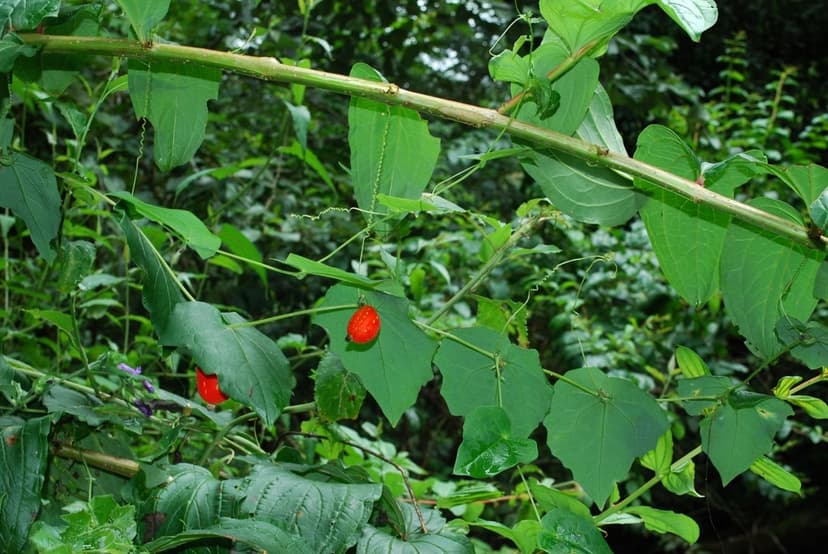
    Move seedlings carefully once they are established in their pots, keeping the root ball intact. Plant them where the vines can climb a trellis, fence or shrub: vines in the IIVR evaluation averaged 2.86 m, and the PROSEA description gives 1.5-3 m.

  2. First growth and flowering

    In Varanasi, seed-grown plants produced male flowers 58-62 days after sowing and female flowers at about 65 days. Fruit reached edible size at about 95 days and ripe seed at 110-120 days.

  3. Male and female plants

    Creeping cucumber is dioecious: each plant carries only male or only female flowers, and the two cannot be told apart at the seedling stage. Raise several plants and keep at least one male near the females, or there will be no fruit.

Creeping Cucumber Seeds (Solena umbellata)

Common problems

ProblemSeed seems not to germinate
Cause
Solena germinates slowly, and propagation by seed is naturally limited.
What to do
Keep pots warm and moist for at least 40 days and sow extra seed.
ProblemFlowers but no fruit
Cause
All your plants are male, or there is no male plant nearby.
What to do
Keep both sexes; if insects are scarce, transfer pollen from a male flower to the stigma of a female flower by hand.
ProblemWeak, slender vines
Cause
Poor planting material. In the IIVR trial, small tubers gave weak, slender sprouts.
What to do
Replant from medium tubers (about 120-140 g) or strong seedlings.
ProblemLow yield
Cause
Natural variation; the crop is not yet improved. Mean yield in the IIVR evaluation was about 324 g per plant (168-480 g), from about 14 fruits of about 10 g each.
What to do
Keep tubers from the most productive plants.

Practical growing tips

Keep the tubers

Plants have thick tuberous roots, which are the usual planting material. In the IIVR trial, medium tubers sprouted in 15-16 days, gave vigorous plants that flowered within 48-55 days and reached edible fruit within about 80 days, faster than plants from seed.

Grow it like a hardy wild vegetable

IIVR describes it as a typical hill crop that often survives stress; it grows naturally in brushwood and at forest edges. Give it a support, free-draining soil and full sun to light shade.

Harvest unripe fruit

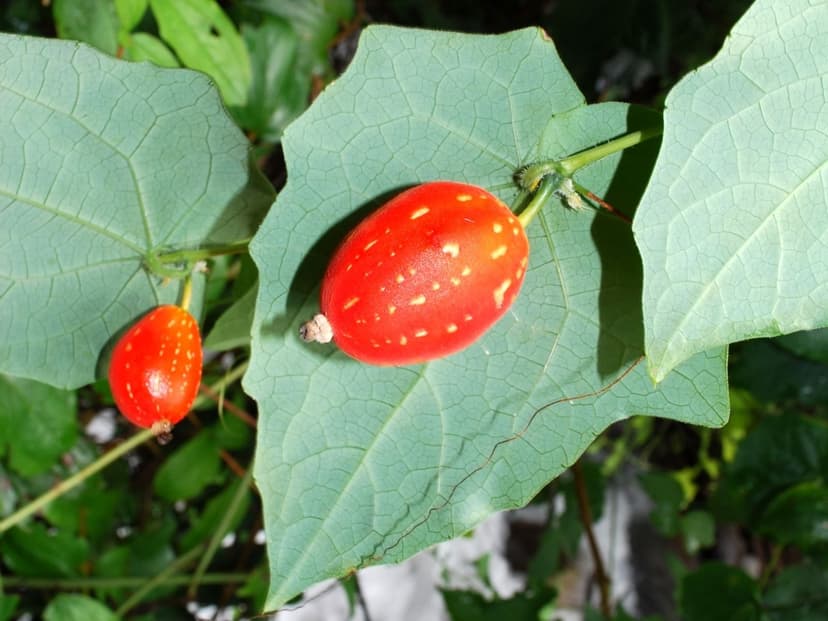
Pick fruits while green and firm for cooking or eating raw; they turn red when ripe. Leave a few on female plants if you want seed.

Conserve the species

Wild populations are declining from over-collection for traditional medicine. Growing it from seed or tubers is the best way to use it.

Creeping cucumber seeds from Deodar

Sow creeping cucumber seed in warm weather and raise several plants so you have both male and female vines.

Frequently asked questions

Do I need male and female creeping cucumber plants?

Yes. Solena is dioecious, so only female plants bear fruit and they need pollen from a male plant. You cannot tell the sexes apart until the plants flower, which in Varanasi trials was about 58-65 days after sowing, so raise several plants.

How long does creeping cucumber seed take to germinate?

It is slow. Indian research reports germination within about 40 days. No tested temperature or soaking method has been published, so keep the seed warm and moist and be patient.

Is creeping cucumber a perennial?

Yes. It is a perennial climber with tuberous roots, and the tubers can be replanted. In trials, plants from medium-sized tubers flowered and fruited sooner than seedlings.