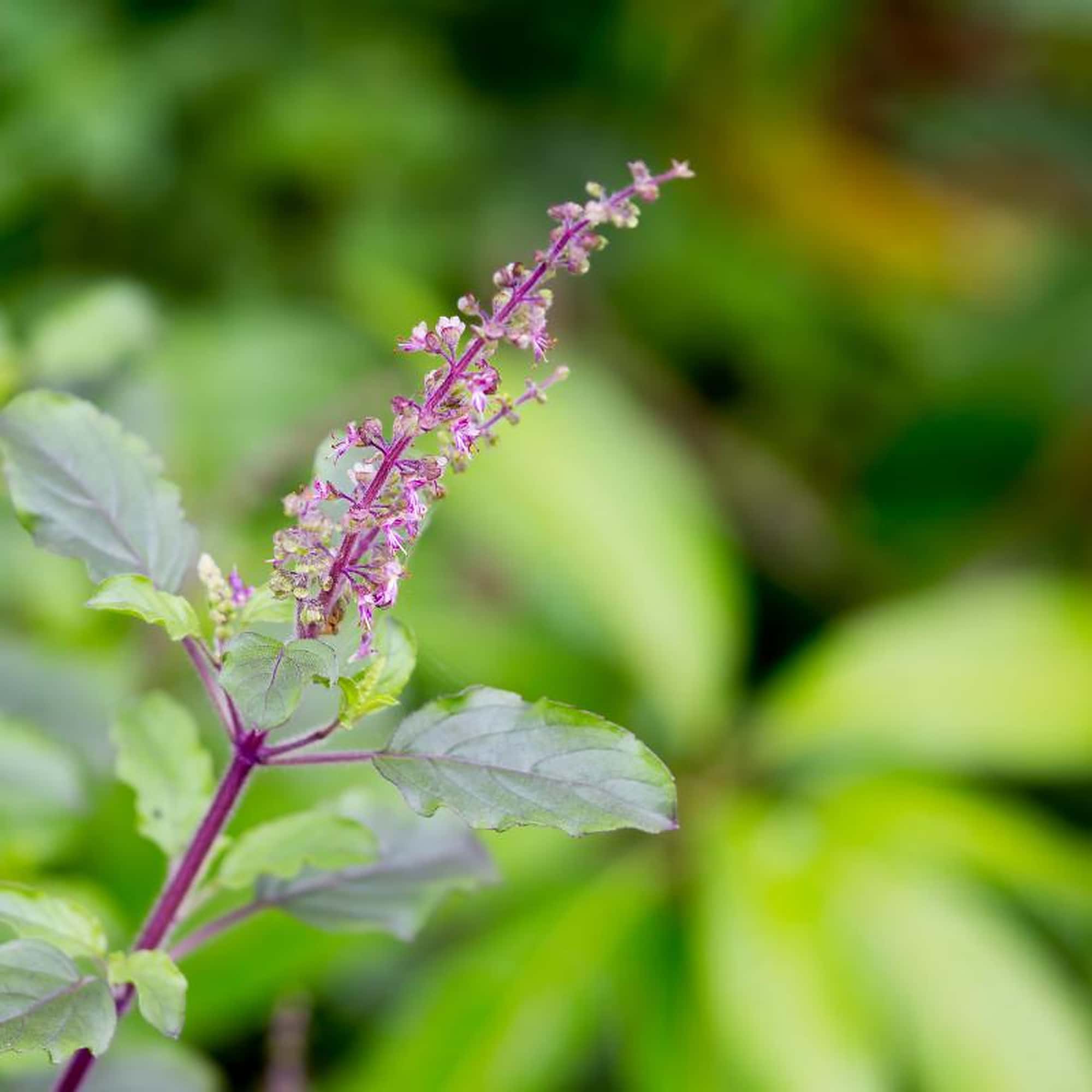



About this variety
Rama Tulsi is the green-leaved form of holy basil (Ocimum tenuiflorum), a perennial subshrub 30–60 cm tall that does not tolerate frost. The seed is tiny and germinates best at 25–30 °C, so it is mixed with sand for even sowing.
Also known as: Tulsi, Tulasi, Thulasi, Sacred basil, Holy basil, Vrinda, Tulas (Marathi), Kaphrao (Thai), Basilic sacré (French), Heiliges Basilikum (German), Albahaca sagrada (Spanish); older botanical name Ocimum sanctum.
Which holy basil this is
Rama (Ram) tulsi is the most common cultivated type in India and Nepal, with broad, bright green, slightly sweet leaves; Krishna (Shyama) tulsi, with purplish-green leaves, is the less common one. Plants raised from seed can differ in leaf colour, aroma and growth, so we do not state which colour or aroma this lot will show. It is not Thai basil: holy basil is the kaphrao of Thai stir-fries, while Thai basil (horapha) is another plant.
Seed size, temperature and emergence
- Seed size: 100 seeds weighed 13–41 mg across Indian germplasm accessions (approximate, species level).
- Temperature: best germination at 25–30 °C in a laboratory test on moist filter paper.
- Emergence: 8–12 days in nursery beds; laboratory counts at 30 °C are made at 5–6 days.
- Dormancy: a 2023 Seed Research paper reports a seed-coat dormancy in tulsi, so uneven emergence is normal.
These are species figures, not a result for this lot.
Sowing and growing on
- Mix the seed with sand, 1 part seed to 4 parts sand, and sow in a nursery bed or tray in partial shade.
- Keep it warm and moist; do not discard the tray before day 12.
- Transplant at the 4–5 leaf stage, about six weeks after sowing, with 40 cm between rows (nursery practice of Tamil Nadu Agricultural University).
- Pinch off flower buds to prolong leaf production; leave some flowers if you want to save seed.
The plant prefers roughly 21–35 °C. In a cool climate grow it as an annual or in a pot kept frost-free. This listing makes no medicinal claim.
FAQ
Nothing has sprouted by day 12. Is the seed bad?
Not necessarily. Nursery emergence takes 8–12 days at best, the seed coat can delay it, and the optimum is 25–30 °C. Keep the mix moist and warm before judging.
Can I grow Rama Tulsi in a cool climate?
Yes, as an annual or in a pot. It is a perennial in the tropics but does not tolerate frost.