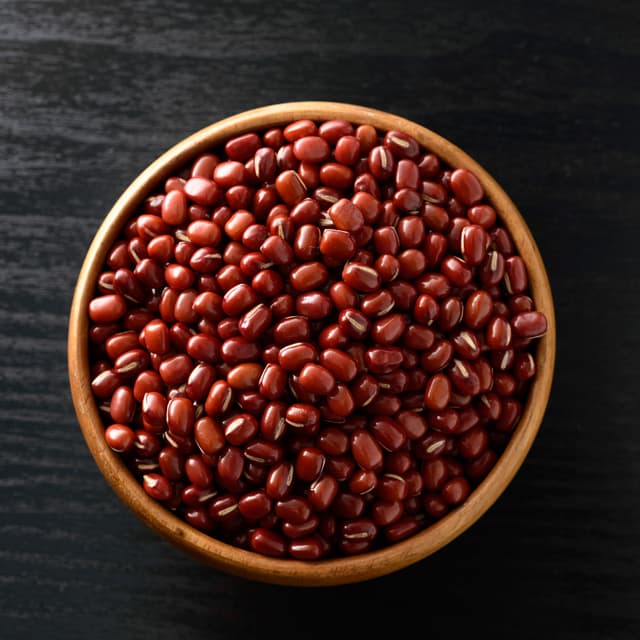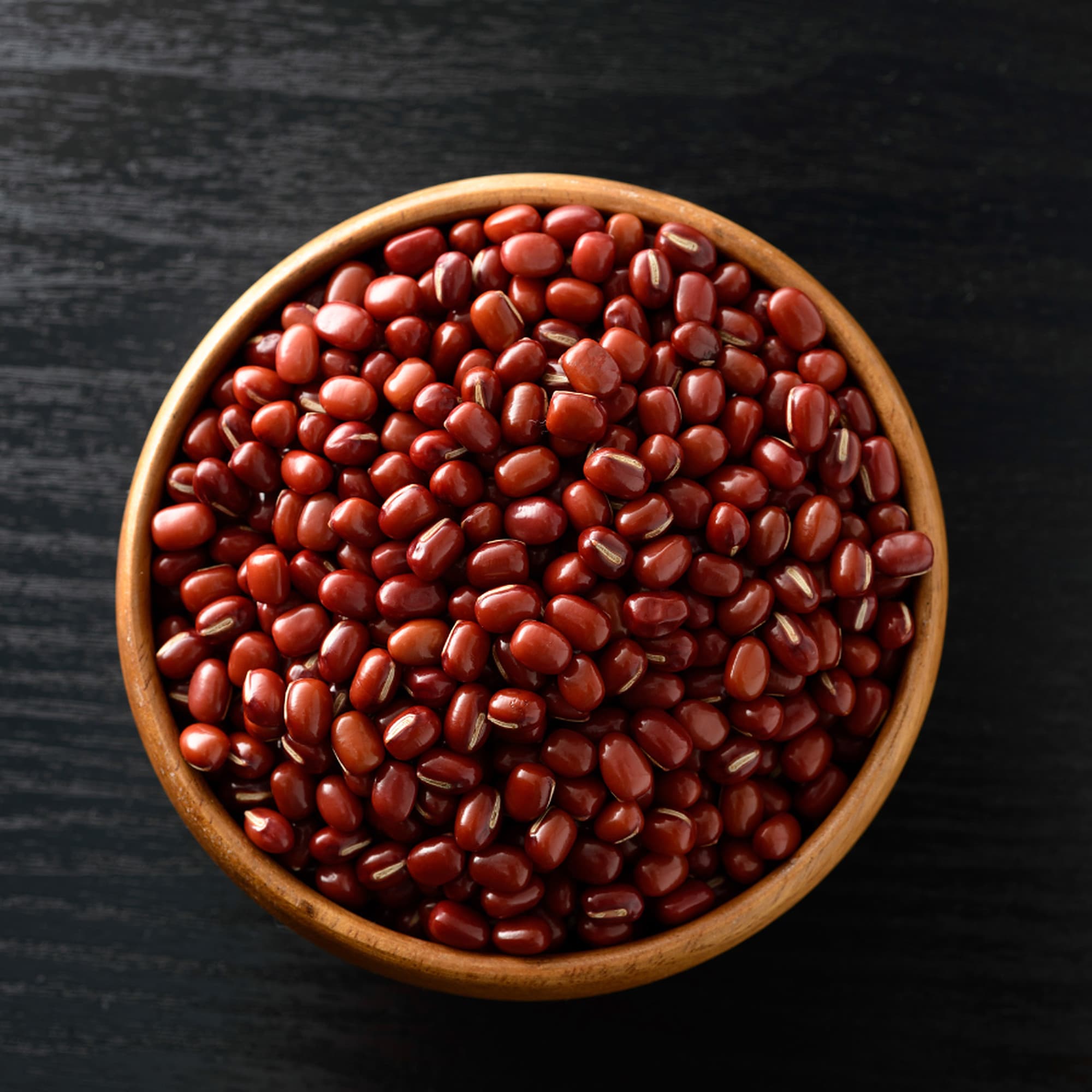
Adzuki japanese beans Seeds plant

Legume growing guide

How to grow adzuki beans from seedVigna angularis

Adzuki is a small red bean from East Asia that grows like a compact soybean and is harvested dry after three to four months. It emerges slowly from cool soil, so warm soil, firm sowing and patience matter most.

6-10 °C
Germination temp.
7-14 days
Germination
2-5 cm
Sowing depth

At a glance

Germination temperature
Germinates in soil above 6-10 °C (43-50 °F) but slowly; sources give optima from 15 °C (59 °F) to 30-34 °C (86-93 °F).
Sowing depth
2-5 cm (0.8-2 in); about 3.8 cm (1.5 in) is a good middle.
Germination time
Usually 7-14 days; up to 20 days in cool soil.
Light
Not needed for germination; flowering depends on day length.
Pre-treatment
Bradyrhizobium inoculant where adzuki or related beans have not grown.
Transplant or direct sow
Direct sow after the soil has warmed.

Seed preparation

Seed preparation

Adzuki forms nodules with Bradyrhizobium bacteria and can fix up to 100 kg of nitrogen per hectare. Inoculate the seed just before sowing where adzuki or similar Vigna beans have not grown; Oregon State trials found no benefit from extra nitrogen fertiliser when an inoculant was used, although a little starter nitrogen helps nodulation.
Scarification

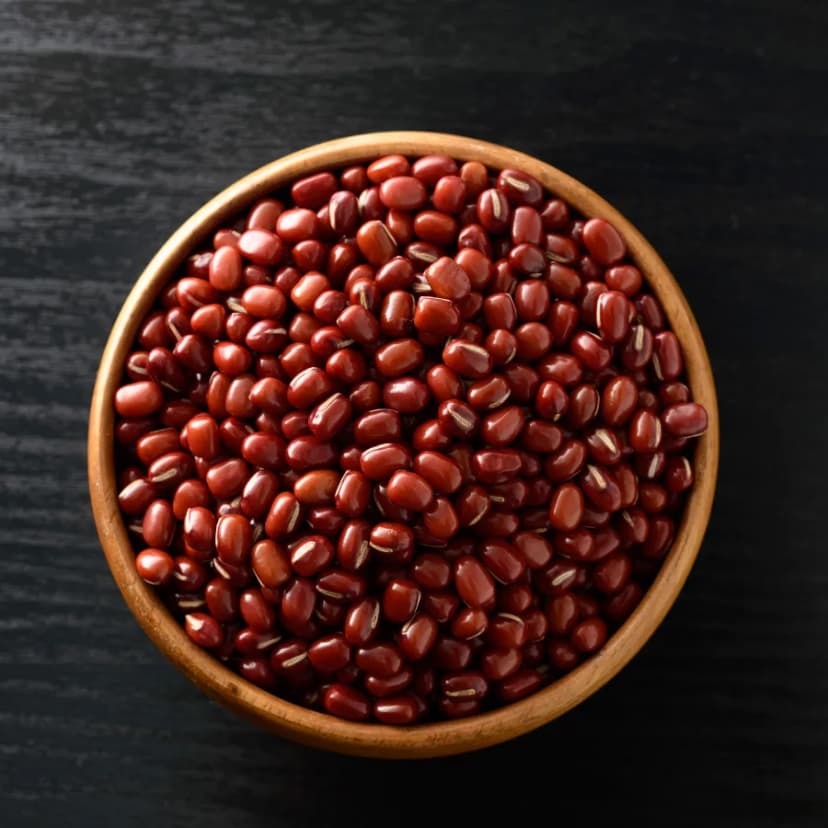
Not needed. Adzuki seed has a hard coat that resists moisture after maturity, so it emerges more slowly than other beans, but no source we checked recommends scarifying it.

Stratification

Not needed. Adzuki has no cold requirement and is sensitive to frost.

Soaking

Not needed for sowing; we found no sourced benefit for pre-soaking. Firm, moist seedbed contact is what gives an even stand.

Adzuki japanese beans Seeds

Germination conditions

Germination temperature

Sources disagree on the optimum. Oregon State University gives an ideal soil temperature of 15 °C (59 °F), similar to other beans; PROTA gives a minimum of 6-10 °C (43-50 °F) and an optimum of 30-34 °C (86-93 °F). They agree that emergence is very slow in cool soil of 10-13 °C (50-55 °F), so in practice sow into warm soil.

Sowing depth

2-3 cm (0.8-1.2 in) according to PROTA, 3-5 cm (1.2-2 in) according to Oregon State, and 3.8 cm (1.5 in) in Minnesota and Wisconsin guidelines. Germination is hypogeal (the seed leaves stay below ground), so it tolerates the deeper end in drying soil.

Growing medium

Well-drained soil. Minnesota and Wisconsin advise liming to at least pH 6.0; Oregon trials grew well at pH 5.8-6.4.

Moisture

Moist soil and good seed-to-soil contact are needed for a uniform stand; firm the soil over the row after sowing.

Light

Not required.

Germination time

About a week in warm late-spring soil and up to 14-20 days in earlier, cooler sowings; PROTA gives 7-20 days.

Transplanting and first growth

  1. Spacing

    Sow directly. PROTA gives rows 30-90 cm (12-36 in) apart with plants 10-45 cm (4-18 in) apart; field trials in Oregon used much closer in-row spacing of 2.5-7.5 cm (1-3 in). In a garden, about 10 cm (4 in) between plants in rows 45 cm (18 in) apart sits within these ranges.

  2. First growth stage

    Growth is best at 18-23 °C (64-73 °F), with a minimum of 10 °C (50 °F) and a maximum of 32 °C (90 °F) according to Oregon State; PROTA describes average temperatures of 15-30 °C as suitable and notes good heat tolerance but frost sensitivity. Keep weeds down in the slow first weeks.

Adzuki japanese beans Seeds

Common problems

ProblemSeedlings take weeks to appear
Cause
Cool soil and the hard seed coat.
What to do
Wait for warm soil, sow 3-4 cm (about 1.5 in) deep in moist soil and give it up to three weeks before resowing.
ProblemPlants wilt or rot at the stem base
Cause
White mould (Sclerotinia), bacterial stem rot or root rot.
What to do
Grow adzuki on the same ground only once in three years or less often, and avoid waterlogged beds.
ProblemCaterpillars in the pods
Cause
Helicoverpa (Heliothis) pod caterpillars, the main pest in Oregon trials; mirid bugs can also cause pods to drop.
What to do
Check plants from flowering and remove or treat caterpillars early.
ProblemWeevils in stored beans
Cause
The adzuki bean weevil (Callosobruchus chinensis) breeds in stored seed.
What to do
Store only fully dry seed in airtight containers.

Practical growing tips

Choose the season

Adzuki is mainly a short-day plant, although day-neutral varieties exist; Oregon State gives 12-14 hours of daylight for best development. It does best in subtropical and warm temperate climates and, in the tropics, at higher altitudes. In India that points to hill areas or the milder seasons on the plains, avoiding peak heat at flowering.

Plan for a long crop

Plants usually mature 110-120 days after sowing in temperate trials (PROTA gives a wider 60-190 day range by variety) and grow 45-65 cm (18-25 in) tall.

Harvest carefully

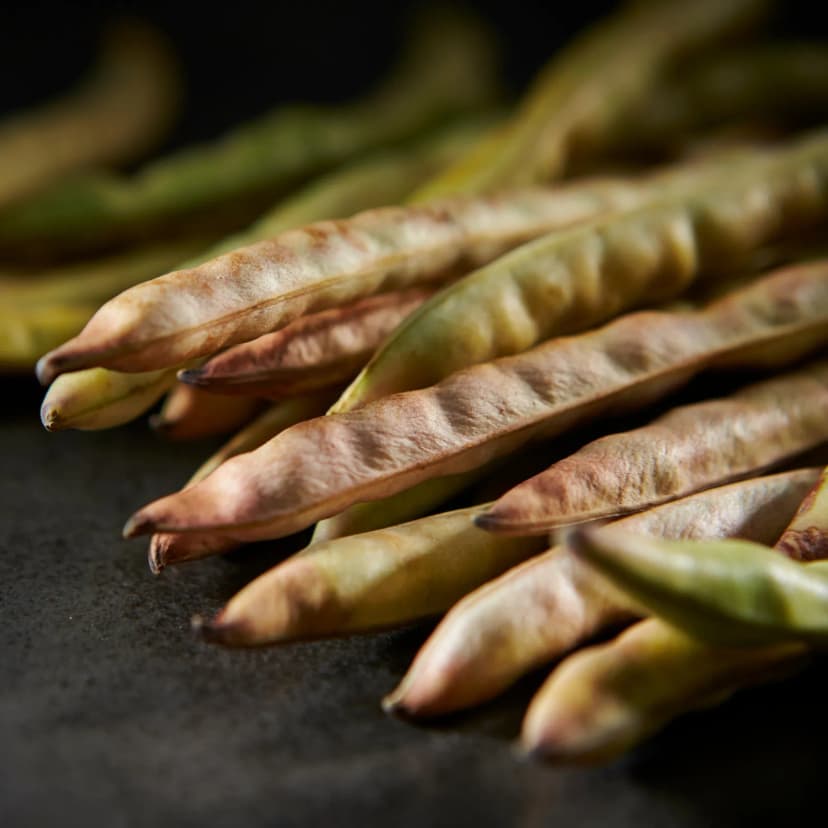
Harvest when the pods are mature and dry. Sources differ on shattering: Minnesota and Wisconsin warn that pods often shatter, while PROTA says they do not shatter readily. Pick or cut plants as soon as most pods are dry to be safe.

Adzuki bean seeds from Deodar

Grow Japanese adzuki beans for your own sweet red bean paste and soups.

Frequently asked questions

Why are my adzuki beans so slow to come up?

Adzuki has a hard seed coat and emerges slowly, especially in cool soil of 10-13 °C (50-55 °F). Emergence can take up to 14-20 days in early sowings. Sow into warm, moist soil and be patient before resowing.

Do adzuki beans need an inoculant?

On ground where adzuki or similar beans have not grown, yes. Adzuki nodulates with Bradyrhizobium bacteria, and with a working inoculant it needs little or no nitrogen fertiliser.

How long until adzuki beans are ready?

Usually 110-120 days from sowing for a dry-bean harvest in temperate trials, though early varieties can be quicker.