About this variety
Adzuki Beans (Vigna angularis)
General Description
Adzuki beans, also known as red beans, red mung beans, azuki beans, or small red beans, are a warm-season legume widely cultivated across East Asia. Originally domesticated in China and later popularized in Japan and Korea, they have been a staple in Asian cuisine for centuries. Adzuki beans are grown in warm climates and prefer sunny, well-drained sites.
Plant Characteristics
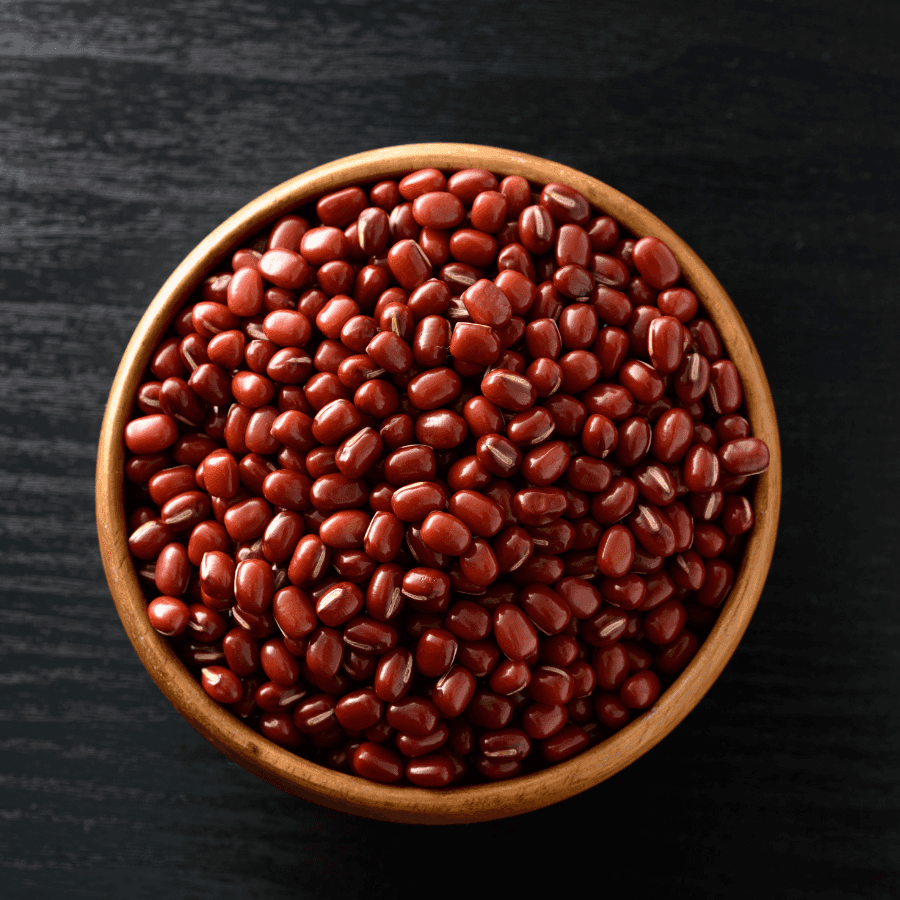
Adzuki bean plants are compact, bushy legumes that grow up to 30–60 cm (12–24 inches) in height. They produce small, oval-shaped beans that range in color from deep red to reddish-brown, with a smooth, glossy surface and a distinct white hilum. The pods are 8–12 cm (3–5 inches) long, each containing 5–10 seeds. This variety is known for its drought tolerance, making it an excellent choice for sustainable farming and home gardening.
Cultivation Recommendations
• Sow seeds directly in well-drained soil at a depth of 2.5 cm (1 inch).
• Germination occurs within 7–10 days at an optimal temperature of 20–30°C (68–86°F).
• Space plants 10–15 cm (4–6 inches) apart to ensure proper airflow and healthy growth.
• Prefers full sun and requires moderate watering, avoiding excess moisture.
• Harvest in 80–100 days when pods are fully dry, and beans harden for storage.
Uses and Applications
Adzuki beans are widely used in Asian cuisine, particularly in Japan, China, and Korea. They are commonly boiled and sweetened to make red bean paste (anko) for desserts such as mochi, dorayaki, and mooncakes. In savory dishes, they are used in soups, curries, rice dishes, and sprouted for fresh salads.
Packaging
Packets are offered in 15-seed and 30-seed options for planting.
From Deodar Seeds Company.
General Description
Adzuki beans, also known as red beans, red mung beans, azuki beans, or small red beans, are a warm-season legume widely cultivated across East Asia. Originally domesticated in China and later popularized in Japan and Korea, they have been a staple in Asian cuisine for centuries. Adzuki beans are grown in warm climates and prefer sunny, well-drained sites.
Plant Characteristics
Adzuki bean plants are compact, bushy legumes that grow up to 30–60 cm (12–24 inches) in height. They produce small, oval-shaped beans that range in color from deep red to reddish-brown, with a smooth, glossy surface and a distinct white hilum. The pods are 8–12 cm (3–5 inches) long, each containing 5–10 seeds. This variety is known for its drought tolerance, making it an excellent choice for sustainable farming and home gardening.
Cultivation Recommendations
• Sow seeds directly in well-drained soil at a depth of 2.5 cm (1 inch).
• Germination occurs within 7–10 days at an optimal temperature of 20–30°C (68–86°F).
• Space plants 10–15 cm (4–6 inches) apart to ensure proper airflow and healthy growth.
• Prefers full sun and requires moderate watering, avoiding excess moisture.
• Harvest in 80–100 days when pods are fully dry, and beans harden for storage.
Uses and Applications
Adzuki beans are widely used in Asian cuisine, particularly in Japan, China, and Korea. They are commonly boiled and sweetened to make red bean paste (anko) for desserts such as mochi, dorayaki, and mooncakes. In savory dishes, they are used in soups, curries, rice dishes, and sprouted for fresh salads.
Packaging
Packets are offered in 15-seed and 30-seed options for planting.
From Deodar Seeds Company.