
Seed preparation
Use clean seed from a healthy crop: cumin wilt (Fusarium oxysporum f. sp. cumini) is carried on seed and in soil. The Spices Board treats seed with Trichoderma, or with thiram or captan at 2.5-3 g per kg, before sowing.
Herb growing guide
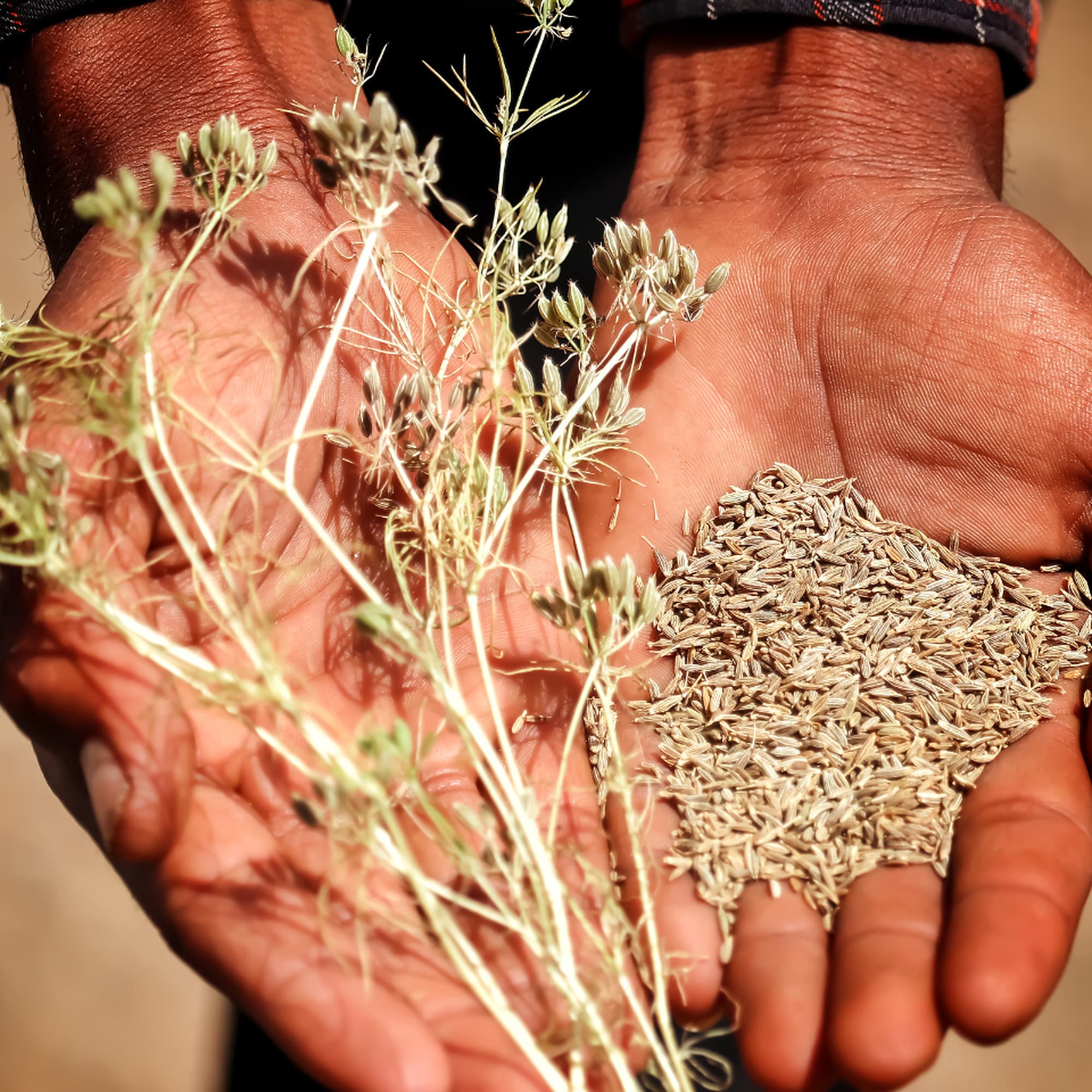
Cumin is a small, frost-tender annual that is sown where it will grow and harvested for its seed about 100-140 days later. It germinates best in cool soil near 20 °C and succeeds only where the weather stays dry while it flowers, which is why India grows it as a November-sown winter crop.
Use clean seed from a healthy crop: cumin wilt (Fusarium oxysporum f. sp. cumini) is carried on seed and in soil. The Spices Board treats seed with Trichoderma, or with thiram or captan at 2.5-3 g per kg, before sowing.
Not needed. The ribbed fruit (the 'seed' sold as jeera) takes up water without help.
Not needed. Cumin has no cold requirement for germination; it simply prefers cool rather than hot soil.
Optional. NC State Extension notes that soaking seed for 8 hours before sowing helps. Dry the surface before sowing so the seed does not clump.

In a laboratory study cumin germinated best at about 20-21 °C (68-70 °F), with a ceiling near 35 °C (95 °F). NC State gives an optimum range of 20-30 °C (68-86 °F). Sowing into hot soil is the most common cause of a patchy stand.
About 6 mm (1/4 in), and never deeper than 1.5 cm (0.6 in) according to the Spices Board.
Sandy loam to medium soil with good organic matter and good drainage. Avoid ground that grew cumin in the previous three years, because wilt builds up in the soil.
Water lightly after sowing and keep the surface just moist until emergence. Cumin is drought tolerant; the Spices Board counts only 4-6 irrigations for the whole crop.
No light is needed for germination. The crop needs an open, sunny site.
7-14 days (NC State); slower in cool soil.
Sow in lines. The Spices Board uses rows 25 cm apart with plants 10 cm apart; a trial at Jagudan, Gujarat, got the best yield from 30 cm rows sown on 5 November. In a garden, NC State sows groups of four seeds every 10-20 cm (4-8 in) and thins to one plant when seedlings are 5 cm (2 in) tall.
In short-summer climates start seed 6-8 weeks before the last frost in biodegradable pots and plant the whole pot, so the root is not disturbed. Otherwise sow outdoors 1-2 weeks after the last frost: the crop needs about 120 frost-free days.
Seedlings are slow and compete poorly with weeds. Weed by hand, with the first weeding at 35-40 days after sowing and two or three in all on irrigated ground. Plants reach only 20-30 cm (8-12 in).
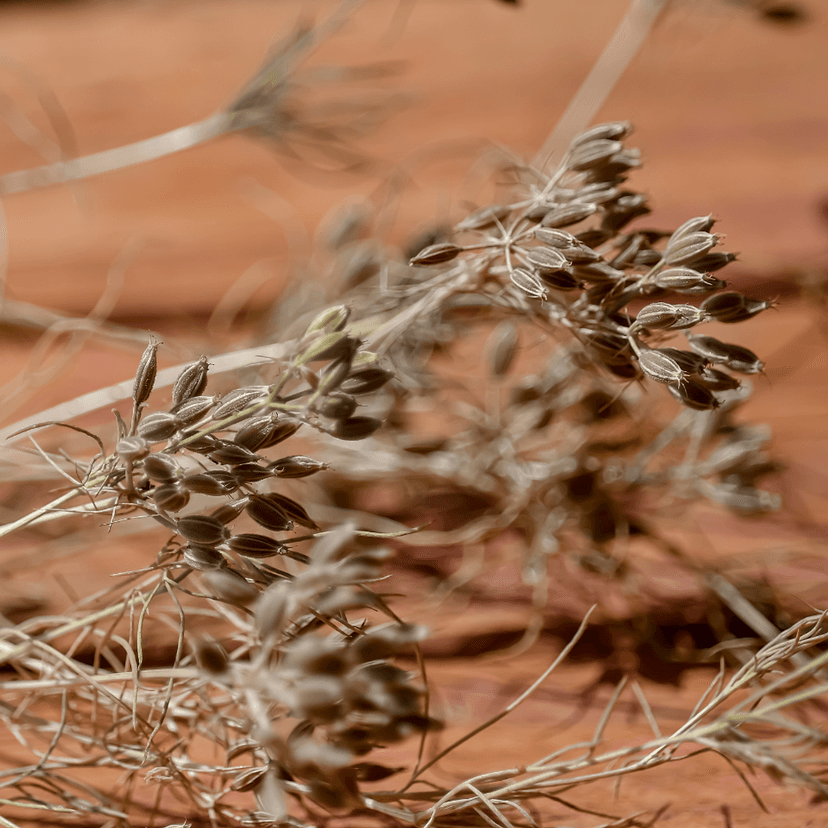
Cumin wants cool weather for growth and dry, clear weather while it flowers and sets seed; humid, cloudy spells at that stage bring blight and aphids. That is why the main Indian crop is sown around November in the dry north-west, and why a crop that flowers in humid weather usually fails. The Spices Board starts disease protection about 40 days after sowing, when this risk window opens; before sowing, check that the weeks from about day 40 to harvest are normally dry where you are.
Sow around early November (Spices Board; best on 5 November in the Gujarat trial). Earlier sowing meets soil that is still hot for germination; in the trial, the other sowing dates gave lower yields.
Gujarat Cumin-2 matures in about 100 days, Gujarat Cumin-1 in 105-110 days and RZ-19 in 120-140 days.
Cut the plants near the ground once the umbels are dry and brown (NC State), thresh carefully and dry the seed to 8-9% moisture before storage.
Black cumin or kalonji (Nigella sativa) is an unrelated plant with its own guide; this guide covers jeera only.
Sow jeera into cool, well-drained soil in a dry season and harvest your own aromatic seed in three to four months.
Around early November, as a winter (rabi) crop. A trial at Jagudan, Gujarat, got the highest yield from sowing on 5 November in rows 30 cm apart.
It is risky. Humid, cloudy weather during flowering favours Alternaria blight and aphids. Time the sowing so that the weeks from about 40 days after sowing to harvest fall in your driest season.
Not easily. NC State Extension says cumin does not transplant well; sow it in place or in biodegradable pots that are planted whole.
About 100-140 days depending on variety, for example about 100 days for Gujarat Cumin-2 and 120-140 days for RZ-19.


