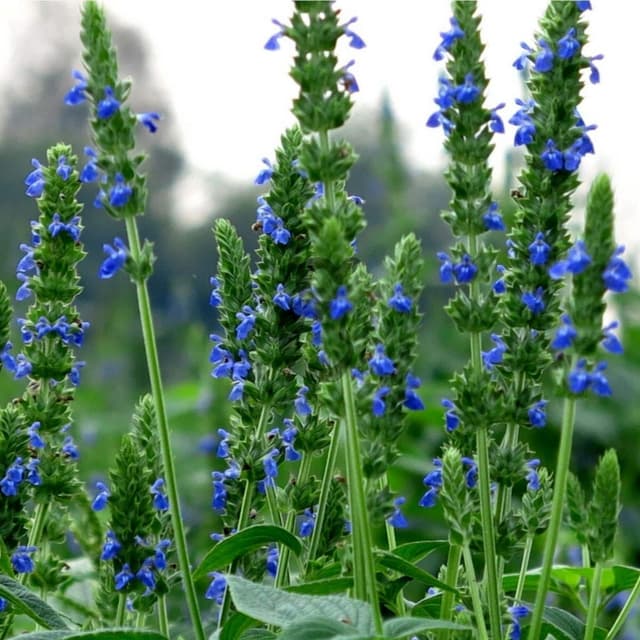
Seed preparation
Chia seed is oval, about 2 mm long and 1 mm wide, like clover seed. Mix it with dry sand for even line sowing. In a Baramati trial black-seeded chia yielded about 11% more than white-seeded chia; both grow the same way.
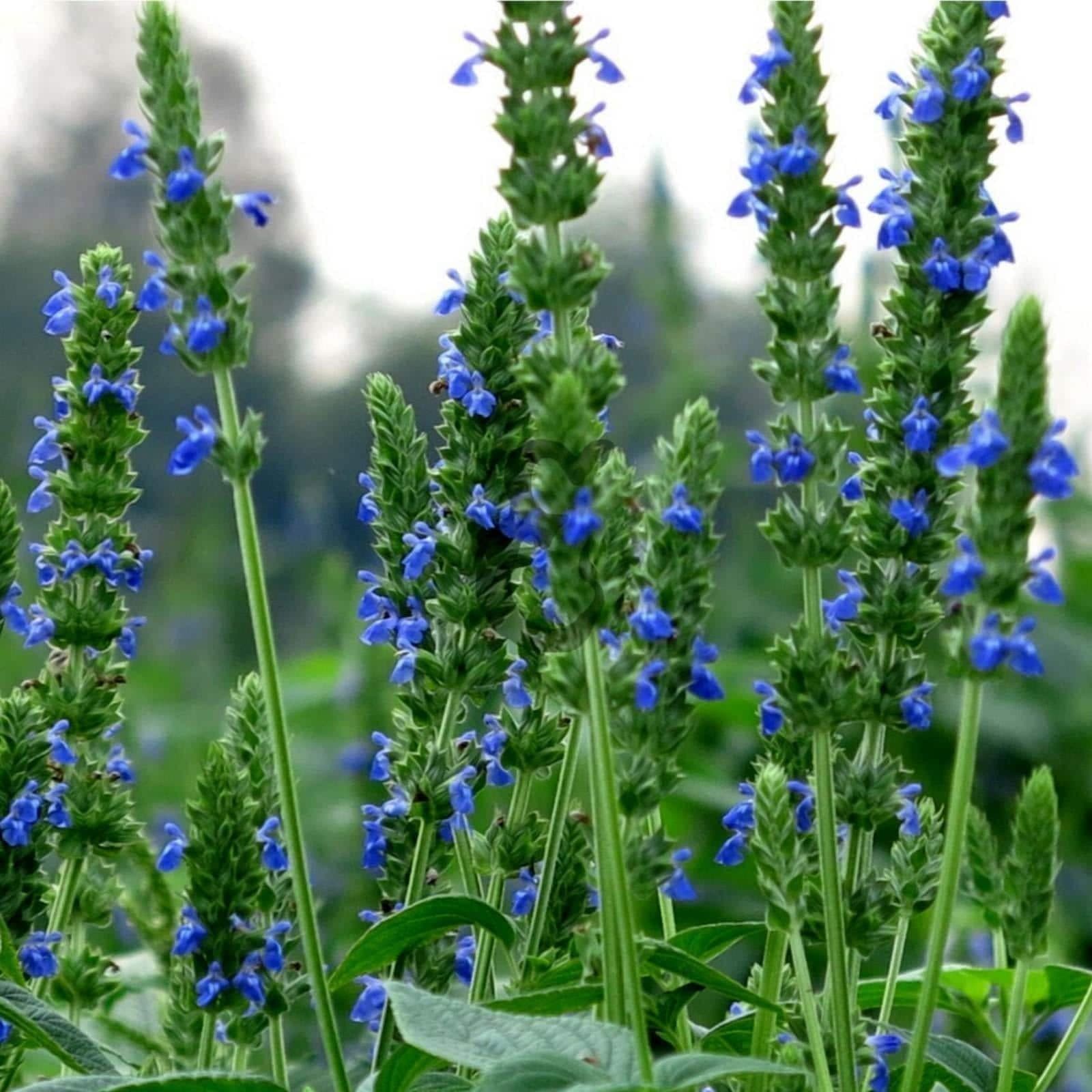
Herb growing guide
Chia germinates almost anywhere between 10 and 35 °C, but it flowers only when the days get short. Sow it so that flowering falls in the short days of autumn and the seed ripens before frost or heat: in western India that means August to mid-September.
Chia seed is oval, about 2 mm long and 1 mm wide, like clover seed. Mix it with dry sand for even line sowing. In a Baramati trial black-seeded chia yielded about 11% more than white-seeded chia; both grow the same way.
Not needed. The seed coat takes up water at once.
Not needed. Chia germinated above 95% even at 10 °C in laboratory tests, only more slowly.
Not needed and unhelpful: the seed coat forms a sticky gel (mucilage) as soon as it is wet, so soaked seed clumps and cannot be sown evenly. Sow dry seed into moist soil.

In a 2022 laboratory study final germination was above 88% at every temperature from 10 to 35 °C (50-95 °F), highest at 20 °C (98%). Germination was fastest at 25-35 °C and dropped to 44% at 40 °C (104 °F). Temperature rarely limits germination; day length limits the crop.
Shallow. The University of Kentucky stresses good seed-to-soil contact for such small seed: sow into a fine, firm, moist bed and press the seed in rather than burying it deep.
A fine, well-prepared seedbed. ICAR-NIASM grows chia on shallow black soils of drought-prone areas; for transplants it raises seedlings in cocopeat, vermicompost and red soil mixed 1:1:1.
Keep the surface moist until seedlings appear. Established plants are fairly drought tolerant; ICAR-NIASM gave a rabi crop about 60% of crop water demand with good results.
Seed needs no light to germinate. Plants need full sun.
In the laboratory, half the seed germinated in about 0.3 days at 30 °C and 5.5 days at 10 °C. Emergence in soil is slower than on lab agar, but warm soil keeps it quick.
ICAR-NIASM sows in lines 60 x 30 cm for July-September sowing and 50 x 30 cm for October-November sowing. In a West Bengal winter trial, direct sowing beat transplanting and closer spacing (about 50-55 x 20-25 cm) gave the highest yield.
For gap filling or intercropping, raise seedlings in trays and transplant them at about 15 days old (ICAR-NIASM).
Keep the rows weeded until the canopy closes; the University of Kentucky calls weed control most critical during establishment, and many common herbicides kill chia. ICAR-NIASM splits nitrogen into three doses: half at sowing, the rest at 30 and 45 days.
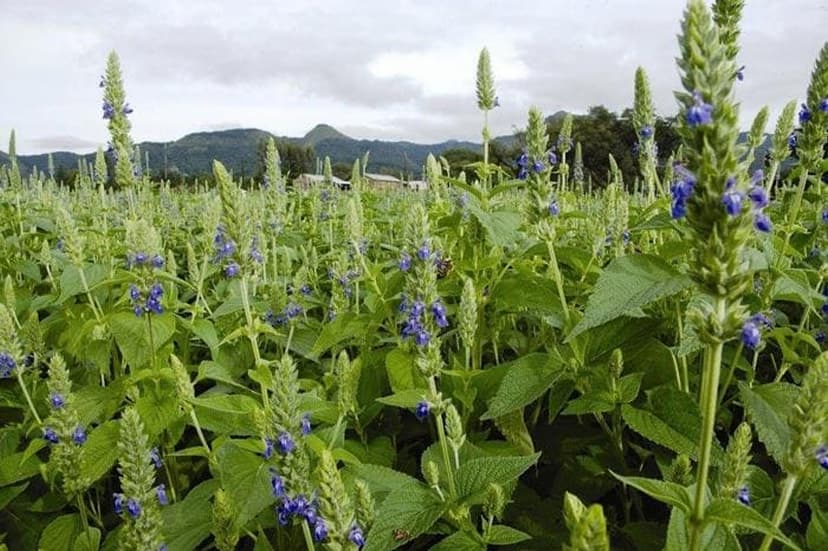
Before sowing, look up your local day length. Chia sown when days are well above 12.5 hours grows leaves first and flowers only when days shorten, so the real question is whether its seed can ripen between that date and your first frost or hot season.
ICAR-NIASM Baramati recommends 1 August to 15 September, with the best yields from sowings between 1 August and 1 September. BCKV in West Bengal grew a winter (rabi) crop by direct sowing.
Traditional chia rarely ripens seed before frost at mid-latitudes. The University of Kentucky bred long-day flowering lines for that reason; ordinary chia there is best treated as a leafy annual.
ICAR-NIASM grew chia with fenugreek in a 1:2 row ratio and harvested both green fenugreek and chia seed from the same field.
Leave the spikes until the seed is fully mature; seed caught by frost stays brown and immature. Dry the harvested heads, rub out the seed and clean it through a fine screen, as used for clover seed.
Sow chia as the days start to shorten and harvest your own seed from its flower spikes.
Chia is a short-day plant. While days are longer than about 12.5 hours it keeps growing leaves and delays flower buds. It will flower as days shorten in autumn.
ICAR-NIASM in Baramati, Maharashtra, recommends 1 August to 15 September. Sowing from December to February cut yield by about 73% in their trials.
No. Wet chia seed forms a sticky gel and clumps together. Sow dry seed into moist soil instead.
Usually not with ordinary chia: it flowers so late that frost kills it before the seed matures, according to the University of Kentucky. Long-day lines bred there can ripen seed at those latitudes.