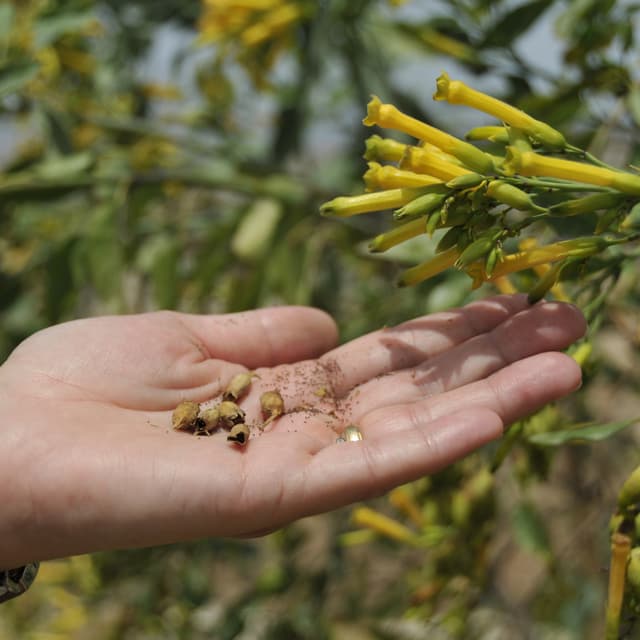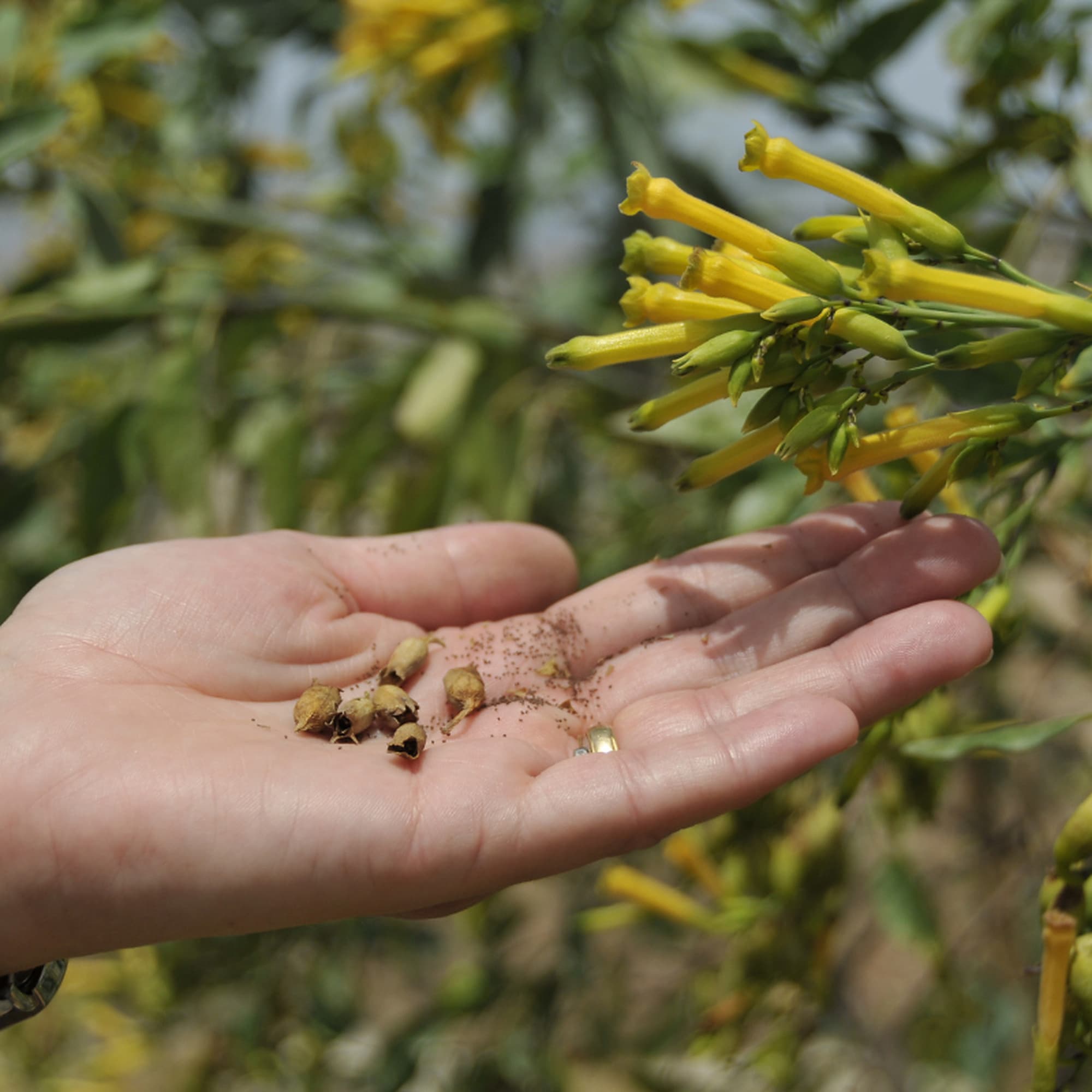
Black mustard Seeds plant

Spice growing guide

How to grow black mustard from seedBrassica nigra

Black mustard is a fast, tall annual grown for its small, pungent dark seeds. It germinates within days in cool weather; the skill lies in harvesting before its pods split and scatter the crop.

25 °C
Germination temp.
48 hours
Germination
≈ 1 cm
Sowing depth
Full sun
Light

At a glance

Germination temperature
Cool to mild soil; seed tests use 25 °C (77 °F) days and 15 °C (59 °F) nights.
Sowing depth
About 1 cm (3/8 in).
Germination time
First seed leaves often within 48 hours; most seed up within a week.
Light
Full sun; tolerates light shade.
Pre-treatment
None needed for sowing.
Transplant or direct sow
Direct sow in rows.

Seed preparation

Seed preparation

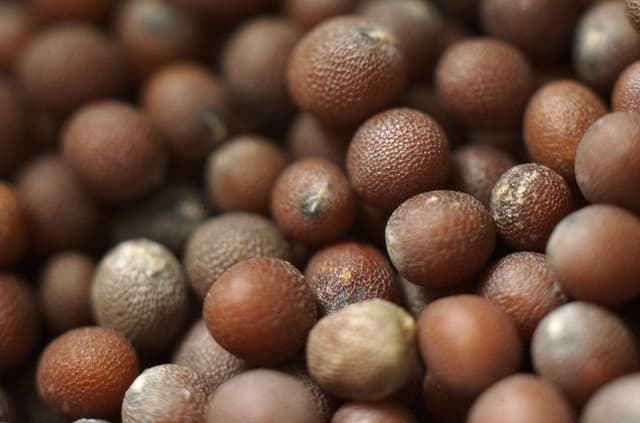
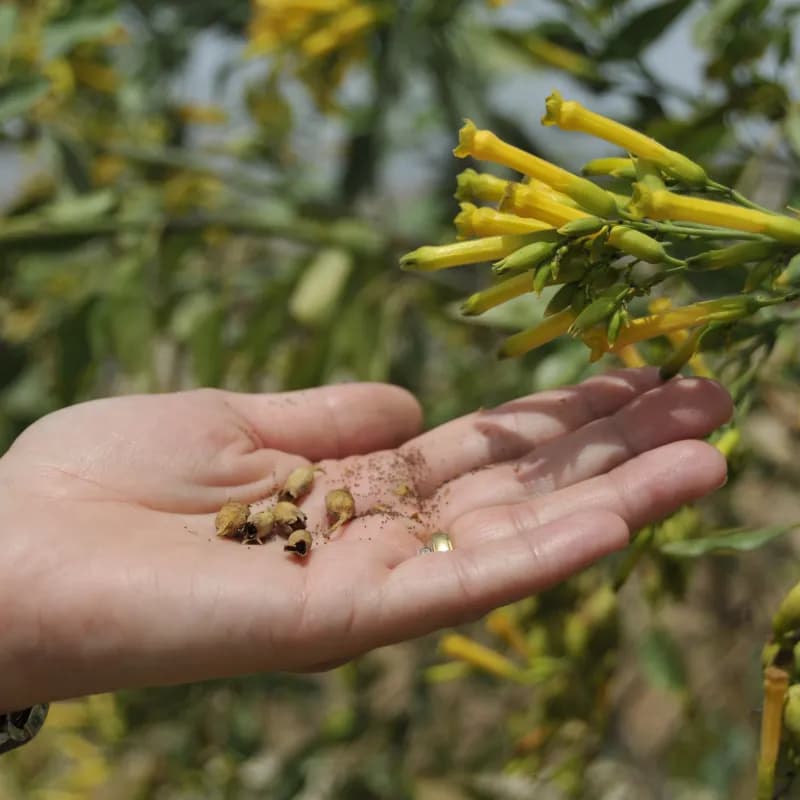
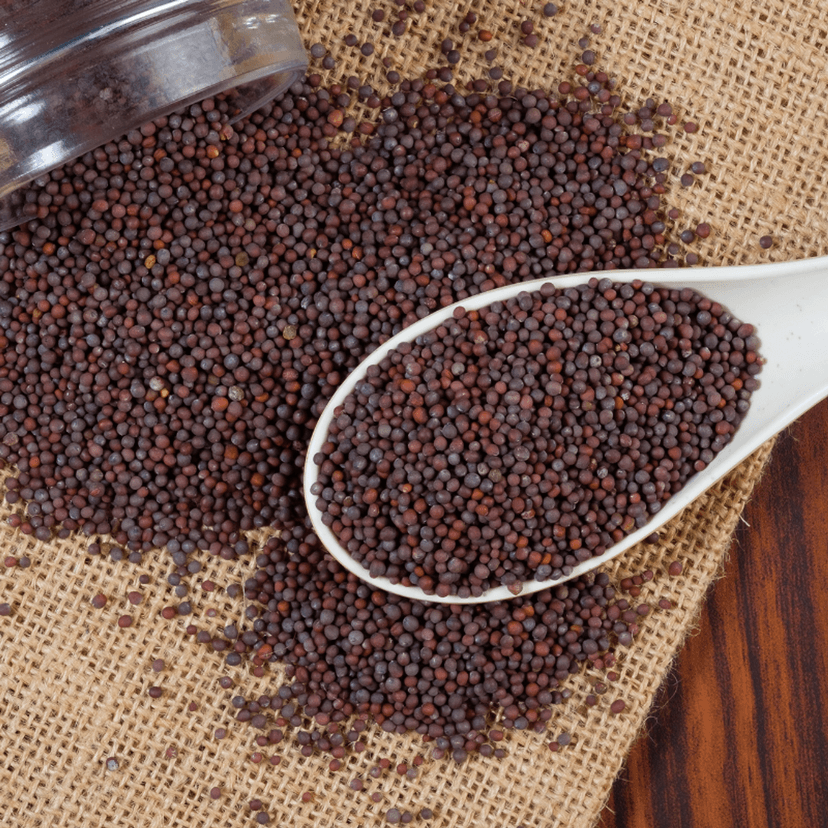
Black mustard seed is tiny: round, about 1 mm across, with 1,000 seeds weighing only 2-4 g. Mix it with dry sand to sow thinly and evenly. It is a different species from brown or Indian mustard (Brassica juncea), which has largely replaced it in commercial fields because black mustard pods shatter so readily.
Scarification

Not needed. The seed takes up water easily.

Stratification

Not needed in the garden. Genebank germination tests at USDA ARS give black mustard a 3-day prechill at 10 °C (50 °F) to even out any residual dormancy in fresh seed. A sowing that comes up patchily can simply be re-sown into the gaps.

Soaking

Not needed. Sow dry seed into a moist seedbed.

Black mustard Seeds

Germination conditions

Germination temperature

Black mustard is a cool-season crop that grows where mean annual temperatures are 6-27 °C (43-81 °F) and does poorly in hot weather. Standard seed tests germinate it at 25 °C (77 °F) by day and 15 °C (59 °F) by night. Sow when the weather cools: autumn in Mediterranean and temperate climates, and after the monsoon for a winter crop in India.

Sowing depth

About 1 cm (3/8 in), in rows 20-30 cm (8-12 in) apart. Small seed needs a fine, level seedbed so it is not buried too deep.

Growing medium

Light sandy loam is best, pH 5-8. It grows on most soils except heavy clay, and is unsuited to wet tropical lowlands.

Moisture

Keep the surface moist until emergence. The crop is mostly grown rainfed (300-1,700 mm a year), but a dry spell after pods form can severely cut seed yield.

Light

Seed is covered lightly. Grow in full sun for strong, well-branched plants.

Germination time

Very fast: germination begins straight after sowing and the first leaves usually show within 48 hours. In seed tests the first count is taken at 3-7 days.

Transplanting and first growth

  1. Thinning

    Black mustard is not transplanted. Thin crowded rows so plants stand a few centimetres apart; they branch heavily and reach 0.5-1.5 m (1.5-5 ft).

  2. First growth stage

    Flower buds can appear as early as 2 weeks after germination, usually at 4-6 weeks, followed by bright yellow flowers in long racemes. Pods then take another 4-8 weeks to ripen, so the crop is ready 40-100 days after sowing.

Black mustard Seeds

Common problems

ProblemMost seed is on the ground at harvest
Cause
Pods (siliques) split open as they ripen, starting at the base of the plant.
What to do
Cut the plants when the lowest pods are mature and the first ones begin to split, then dry them on a sheet.
ProblemSmall shot-holes in seedling leaves
Cause
Flea beetles.
What to do
Cover young rows with fine insect mesh until plants are well established.
ProblemGrey, waxy aphid colonies on shoots and pods
Cause
Cabbage aphid (Brevicoryne brassicae).
What to do
Check flowering shoots weekly and spray off or remove colonies early.
ProblemDark leaf spots, or stems rotting with white mould
Cause
Alternaria black leaf spot or Sclerotinia stem rot.
What to do
Rotate away from other brassicas, use clean seed and avoid dense, damp stands.
ProblemMustard seedlings appear in later years
Cause
Shed seed; black mustard seed survives in soil for more than 5 years and is a competitive weed.
What to do
Harvest before pods shatter and remove plants grown only for flowers before they set seed.

Practical growing tips

Check ripeness before you cut

Ripening moves up the stem. Every few days, roll a few of the lowest pods between your fingers: when they are dry and the first begin to split, with dark brown to black seed inside, cut the whole plant even though upper pods are still green.

Dry and thresh

Tie the cut plants in small bunches and dry them on a tarp or clean floor so the seed that drops is caught. When dry, beat or rub the bunches and winnow out the chaff.

Expectations

PROSEA gives typical yields of 300-600 kg/ha, up to 1,100 kg/ha with good care; in a garden that is roughly 30-60 g of seed per square metre.

Handling

Young leaves, flowers and seeds are edible, but handling the plant can cause contact dermatitis in some people. Black mustard is listed as invasive in parts of the western United States; do not let it seed into wild land.

Black mustard seeds from Deodar

Sow black mustard in the cool season and harvest your own pungent seed for the spice jar.

Frequently asked questions

When should I harvest black mustard seed?

When the lowest pods are dry and the first start to split, even if the upper pods are still green. Cut the plants, dry them on a sheet and thresh.

Is black mustard the same as brown mustard?

No. Black mustard is Brassica nigra, a taller plant with readily shattering pods. Brown or Indian mustard is Brassica juncea, which has largely replaced it in commercial fields.

Can I grow black mustard in India?

Yes, as a cool-season crop. It does poorly in heat and in wet tropical lowlands, so sow it after the monsoon for a winter crop.