
Seed preparation
A chard seed is really a corky seed ball containing several embryos, so one cluster often gives several seedlings. Sow clusters individually about 5 cm (2 in) apart rather than in a dense line.
Vegetable growing guide
Each chard 'seed' is a cluster that can produce several seedlings, so sowing and thinning work differently from most greens. Chard is easy to grow and keeps producing leaves for months from one sowing.
A chard seed is really a corky seed ball containing several embryos, so one cluster often gives several seedlings. Sow clusters individually about 5 cm (2 in) apart rather than in a dense line.
Not needed. Soaking softens the corky cluster enough.
Not needed. Chard germinates without any cold treatment.
Optional but useful in dry soil: extension guidance for Beta vulgaris seed (beet and chard) is to soak it in warm water for up to 24 hours before sowing to aid germination. Sow soaked seed into moist soil straight away.
Sow once soil reaches 4 °C (40 °F). Germination is best at about 13-24 °C (55-75 °F) according to Utah State University, while University of California data give an optimum range of 18-29 °C (65-85 °F) with a maximum of 35 °C (95 °F). In practice, soil above about 27 °C (80 °F) reduces germination, so in hot weather sow in the evening and keep the bed shaded and moist.
Cover with about 1.3 cm (1/2 in) of fine soil, or 2.5 cm (1 in) of sandy soil that dries out faster.
Loose, well-drained soil with plenty of organic matter, or a standard seed compost for module trays.
Keep the soil evenly moist until seedlings appear; the corky clusters need sustained moisture to swell.
Seed germinates in darkness under soil. After emergence give full sun or light shade; 6-8 hours of direct sun gives the best growth.
Seedlings usually emerge in 7-14 days.
Because each cluster produces several seedlings, thin when plants are about 5 cm (2 in) tall or have 3-4 true leaves. Snip extras at soil level to avoid disturbing the kept seedling. Thin first to about 10-15 cm (4-6 in), then to 20-30 cm (8-12 in) for large plants. Thinnings can be eaten or replanted.
Module-grown plants are ready in 5-6 weeks, when they have 4-6 leaves and a well-developed root system. Plant about 15 cm (6 in) apart in rows about 30 cm (12 in) apart, or 20-30 cm (8-12 in) apart if you want large plants.
Growth is best at or below about 24 °C (75 °F). Give about 2.5-5 cm (1-2 in) of water per week; uneven moisture makes leaves tough and off-flavoured.
Pick young outer leaves as soon as they are usable for baby salad; direct-sown plants reach full size in about 50-70 days. Cut stems about 5 cm (2 in) above the crown and leave the centre to keep producing.
Chard prefers cool weather; high summer heat slows growth and can make leaves bitter. In India it is easiest as a cool-season crop in the plains and through summer in the hills; light shade helps in hot spells.
A light nitrogen side-dressing about 4 weeks after thinning or transplanting keeps new leaves coming.
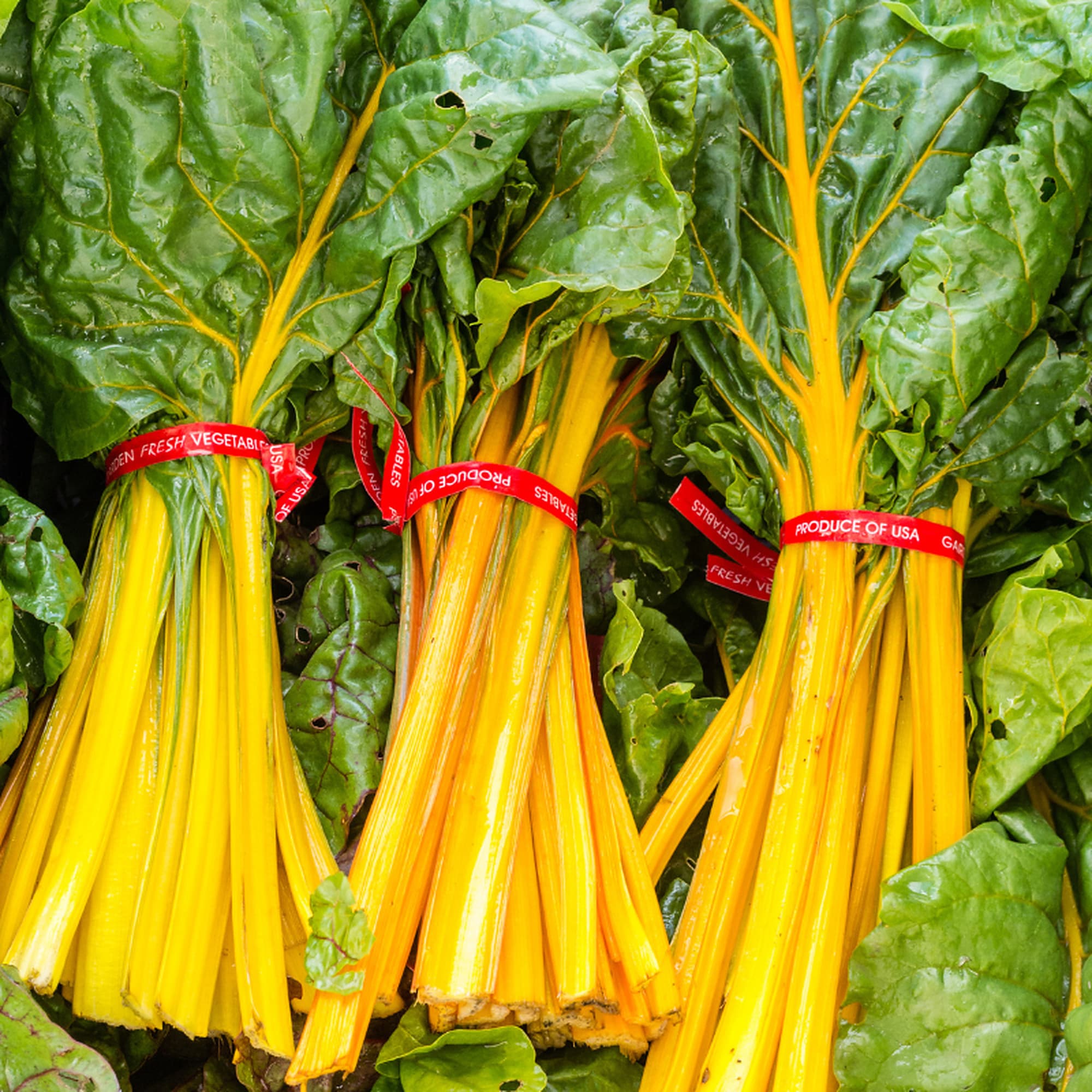
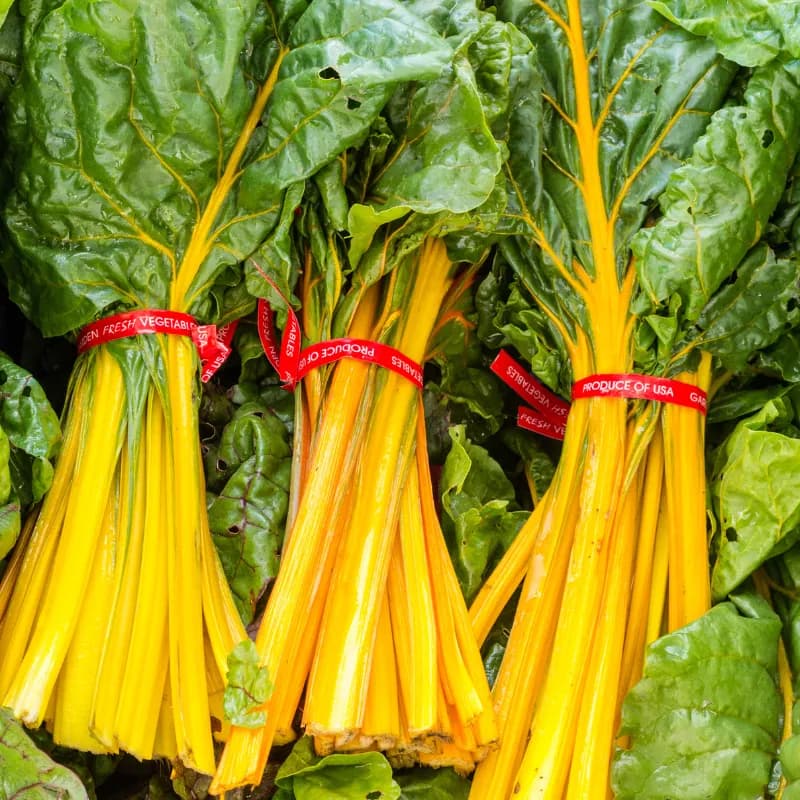
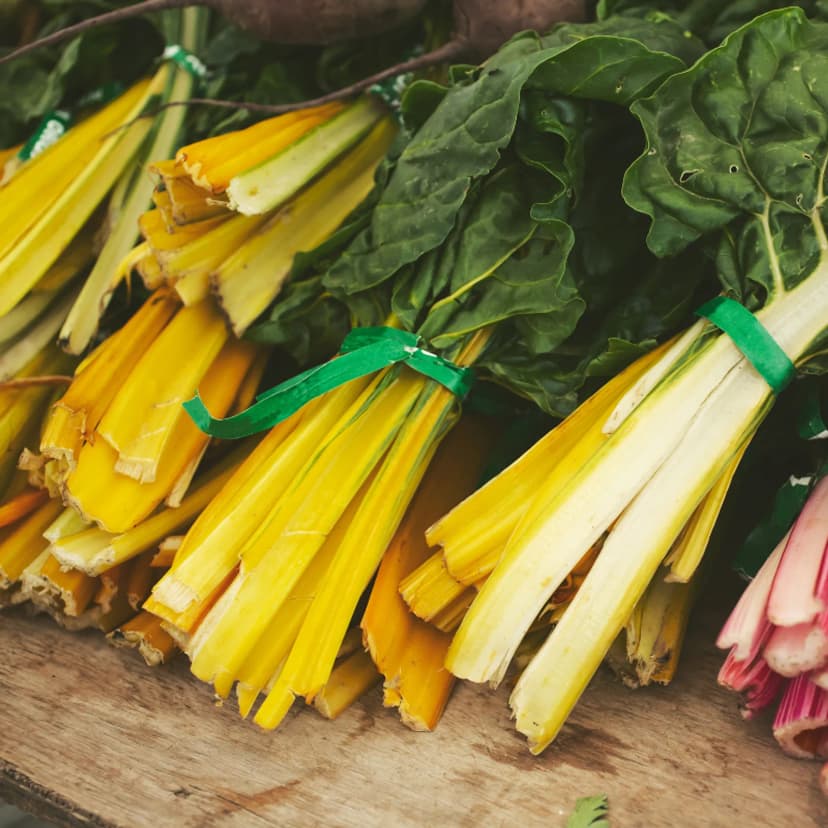
Yellow Swiss Chard has golden stems and green leaves; it is grown exactly like other chard and the stems add colour to stir-fries and salads.
Sow Yellow Swiss Chard for months of colourful leaves from one planting.
Chard seed is a cluster that contains several embryos. Thin to one seedling per spot when plants are about 5 cm (2 in) tall, cutting the extras rather than pulling them.
It is optional. Soaking the clusters in warm water for up to 24 hours helps them take up water and can make germination quicker and more even, especially in dry soil.
Chard grows best at or below about 24 °C (75 °F); growth and leaf quality fall in high heat, and soil above about 27 °C (80 °F) reduces germination. Sow in the cooler months in the plains or give light shade and steady water.


