Seed preparation
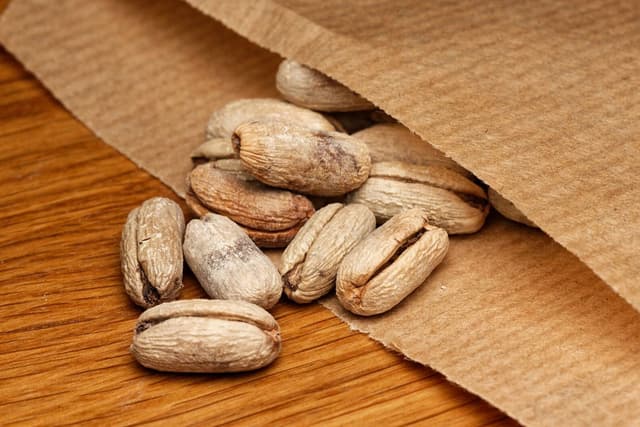
Wash every trace of fruit flesh off the seed; sugary pulp moulds quickly. Use plump, undamaged seeds from ripe fruit; the Bangladesh trial used seed from imported eating dates.
Palm growing guide
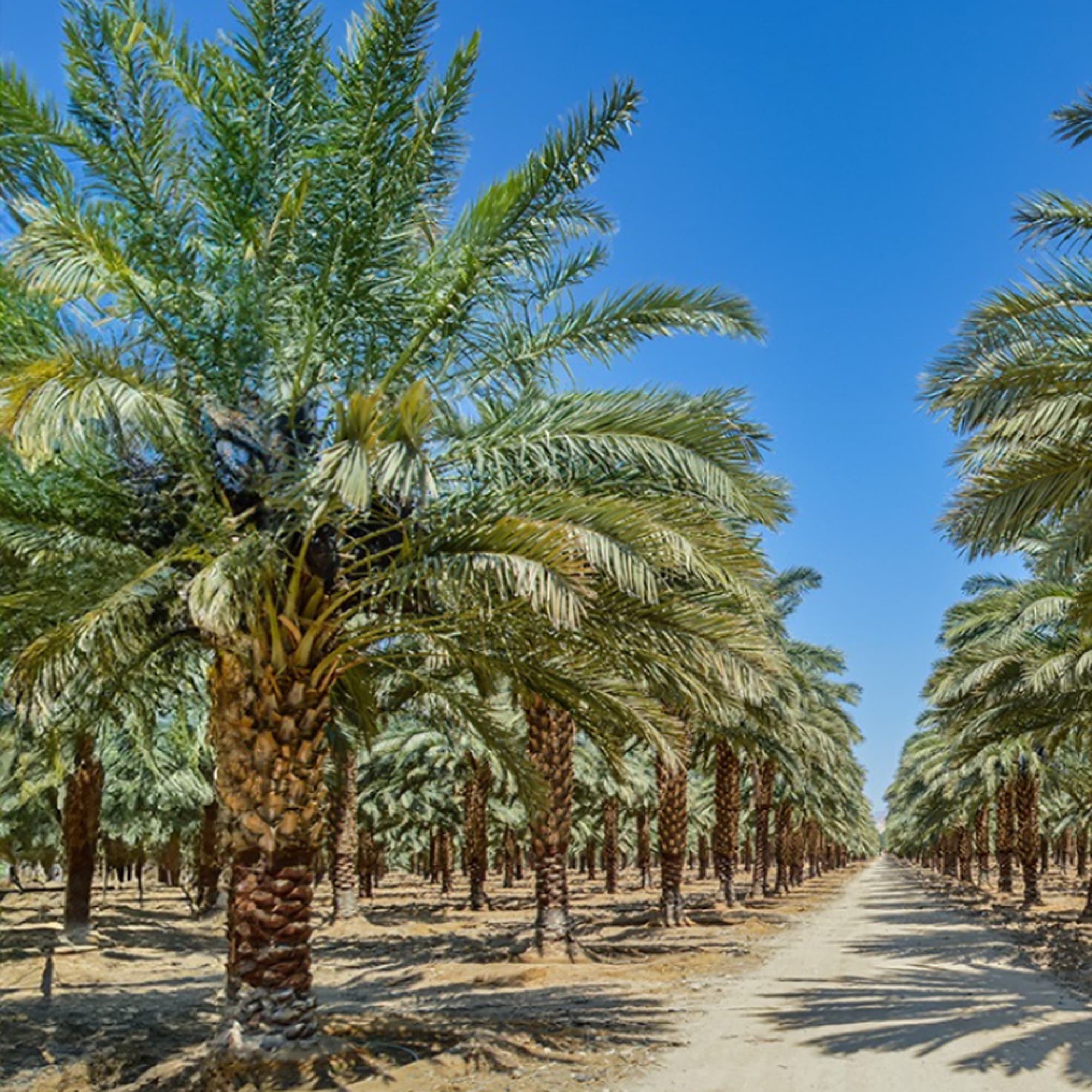
Date seeds sprout readily in warm weather and make an attractive, heat- and drought-tolerant palm. This guide covers soaking, deep pots, the slow first years and what to expect from seedling fruit.
Wash every trace of fruit flesh off the seed; sugary pulp moulds quickly. Use plump, undamaged seeds from ripe fruit; the Bangladesh trial used seed from imported eating dates.
Not needed. Soaked, un-nicked seed reached 84% germination in the Bangladesh trial.
Not needed. Date palm is a hot-climate tree with no chilling requirement.
Recommended. In a Bangladesh trial a 12-hour soak in room-temperature or sun-warmed water raised germination to 84%, against 68% for unsoaked seed, while hot water at 50 °C (122 °F) gave no gain. A Sudanese nursery study found a 6-day soak best, with longer soaks reducing germination. A soak of 12 hours to a few days, changing the water daily, is a safe middle course.
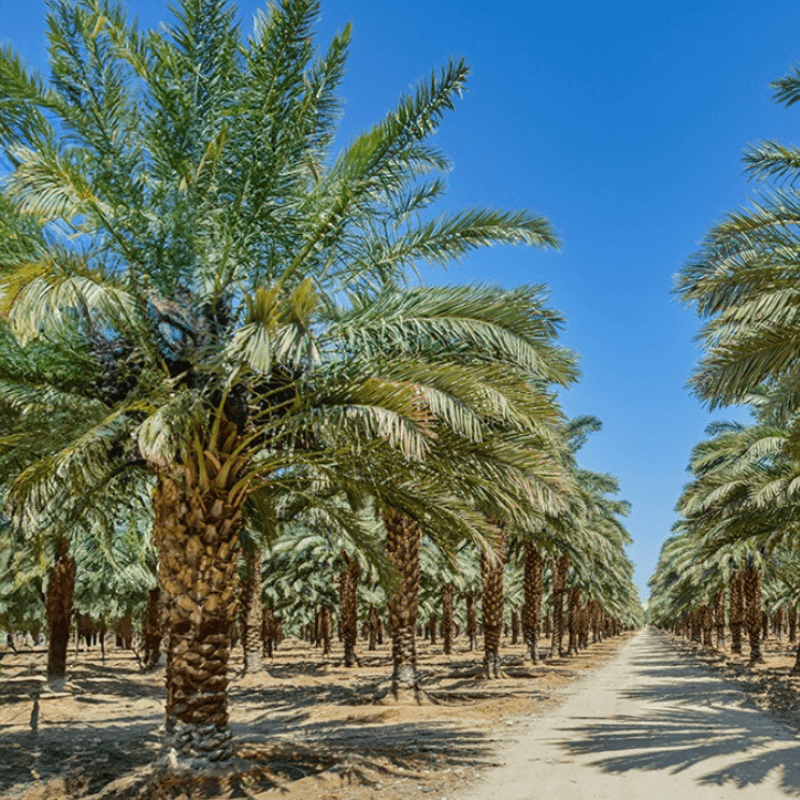
UF/IFAS gives 21-38 °C (70-100 °F) for palm seed, with 29-35 °C (85-95 °F) probably best. The Bangladesh trial germinated well at air temperatures of 18-27 °C (64-81 °F), so the Indian pre-monsoon and monsoon months suit sowing outdoors. FAO notes that date palm stops growing below 7 °C (45 °F), so in cool countries sow indoors with bottom heat.
0.5-1.5 cm (1/4-1/2 in), one seed per container.
Sandy and free-draining. In Bangladesh coarse sand or 3 parts coarse to 1 part fine sand did best (84% and 81%), loamy soil worst (68%); in Sudan a 2:1 sand:clay mix was best. A sandy potting mix works well.
Keep evenly moist; the trial watered once a day. Water must never stand on the surface.
No light needed for germination; move pots into sun as soon as the first leaf shows.
First seedlings at 21-26 days and germination complete by 38-40 days in the Bangladesh trial. Date palm germinates remotely: a root-like stalk first grows deep into the soil and the leaf appears from below, so the pot must be deep.
Use deep pots or tall bags from the start so the deep germination stalk is not cramped. Move seedlings on once 1-2 leaves have formed, keeping the same planting depth: UF/IFAS warns that planting palms even about 1.3 cm (1/2 in) too deep can kill them.
Grow on in full sun with deep watering, and plant out in the ground in warm weather once the palm has several leaves.
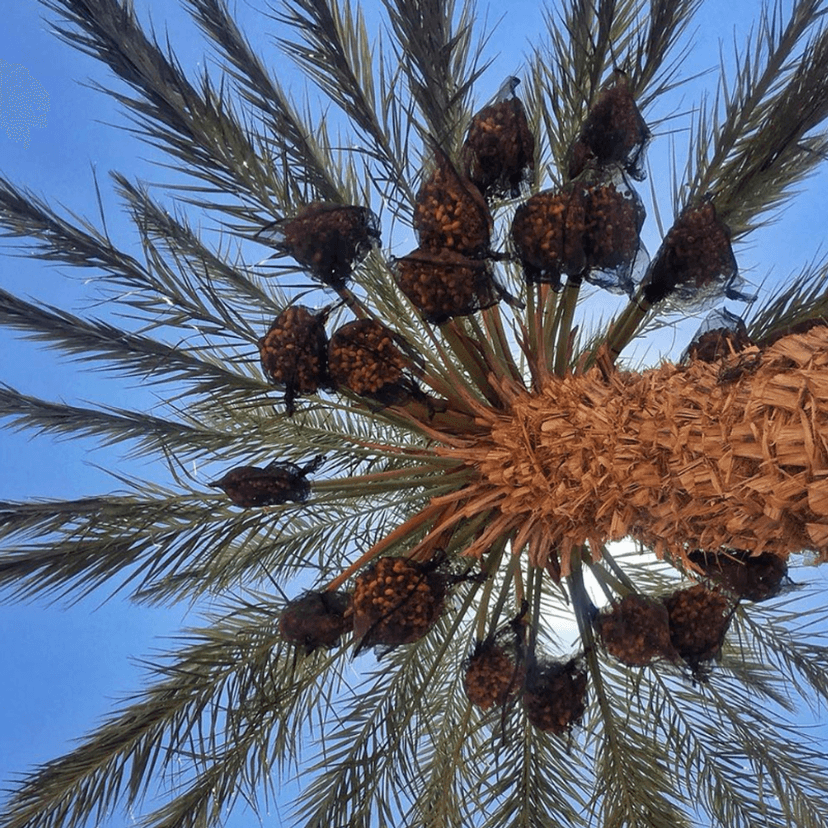
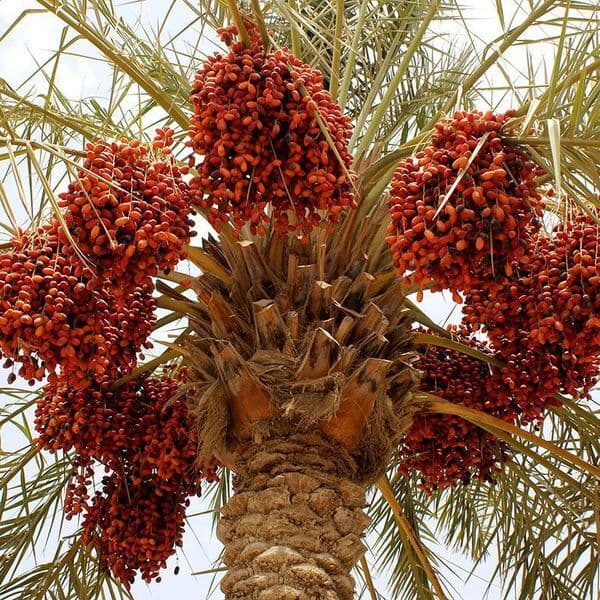
FAO notes that a seedling's sex and fruit quality are known only at flowering, often seven years after sowing, and seldom more than 10% of seedlings bear fruit of good quality. Enjoy seed-grown dates as ornamental palms; named varieties are propagated from offshoots.
Growth is best at around 32 °C (90 °F) and slows above 38-40 °C (100-104 °F). Water deeply and regularly in summer; date palm needs a copious water supply but grows better in fresh rather than salty soil and water.
Never cut the growing point or take green leaves for shape.
Suckers at the base of a good female palm can be separated later; they bear 2-3 years earlier than seedlings and fruit like their mother.
Sow date seeds in warm weather in deep pots for a hardy, sun-loving palm.
Often yes: the Bangladesh germination trial used seed from imported eating dates. Clean it, soak it and sow it in a deep pot in warm conditions. The palm will not be the same variety as the fruit.
Usually around seven years before it flowers, and only female palms with a male nearby produce dates. Fruit quality from seedlings is unpredictable.
It will grow well, but rain and humidity during ripening crack and spoil the fruit. Dates crop best in hot, dry regions with irrigation.
Phoenix canariensis and the Indian wild date Phoenix sylvestris are close relatives grown mainly as ornamental palms. They have their own guide.