Washingtonia robusta Seeds plant

Palm growing guide

How to grow Mexican fan palm from seedWashingtonia robusta

Mexican fan palm is one of the fastest and easiest palms to raise from seed, often sprouting in about two weeks in warm conditions. This guide covers sowing, the remote germination habit, potting on and the mature height to plan for.

29-35 °C
Germination temp.
≈ 2 weeks
Germination
6-13 mm
Sowing depth

At a glance

Germination temperature
Warm: 29-35 °C (85-95 °F) gives the fastest results.
Sowing depth
6-13 mm (1/4-1/2 in), or about the thickness of the seed.
Germination time
About 2 weeks for fresh seed in warmth; up to 4-15 weeks in cooler conditions.
Light
Not needed to germinate; seedlings like partial shade at first, then full sun.
Pre-treatment
None needed for fresh, cleaned seed; a short soak is optional.
Transplant or direct sow
Sow in pots or a seedbed; pot on when the second leaf appears.

Seed preparation

Seed preparation

Remove the thin dark pulp: the USDA Woody Plant Seed Manual reports germination-inhibiting substances in the dry fruit coat of Washingtonia. Rub the fruits in water, rinse and sow the clean seed promptly; do not let it dry out completely.
Scarification

Not needed. The seed coat is thin and takes up water easily.

Stratification

Not needed. Fresh seed of the related California fan palm germinated 80-100% without any pretreatment. Chilling at 5 °C (41 °F) for 12 weeks only shortened the time to full germination of stored seed.

Soaking

Optional. A short soak in water, changed daily (UF/IFAS gives 1-7 days for palm seed in general), softens remaining pulp and evens out germination. Sow directly afterwards.

Washingtonia robusta Seeds

Germination conditions

Germination temperature

UF/IFAS reports that Mexican fan palm seed germinates within about two weeks at 29-35 °C (85-95 °F). Use bottom heat in cooler seasons or where nights turn cold. In most of India, seed sown from spring to the monsoon germinates without extra heat.

Sowing depth

Cover with 6-13 mm (1/4-1/2 in) of mix, or a depth equal to the thickness of the seed, as given in the USDA manual.

Growing medium

Peat moss and sand, or clean sand alone, are the usual mixes in the USDA account. A free-draining coir and perlite mix also works. Use deep pots rather than shallow trays, because the root goes straight down.

Moisture

Keep evenly moist. UF/IFAS stresses uniform moisture; never let the pot dry out or stand in water.

Light

No light needed for germination. Move the pots into bright, filtered light as soon as shoots show.

Germination time

About 2 weeks at 29-35 °C (85-95 °F). For the related California fan palm, the USDA manual gives 4-15 weeks for fresh seed under nursery conditions, so cooler sowings take longer.

Transplanting and first growth

  1. Let the root go deep

    Mexican fan palm germinates remotely: a stalk grows down from the seed and the first leaf and root come from its tip below the surface. Leave the seed attached.

  2. Transplanting

    Pot seedlings individually when the elongated second leaf appears, as the USDA manual recommends, using soil enriched with leaf mould or compost. Keep the root-stem junction at soil level.

  3. First growth stage

    Grow young plants in partial shade and then remove the shade gradually to harden them to sun and heat. Feed lightly from about two months after germination with a palm fertilizer containing potassium.

Washingtonia robusta Seeds

Common problems

ProblemSeed slow or patchy to sprout
Cause
Cool soil, or dry pulp still on the seed.
What to do
Clean the seed fully and give bottom heat of 29-35 °C (85-95 °F).
ProblemSeedlings collapse with a rotting spear leaf
Cause
Phytophthora bud rot, which UF/IFAS notes mainly affects young palms in nurseries.
What to do
Avoid overhead watering in the evening, improve drainage and remove affected seedlings.
ProblemOlder leaves with dead tips and yellow-orange patches
Cause
Potassium deficiency, which UF/IFAS calls nearly universal in this palm.
What to do
Use a palm fertilizer with potassium and magnesium, and do not cut off the discoloured old leaves, which still supply potassium.
ProblemSmall, crumpled new leaves
Cause
Boron deficiency.
What to do
Apply a palm fertilizer that includes micronutrients, at the label rate.

Practical growing tips

Plan for height

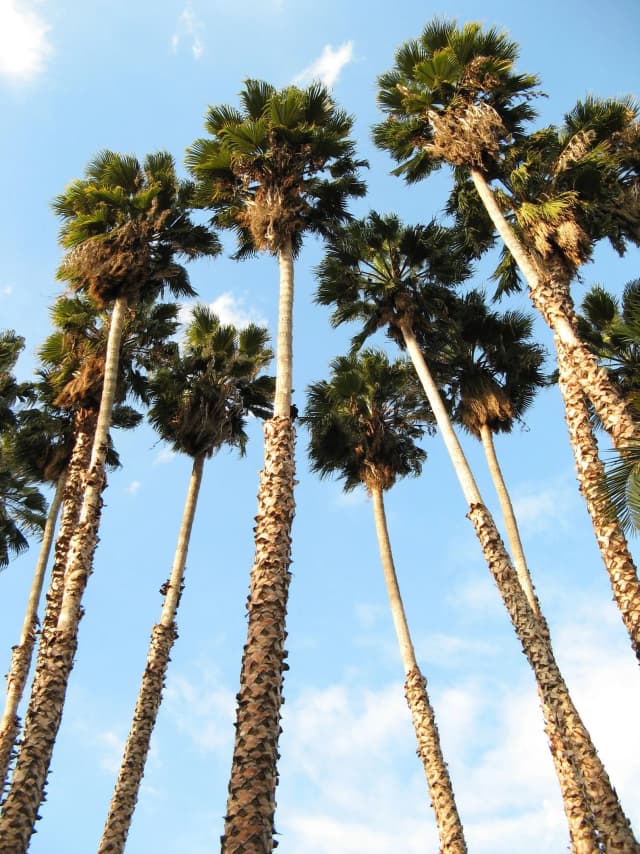
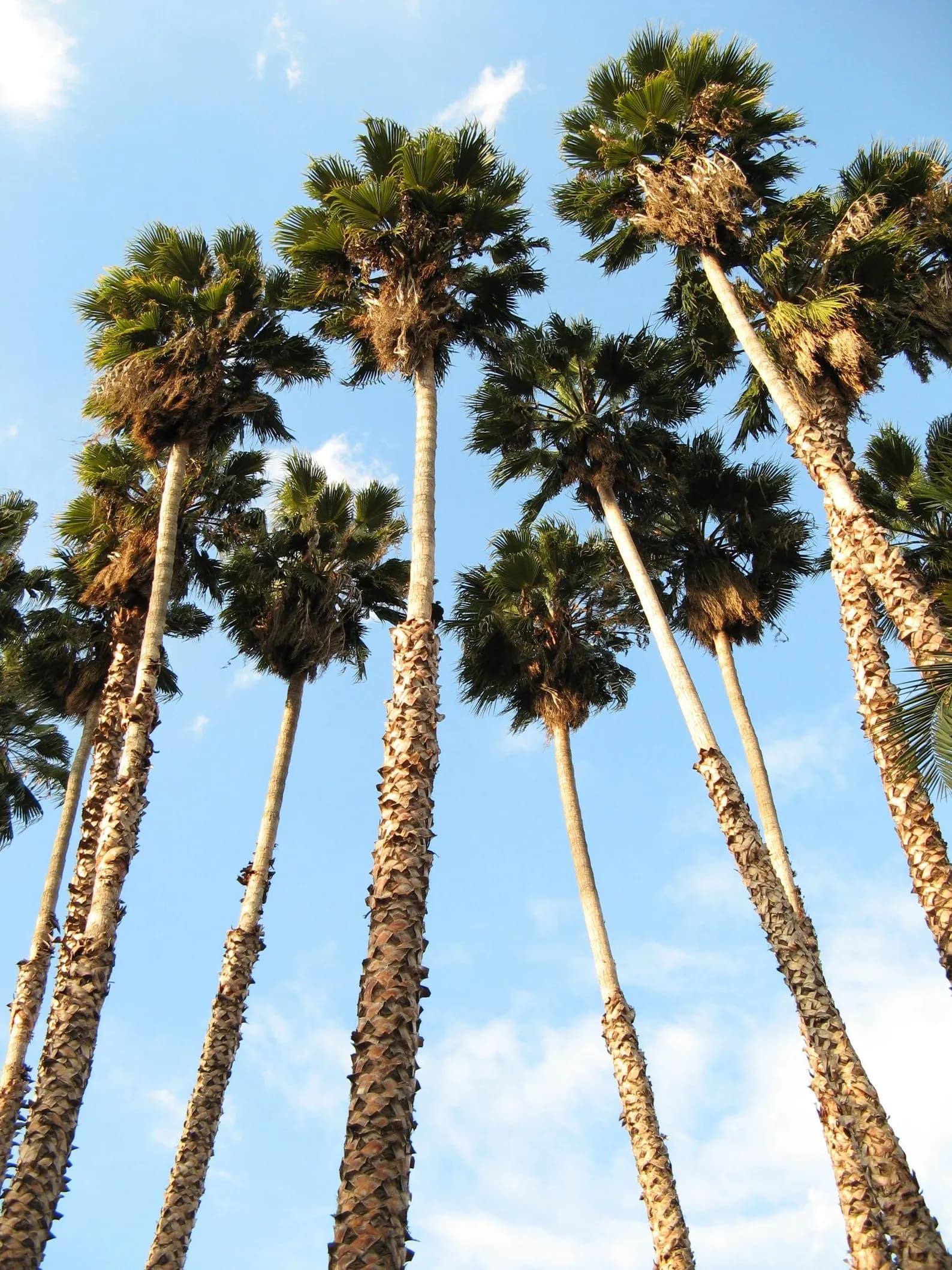
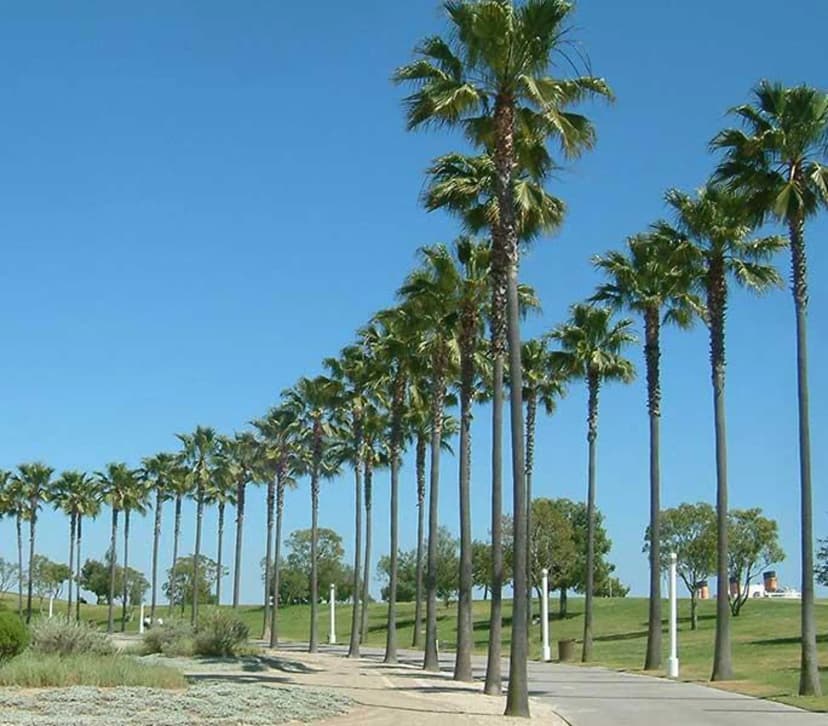
UF/IFAS gives a mature height of 21-30 m (70-100 ft) and calls it fast-growing. Do not plant it under power lines or close to a house.

Give it water and drainage

Although seen as a desert palm, it grows naturally near permanent water and has limited drought tolerance. Water regularly in dry seasons but plant in well-drained soil.

Know the cold limit

It is hardy to about -7 °C (20 °F). Young pot-grown plants are more tender and should be sheltered in hard frost.

Avoid trunk wounds

Lethal trunk rots enter through wounds, so avoid climbing spikes and pulling off green lower leaves.

Mexican fan palm seeds from Deodar

Sow Washingtonia seed in warm weather for a fast-growing fan palm that sprouts within weeks.

Frequently asked questions

How long does Washingtonia seed take to germinate?

Fresh seed of Mexican fan palm usually sprouts in about two weeks at 29-35 °C (85-95 °F). Cooler sowings can take a few months.

What is the difference between Washingtonia robusta and Washingtonia filifera?

Mexican fan palm (robusta) is taller and slimmer, with a narrow trunk; California fan palm (filifera) is shorter and stouter. They hybridize readily, and some botanists treat robusta as a variety of filifera.

Can I grow Mexican fan palm in a pot?

Yes, for several years. It grows fast, so move it to the ground or a large container once roots fill the pot.

Is it suitable for Indian gardens?

Yes. It tolerates heat and grows quickly in warm climates. Give it sun, regular water in the dry season and space for its eventual height.