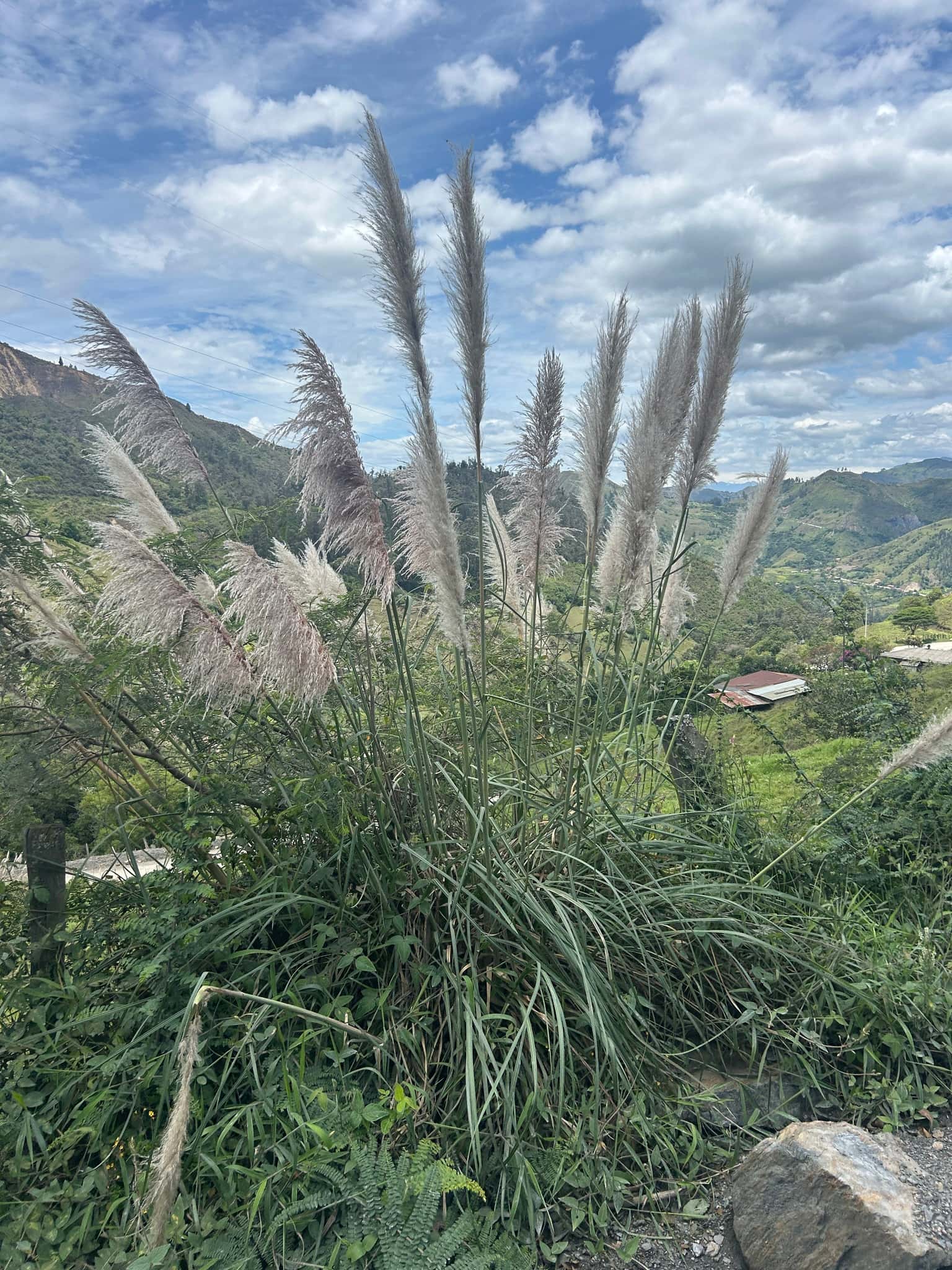
About this variety
Cortaderia nitida is a perennial tussock grass of the high Andes, recorded at about 2,500–4,000 m, with culms 1–2 m tall and open, feathery flowering panicles. Its native range runs from Costa Rica to Peru, and it is a different species from the garden pampas grass.
Also known as: Sigse, Sigse de páramo, Cortadera, Cortadero, Carrizo, Rabo de zorro, Pajita del Niño Dios (Colombia), Andean pampas grass; scientific synonyms Gynerium nitidum and Cortaderia sodiroana.
What it looks like
The leaf blades are 20–40 cm long and 3–6 mm wide, with rough margins and inrolled edges. The open, ovate panicle is 20–30 cm long and 10–12 cm wide, with pale, glossy spikelets. Large tussocks of this species are reported up to 2.3 m.
Sowing
- Sow the fine seed thinly on moist, free-draining seed compost.
- Press it onto the surface and cover only very lightly.
- Keep the tray bright, evenly moist and ventilated; avoid standing water and severe drying.
- Pot seedlings on carefully, and acclimatise young plants gradually before the final position.
We hold no sourced germination temperature, emergence time or sowing depth for this species and do not state one.
Site and handling
Choose an open, well-lit site with free drainage. Because the species comes from high elevations, protect young plants from abrupt heat, hard frost and prolonged waterlogging while they establish. The leaf margins of Cortaderia grasses can be sharp, so wear gloves when cutting back old foliage.
FAQ
Is it the same as pampas grass?
No. The common garden pampas grass is Cortaderia selloana. Cortaderia nitida is a separate Andean species with inrolled leaf margins and 5–7-veined lemmas that are hairy in both sexes.
Will every seedling look the same?
No. Seed-grown plants vary in size, plume colour and habit. Most Cortaderia species outside the pampas-grass group are dioecious, so this one most likely has separate male and female plants.