
Seed preparation
Gazania seed carries a tuft of fine hairs. Sow it as it is, one seed per cell or spaced thinly on the tray, and press it gently into contact with the moist compost.
Flower growing guide
Gazania seed germinates quickly in warm compost and the plants love sun, heat and dry soil, but not wet roots. This guide covers sowing, the light-versus-darkness question and how to keep plants flowering.
Gazania seed carries a tuft of fine hairs. Sow it as it is, one seed per cell or spaced thinly on the tray, and press it gently into contact with the moist compost.
Not needed. Fresh seed takes up water readily.
Not needed. In seed research gazania germinated at over 90% without any cold treatment.
Not needed. Gazania prefers slightly drier conditions than most seedlings, and soaked hairy seed is hard to sow evenly.
Seed breeders recommend 21-23 °C (70-73 °F) until roots emerge, then about 20-21 °C (68-70 °F). The seed is not fussy: in a 2025 study of naturalised gazania in Australia, germination was 89-95% at day/night regimes from 15/5 °C to 35/25 °C, highest in the cool range.
Give only a thin cover of medium vermiculite or sieved compost to keep moisture around the seed. Depth matters: in the same study emergence fell steeply with burial, halving at about 1.6 cm (5/8 in) in soil, and no seedlings came up from 6 cm (2 1/3 in).
A light, free-draining seed compost. In that study seedlings emerged far better in potting mix or sand than in heavy field soil.
Start wet, then let the compost dry back to just moist after a few days. Gazania needs slightly drier conditions than most bedding plants during and after germination.
Gazania is often described as needing darkness, but research and breeders' notes do not support a strict requirement: germination was the same in light and in complete darkness (above 90%), and breeders state that light is not necessary. A light cover is still the standard method because it keeps the seed moist; once seedlings appear give them good light so they do not stretch.
In warm trays roots appear in 4-6 days. In cooler or less even conditions germination can continue for up to about two weeks.
Seedlings in small cells are ready in about 5-6 weeks. Grow them cooler, about 16 °C (61 °F), for a week before transplanting to toughen them, then plant out in full sun after any frost.
After transplanting keep plants moderately cool and bright at first, and let the soil dry slightly between waterings. Warmth combined with low light makes soft, stretched plants.

Gazania tolerates heat and drought but dislikes prolonged wet and humid weather, so in most Indian plains it does best sown after the monsoon for flowering through the dry, cool months. In hill areas sow in spring.
Give full sun and sandy to average, well-drained soil; gazania tolerates poor soil and does not need rich feeding.
Remove faded flowers regularly to keep new buds coming.
Gazania is a tender perennial grown as an annual. It suits containers and edging, and potted plants or rooted cuttings of a favourite colour can be kept through a cold winter indoors in a bright spot.
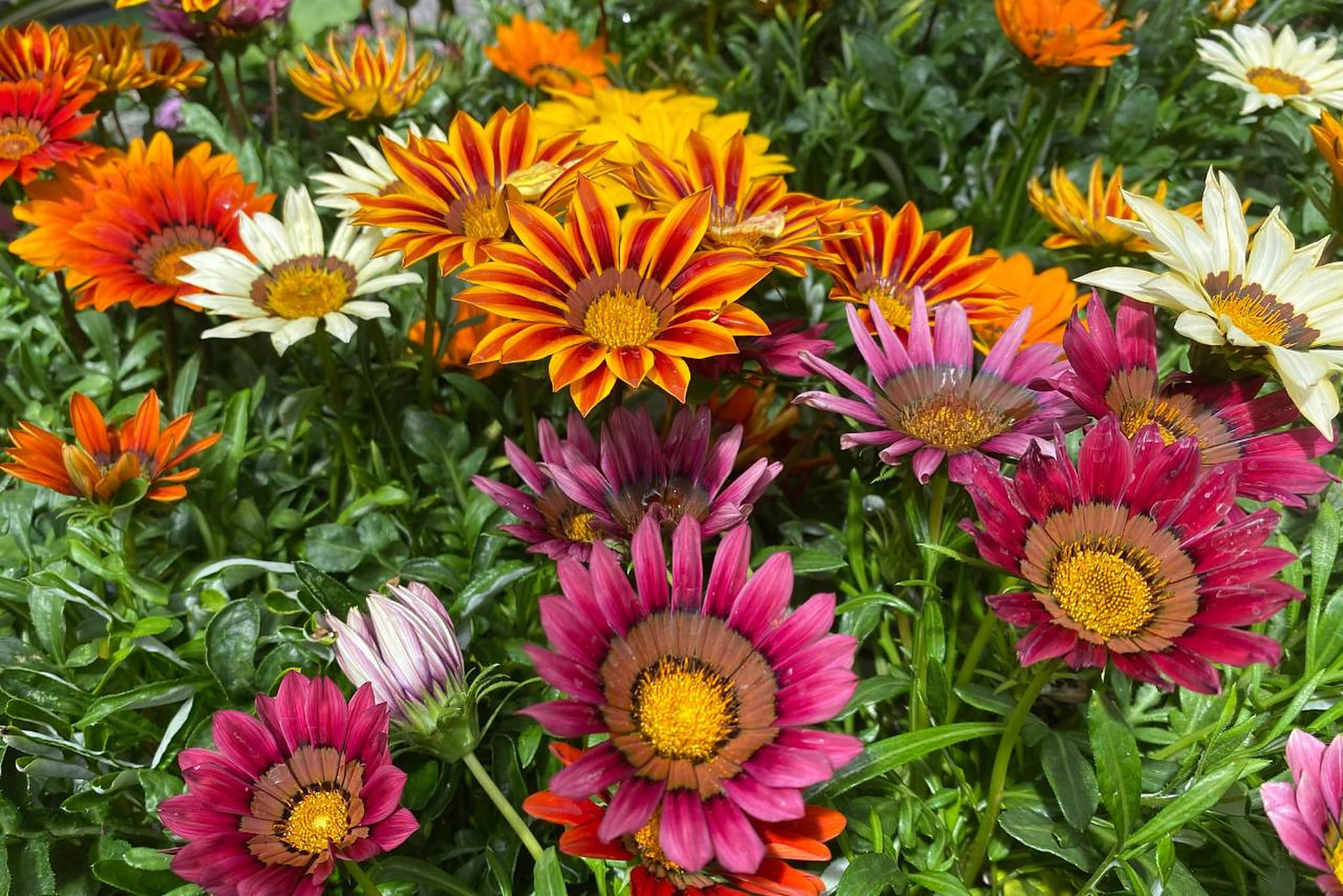
Sow gazania for sun-loving, drought-tolerant colour in beds, borders and pots.
Not strictly. Germination tests found the same high germination in light and in darkness, and seed breeders say light is not necessary. Give the seed a thin cover of vermiculite to keep it moist, but do not bury it deeply.
In warm trays at 21-23 °C (70-73 °F) roots appear in 4-6 days, and most seed is up within about two weeks.
Gazania flowers close at night and in cloudy weather or shade. Grow plants in full sun and they open during bright days.
