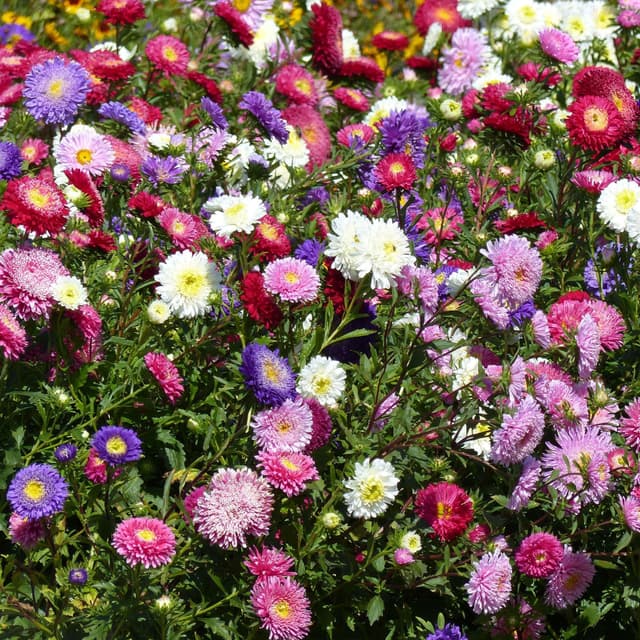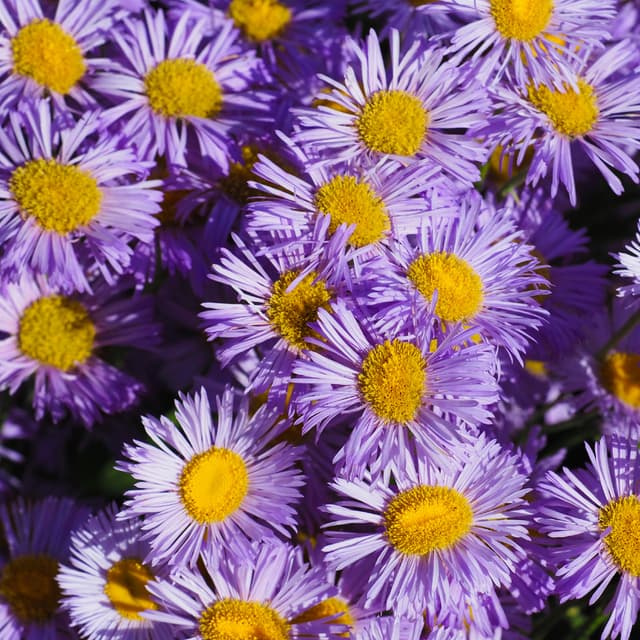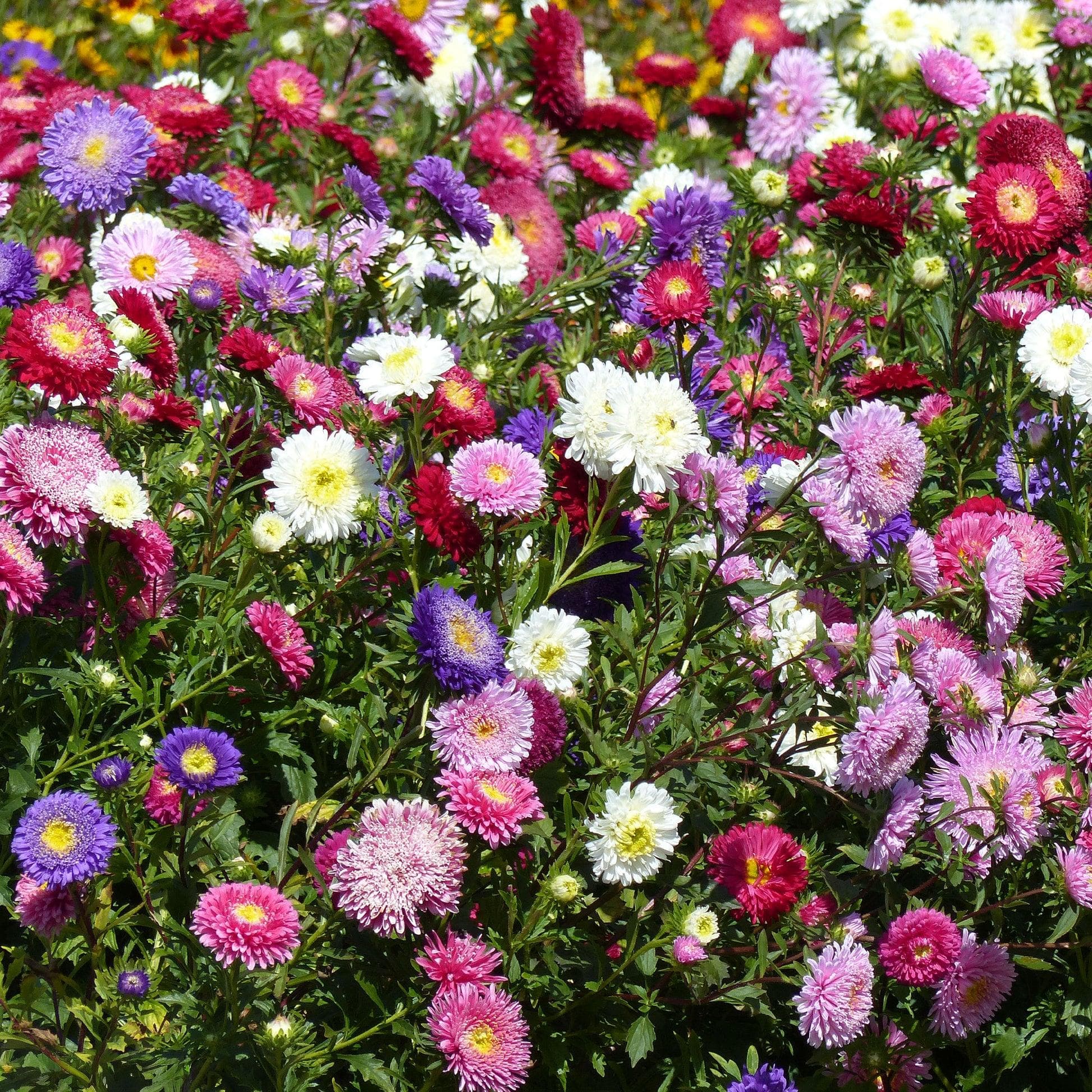
Aster Mix Seeds plant

Flower growing guide

How to grow China aster from seedCallistephus chinensis

China aster is a quick annual for cutting, raised from seed in about three months. Its one serious weakness is a seed-borne wilt that lives in the soil for years, so fresh seed and a new bed every year matter more than any feed.

16-21 °C
Germination temp.
7-10 days
Germination

At a glance

Germination temperature
16-21 °C (61-70 °F).
Sowing depth
Sow thinly and cover lightly.
Germination time
7-10 days.
Light
Light covering only; full sun for growing.
Pre-treatment
None; use seed that is fresh and stored cool.
Transplant or direct sow
Raised in a nursery or trays and transplanted about a month after sowing.

Seed preparation

Seed preparation

Seed age matters. In an ICAR-IIHR storage trial at Bengaluru, normally dried China aster seed kept at room temperature started losing viability after 18 months and none germinated after 36 months, while the same seed kept at 15 °C (59 °F) held its germination for four years. Sow the freshest seed you have and keep the rest dry and cool.


Scarification

Not needed. The seed takes up water readily.

Stratification

Not needed. China aster is an annual with no cold requirement.

Soaking

Not needed. Sow dry seed into moist compost.

Aster Mix Seeds

Germination conditions

Germination temperature

The RHS sows at 16 °C (61 °F); Iowa State gives 21 °C (70 °F). Do not overheat the seedbed: where the aster Fusarium fungus is present, it kills seedlings as damping-off at soil temperatures of 24-27 °C (75-80 °F).

Sowing depth

Sow thinly and cover lightly with fine compost or well-rotted, sieved manure; do not bury the seed deeply.

Growing medium

A fresh, sterile seed mix in trays, or a raised nursery bed of clean soil that has not grown asters before. Never use soil where asters wilted.

Moisture

Water right after sowing and keep evenly moist, not soggy; heavy, waterlogged soil invites Pythium and Phytophthora root rot.

Light

Seed needs only a light covering. Move trays into bright light as soon as seedlings appear.

Germination time

7-10 days. Seedlings reach transplant size, three to four true leaves, about a month after sowing in a warm nursery and in 6-8 weeks in cool conditions.

Transplanting and first growth

  1. Transplanting

    Transplant at the three-to-four-leaf stage: about a month after sowing in a warm nursery, or after 6-8 weeks in trays in a cool climate. In temperate gardens wait until frost is over: China aster tolerates about 1-5 °C (34-41 °F) but not freezing.

  2. Spacing

    ICAR-IIHR spaces plants 30 cm (12 in) apart in rows 45 cm (18 in) apart; the Banda winter trial used 30 x 30 cm. The wider rows keep air moving through the bed.

  3. First growth stage

    Keep weeds down for the first month and stake tall cutting varieties early; garden plants grow 20-70 cm (8-28 in) tall. A crop transplanted in August starts flowering in about two months.

Aster Mix Seeds

Common problems

ProblemPlants yellow and wilt, often on one side
Cause
Fusarium wilt (Fusarium oxysporum f. sp. callistephi), carried on seed and surviving in soil for years. Check by slitting the lower stem: brown streaks in the water-conducting tissue confirm it.
What to do
Pull and destroy affected plants, never compost them, and do not grow asters in that bed again for several years; UC IPM advises infested land only once in five years. Start again with clean seed.
ProblemUpright yellow shoots, flowers stay green and deformed
Cause
Aster yellows, a phytoplasma spread by leafhoppers.
What to do
Remove affected plants at once and keep weeds, where leafhoppers breed, away from the seedbed.
ProblemBrown, water-soaked rot with grey fuzz on flowers
Cause
Grey mould (Botrytis), worst in cool, wet weather.
What to do
Water at the base, not overhead, and pick off spent flowers.
ProblemBrown spots on lower leaves after long wet spells
Cause
Stemphylium leaf spot, which needs about 48 hours of leaf wetness.
What to do
Avoid overhead watering and low, still sites.
ProblemSeedlings collapse at soil level
Cause
Damping-off from Pythium, Rhizoctonia or Fusarium in wet or warm, reused compost.
What to do
Sow in fresh mix, water moderately and do not overheat the seedbed.

Practical growing tips

Seasons in India

China aster is grown both in kharif and in rabi. ICAR-IIHR describes a kharif crop transplanted in August that was cut from October, in time for Dussehra and Diwali, after about three months. In the north Indian plains a 2022-23 trial at Banda found transplanting in the third week of November gave the most flowers, and a Karnataka study cited there found November best.

Rotate every year

Plant China aster in a different spot each year, and destroy wilted plants rather than composting them. Clean ground and clean seed are the defence against wilt, because the fungus survives in soil for years.

Sun and soil

Full sun and fertile, moist but well-drained soil near neutral pH. A sheltered spot keeps tall, heavy-headed stems upright.

Cutting and deadheading

Cut flowers when they open for vases and deadhead garden plants to prolong flowering.

China aster seeds from Deodar

Sow a mix of China asters for a colourful cutting bed in about three months.

Frequently asked questions

Why do my China asters suddenly wilt and die?

Almost always Fusarium wilt. It is carried on seed, persists in the soil for years and blocks the stem's water vessels; slit a stem and look for brown streaks. Remove the plants and move asters to a bed where they have not grown before.

Can I use China aster seed from previous years?

Only if it was stored cool. In an ICAR-IIHR trial, seed at room temperature began to decline after 18 months and was dead by 36 months, but seed kept at 15 °C still germinated well after four years.

When should I sow China aster in India?

Sow in a nursery about a month before transplanting. ICAR-IIHR describes a kharif crop transplanted in August for October flowers; in the north Indian plains, a trial found transplanting in mid to late November best for a winter crop.