
Seed preparation
Iowa State University counts 250,000-300,000 petunia seeds per ounce, roughly 9,000-10,500 per gram. Sow such fine seed thinly by tapping it from a folded card. Pelleted (coated) seed is larger and easier to place one by one.
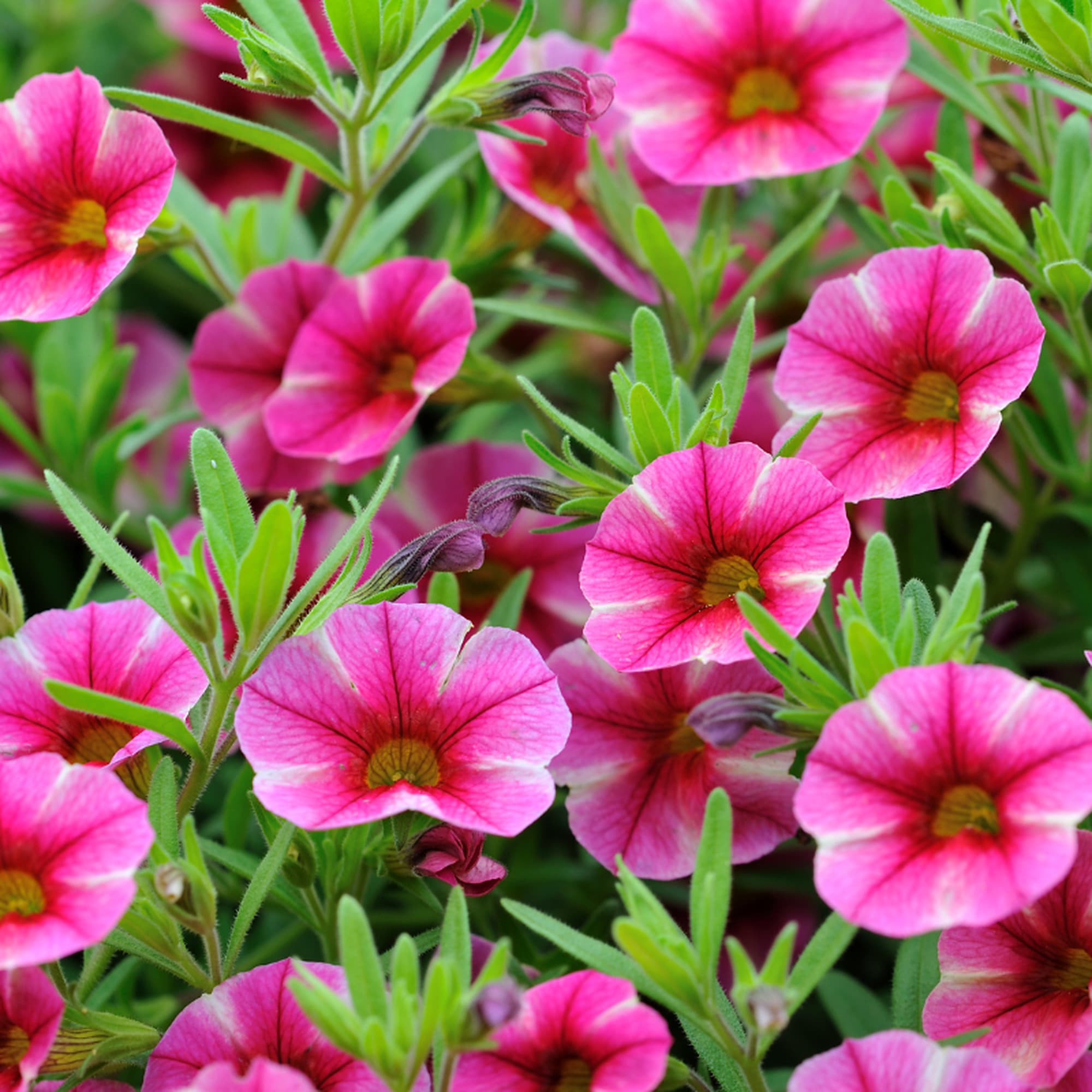
Flower growing guide
Petunia seed is as fine as dust and needs light to germinate, so it is sown on the surface, never buried. Raise seedlings in trays for about ten weeks, keep the potting mix slightly acidic, and plant out in full sun.
Iowa State University counts 250,000-300,000 petunia seeds per ounce, roughly 9,000-10,500 per gram. Sow such fine seed thinly by tapping it from a folded card. Pelleted (coated) seed is larger and easier to place one by one.
Not needed. The seed coat lets water in easily.
Not needed. Petunia germinates in warmth and has no cold requirement.
Not needed. Moisten the mix from below before sowing so the fine seed is not washed around.
Keep the tray at 24-27 °C (75-80 °F); the University of Minnesota gives a workable range of 21-29 °C (70-85 °F). As soon as seedlings appear, move them somewhere cooler, about 16-18 °C (60-65 °F), so they stay compact.
Scatter the seed on the surface of moist seed compost and press it in gently with a flat block. Do not cover it with compost or vermiculite: buried seed stays in the dark and fails.
A fine, sterile seed-starting mix or milled sphagnum moss, pressed level. Petunias take up iron poorly, so choose a mix that is slightly acidic, ideally pH 5.5-6.0.
Cover the tray with clear plastic or glass to hold humidity and water only from below until the seed has sprouted; overhead watering washes the seed into clumps.
Light is required for germination. Put the covered tray in bright light out of direct sun. After emergence give seedlings 12-16 hours of light; under lamps keep the tubes 10-15 cm (4-6 in) above the leaves.
7-10 days at 24-27 °C.
Move seedlings into cell packs or small pots when they have three true leaves. Let the mix dry slightly between waterings and feed with a dilute liquid fertiliser every two weeks if the mix has no slow-release feed.
Harden plants outdoors for a few days, then plant after frost risk has passed, when the soil is about 16 °C (60 °F). Space grandiflora and multiflora types about 30 cm (12 in) apart, compact milliflora types 10-15 cm (4-6 in), and spreading types at least 45 cm (18 in). Shade new plants from midday sun for the first few days in hot weather.
Pinch grandiflora and multiflora plants once when they are about 15 cm (6 in) tall to make them bushier; do not pinch milliflora or spreading types.
On the plains petunia is grown as a winter annual, sown in September-October so plants flower through the cool months. In the hills and in frost climates, sow indoors about ten weeks before the last frost.
Petunias are long-day plants. Under short winter days they branch well but stay compact and flower later, so allow the full 10-12 weeks from sowing before you expect a display.
Give at least 5-6 hours of direct sun; full sun is best. The soil need not be rich but must drain well; work in 5-8 cm (2-3 in) of compost or well-rotted manure before planting.
In beds, water thoroughly about once a week in normal weather; pots and hanging baskets may need water daily. Remove faded flowers together with the swelling seed pod below them so plants keep flowering.
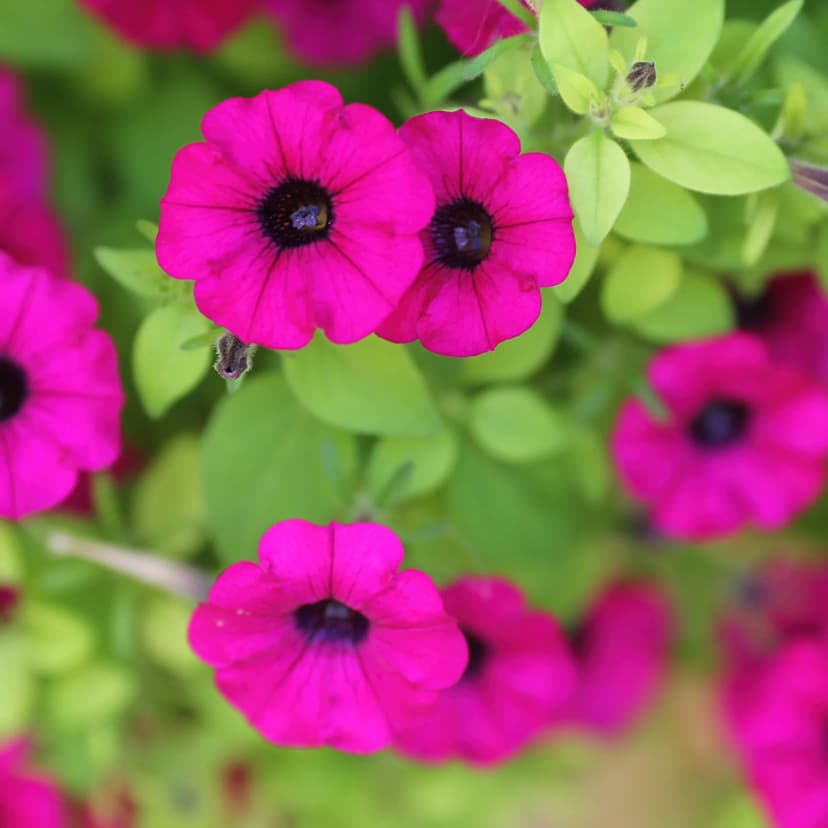
Choose compact dwarf petunias for edging and pots or rose-pink forms for a bright bed and baskets.
No. Petunia seed needs light to germinate. Press it onto the surface of moist mix, cover the tray with clear plastic and keep it at 24-27 °C; seedlings appear in 7-10 days.
Most often iron deficiency caused by a potting mix or irrigation water that is too alkaline. Petunias need a root-zone pH of about 5.5-6.0; check the pH, use an acid-forming fertiliser and give an iron chelate. Plants usually green up within days.
On the plains sow in September-October for winter and spring flowers. In the hills, or anywhere with frost, start seed indoors about ten weeks before the last frost and plant out once it has passed.

