

About this variety
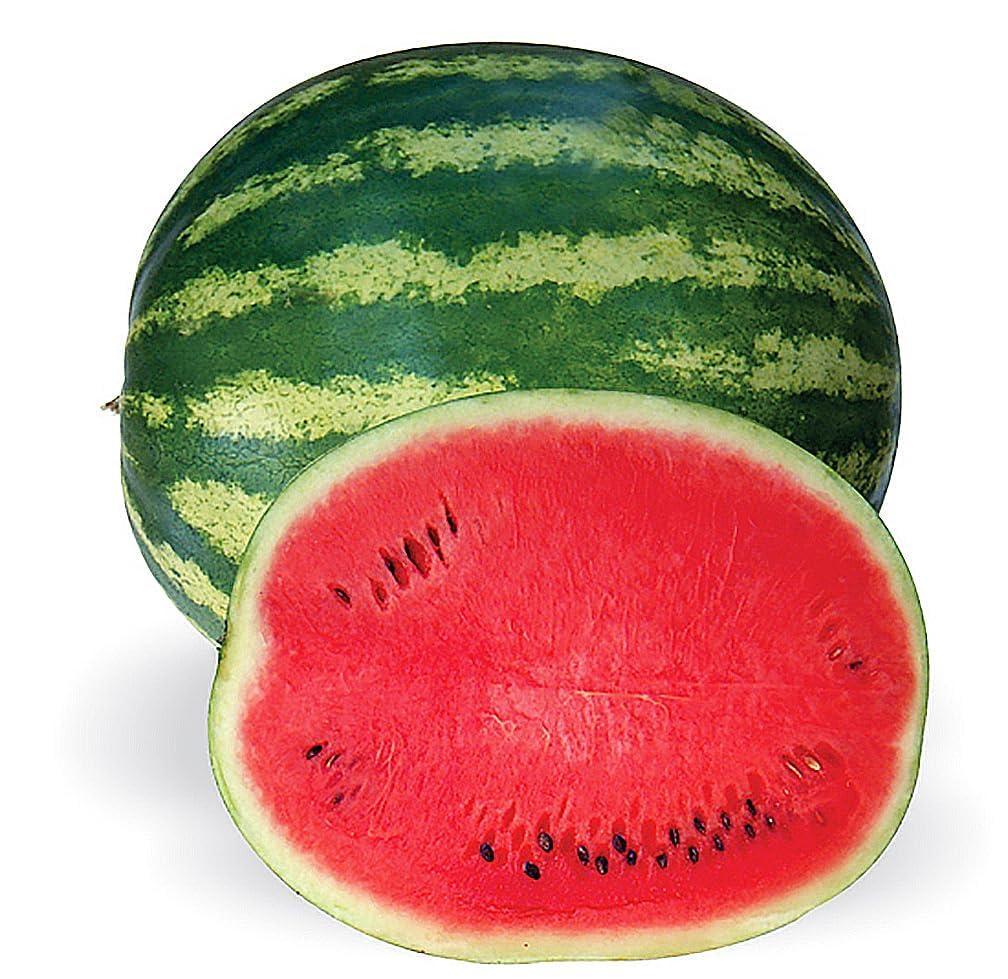
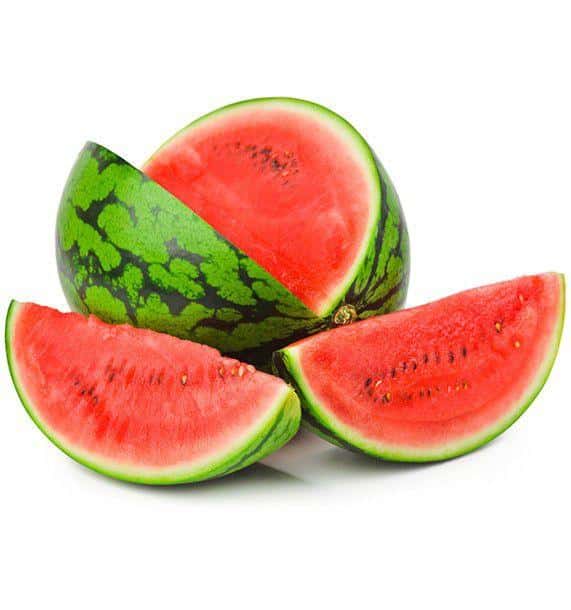
Crimson Sweet (Citrullus lanatus) is a vining watermelon with oval light-green fruit striped dark green and deep red flesh. Seed catalogues rate it resistant to Fusarium wilt and anthracnose and give roughly 80–97 days to maturity; it was bred at Kansas State University in 1964.
Also known as: Watermelon, Tarbooz (Hindi, Urdu), Sandía (Spanish), Pastèque (French), Wassermelone (German), Anguria and Cocomero (Italian), Melancia (Portuguese), Arbuz, Karpuz (Turkish); synonym Citrullus vulgaris.
Fruit and plant
- Habit: sprawling annual vine that needs room to spread.
- Fruit: oval, light-green rind with dark green stripes, dark red flesh.
- Size: seed companies list about 15–25 lb (7–11 kg).
- Resistance: Fusarium wilt (races 1 and 2) and anthracnose, as stated by seed catalogues. Resistance reduces the risk and does not make the crop immune.
Sowing: temperature, depth, spacing
- Soil temperature: the optimum range is about 21–35 °C (approximate, Oregon State University Extension).
- Emergence: about 3–5 days at roughly 25–35 °C, but about 12 days at 20 °C, so cold soil delays seedlings.
- Depth: 25–51 mm (1–2 in).
- Spacing: 3–4 ft (about 1 m) between plants in rows 6 ft apart.
These are species values for watermelon, not a test result for this lot.
Pollination and fruit set
Fruit needs bees or hand pollination. A fruit needs about a thousand pollen grains spread over the stigma, and too little pollen is thought to cause hollow heart, which is safe to eat.
Ripeness and seed storage
The fruit is ripe when the underside turns creamy yellow and the tendril closest to it dries. Reduce watering during ripening. Seed kept cool, dark and dry stays viable about 4 years (approximate, Purdue Extension).
FAQ
How many days until harvest?
Catalogues give 80–97 days. The count may start from sowing or from transplanting, so check which basis a source uses.
Why does the fruit have a hollow centre?
Hollow heart is linked to too little pollen on the stigma. Support pollinators or hand-pollinate.
Can I plant it in cool soil?
Wait for warm soil: emergence slows to about 12 days at 20 °C, and the optimum range starts at 21 °C.
Local names
Vandmelon, vesimeloni, Citrulle laineux, vannmelon, vassmelon, Citrulle laineux, Pastèque, Citrouille, Melon d'eau, vattenmelon, Water Melon, Watermelon, Tarbooz, Sandía, Pastèque.
Common names of Citrullus lanatus
All 44 names, languages and regions
Local names
| Denmark | |
|---|---|
| Danish | Vandmelon |
| Finland | |
| Finnish | vesimeloni |
| Mayotte | |
| French | Citrulle laineux |
| Norway | |
| Norwegian | vannmelon |
| Norwegian Nynorsk | vassmelon |
| Réunion | |
| French | Citrulle laineux, Pastèque, Citrouille, Melon d'eau |
| Sweden | |
| Swedish | vattenmelon |
| United Kingdom | |
| English | Water Melon |
| Other places | |
| Hindi, Urdu | Tarbooz |
| Spanish | Sandía, albudeca |
| French | Pastèque |
| German | Wassermelone, Dessert-Wassermelone |
| Italian | Anguria, Cocomero |
| Portuguese | Melancia, angúria |
| Turkish | Karpuz |
| English | bastard-melon, dessert watermelon, Wild Watermelon |
| Welsh | Melon Dŵr, Melonau Dŵr |
| Lithuanian | Tikrasis arbūzas |
| Dutch | Watermeloen |
| Estonian | harilik arbuus |
| Greek | karpouzia |
| Czech | lubenice obecná |
| Korean | subag |
| Japanese | suika |
| Chinese | xi gua |
| Simplified Chinese | 西瓜 (xigua) |
| Asturian | melonar d'agua |
| Slovenian | lubenica |
| Watermelon, Arbuz, synonym Citrullus vulgaris, Dessert-Wassermelone (DE), Melon d'eau (FR), Patia, Watermelon (EN), subag, suika, wild melon, xi gua, 수박 (subak) | |