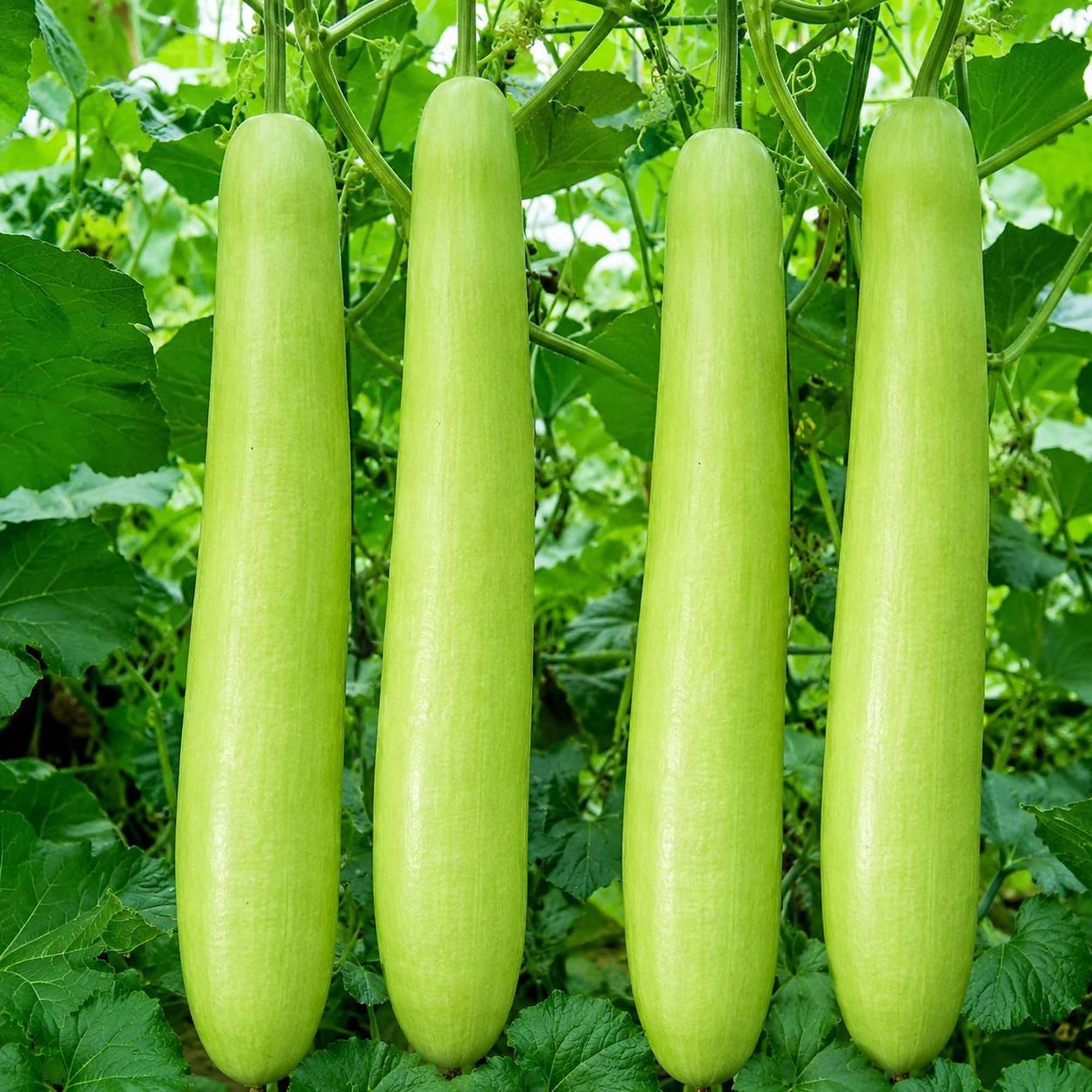


About this variety
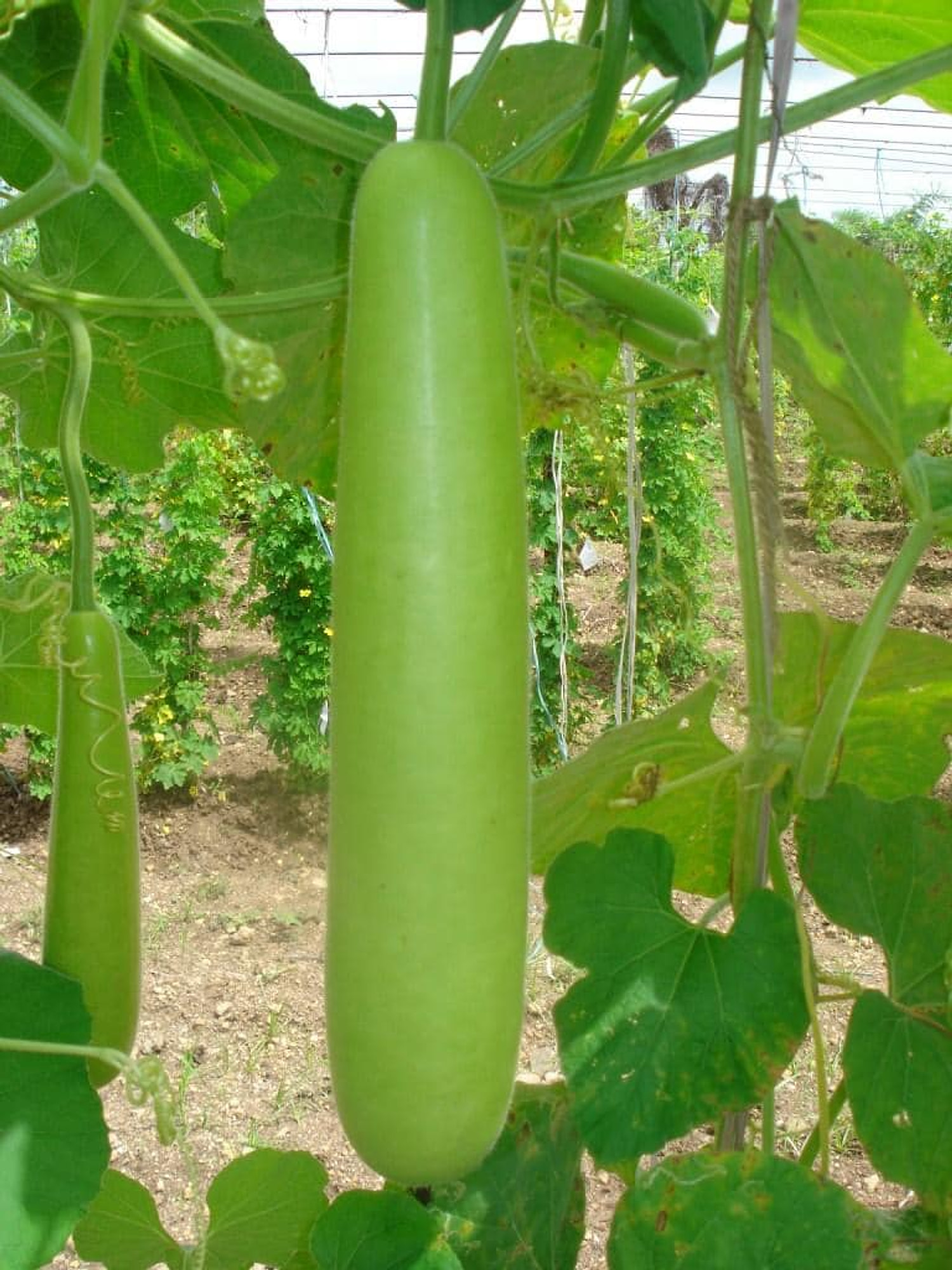
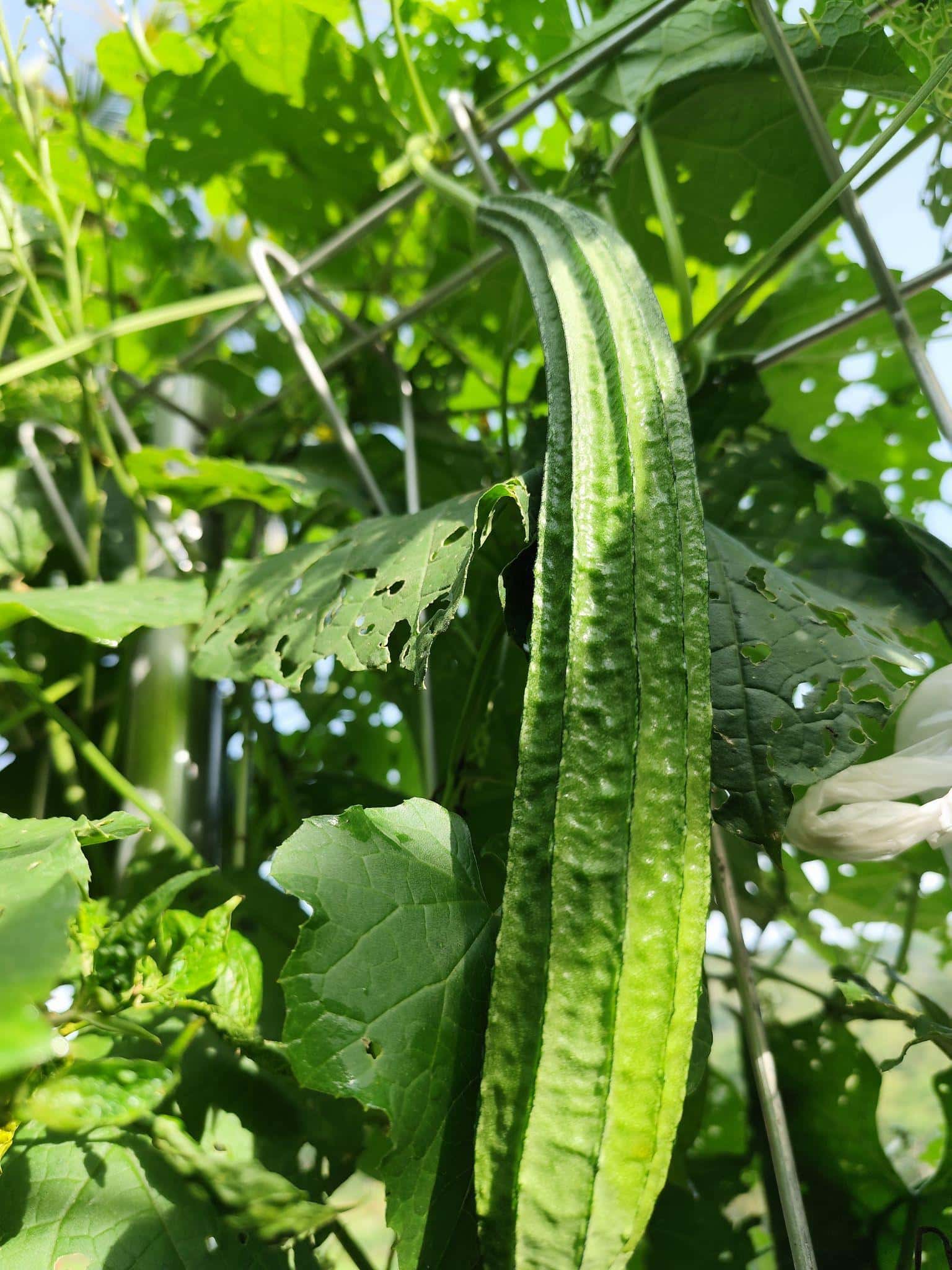
Durgesh Gutka is a long, light-green bottle gourd (Lagenaria siceraria) grown for eating young: the lauki or dudhi of Indian kitchens, not the hard-shelled gourd dried for birdhouses. Success depends on warm soil, evening pollination and picking on time.
Also known as: Lauki (Hindi), Ghiya (Hindi), Dudhi (Gujarati, Marathi), Opo squash, Long melon, Calabash, White-flowered gourd, Sorakaya (Telugu), Suraikkai (Tamil); scientific synonym Lagenaria vulgaris.
Key facts
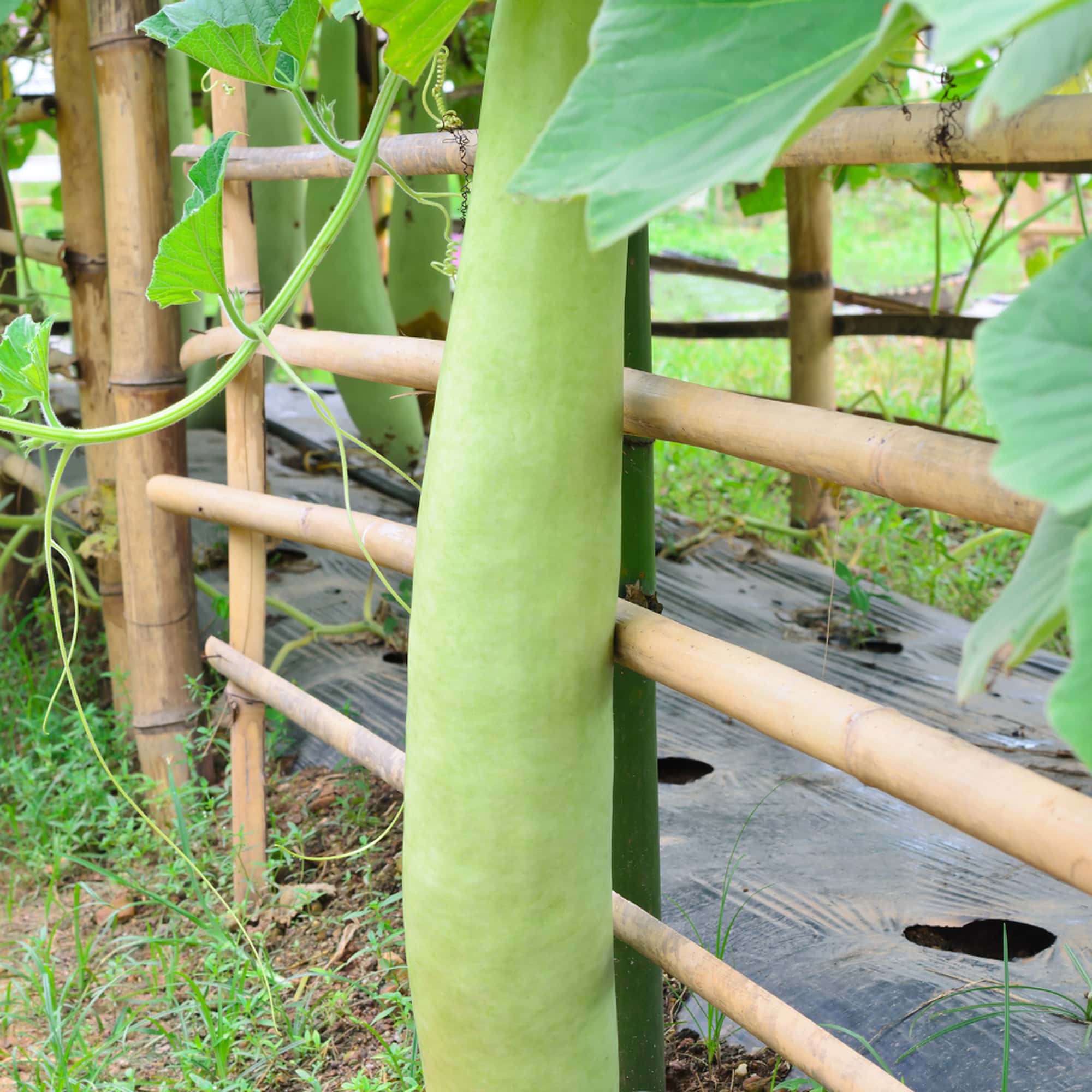
- Fruit (variety description): cylindrical, smooth, light green, 40–50 cm or longer, with white flesh.
- First harvest (variety description): about 50–60 days from sowing in warm conditions.
- Typical species value: germination at 25–30 °C, sowing depth about 2.5 cm (1 in), both approximate.
- Seed is orthodox: store it dry, sealed and cool. Hybrid or open-pollinated status is not confirmed.
Sowing
- Wait until frost has passed and soil holds at least 15 °C (60 °F).
- Soak seed in warm water for about 12 hours, no more than 24.
- Sow 2.5 cm (1 in) deep, one seed per pot indoors, because roots dislike disturbance. Keep at 25–30 °C; seedlings usually appear in 7–14 days.
- Transplant at 2–3 true leaves after a week of hardening off.
In cool climates start seed indoors 3–4 weeks before the last frost, or grow under glass.
Why vines flower but do not fruit
The white flowers open at dusk and last until early morning, so they rely on insects active then. Males appear first on long stalks; a female flower has a miniature gourd behind the petals, and if that yellows and drops it was not pollinated. To hand-pollinate in the evening, brush pollen from a fresh male flower onto the centre of a female flower.
Growing and harvest
Train vines up a strong trellis so fruit hangs straight; ground-resting gourds curve and rot more easily. Space plants 60–90 cm apart on a trellis or 2.4–3 m on the ground, in full sun, rich well-drained soil and steady water. Pick while the skin is light green and a fingernail presses in easily; later the flesh turns hard.
Taste a small raw piece of every fruit before cooking. If it is bitter, discard the whole fruit and never juice it: bitter bottle gourd juice has caused serious poisonings reported in the medical literature.
FAQ
Is this the same as opo squash or calabash?
All are Lagenaria siceraria. The names cover many shapes; Durgesh Gutka is a long, cylindrical type for eating, not for drying.
How many plants do I need?
Two to four vines suit most home gardens.
Can I grow it in a pot?
Yes, in a container at least 35–40 cm (14–16 in) deep with drainage and a trellis beside it.
Local names
hue, huen, hue maoì, hue parani, Chitsuva, Tsuva, Kasingi, White-flowered Gourd, Bottle gourd, lauki, ghiya, dudhi, opo squash, long melon, calabash.
Common names of Lagenaria siceraria
All 44 names, languages and regions
Local names
| French Polynesia | |
|---|---|
| hue, huen, hue maoì, hue parani | |
| Mayotte | |
| Chitsuva, Tsuva, Kasingi | |
| United Kingdom | |
| English | White-flowered Gourd |
| United States | |
| English | Bottle gourd |
| Other places | |
| English | Flask Calabash, Hercules club gourd, Italian edible gourd, Large African Calabash, New Guinea bean, Pipe Calabash, South African Pipe Calabash, Trumpet Calabash, White -fld, Gourds, Calabash, birdhouse gourd, calabash, calabash gourd, dipper gourd |
| lauki, ghiya, dudhi, opo squash, long melon, calabash, white-flowered gourd, sorakaya, suraikkai, Anyal, Bottle gourd (EN), Butelkürbis, Calabazo, Candungo amargo, Carracho, Flaschenkürbis, Guicharo, Kalebassenkürbis (DE), Kham, Marinibo (ES), arócosim, bag, bitahul, bottle gourd, cixauri-te, hu lu, hyōtan, ipu | |