Visit deodar-seeds.in



About this variety
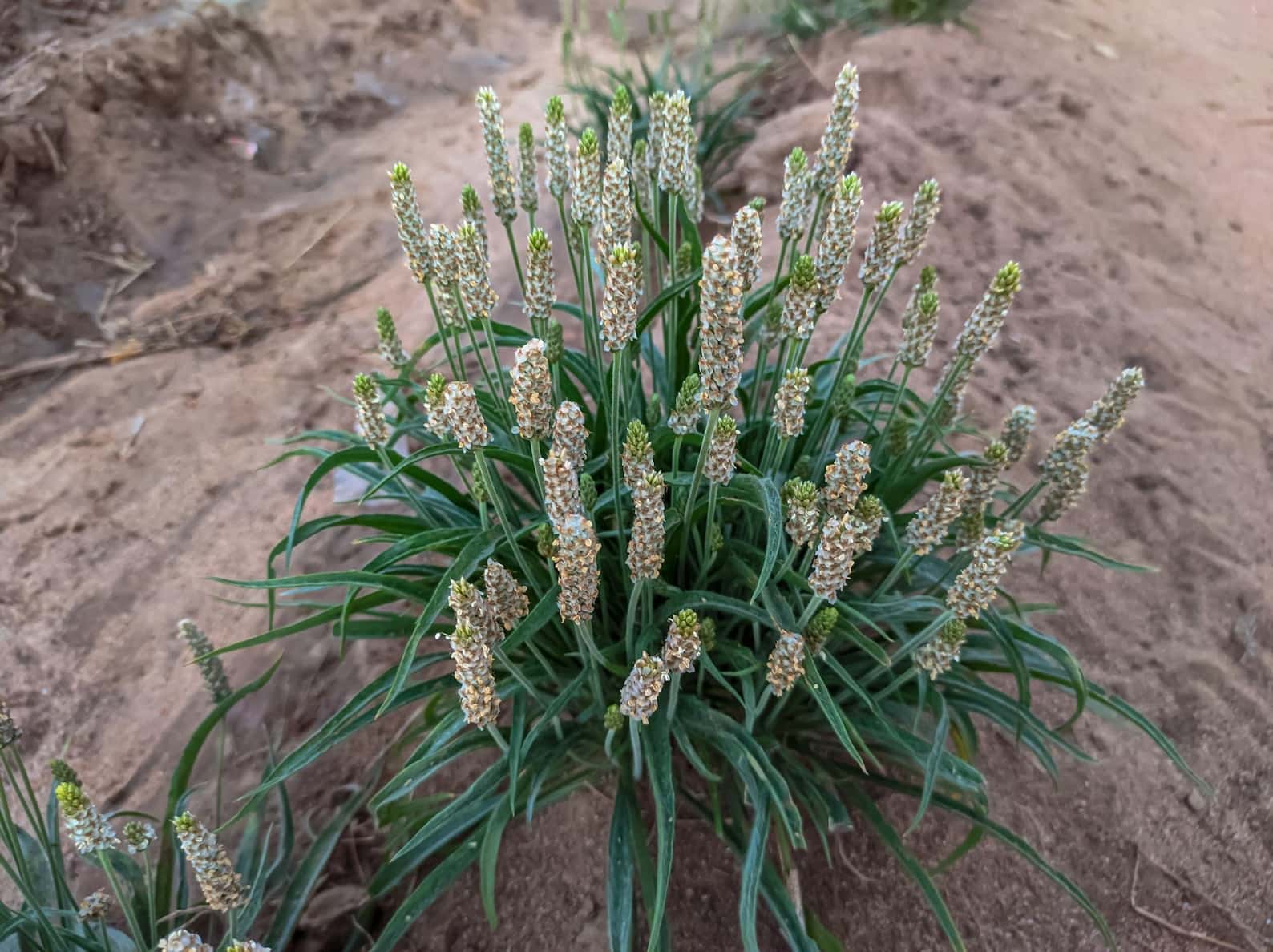
Plantago ovata (isabgol, blond psyllium) is a short annual herb with narrow leaves and dense flower spikes, native to the Mediterranean region and naturalized in central, eastern and south Asia and North America. It suits dry winters and shallow sowing; winter rain makes a region unsuitable for it.
Also known as: Isabgol, Isabgul, Isabghol, Ispaghula, Ispaghal, Blond psyllium, Blond plantain, Desert Indianwheat, Plantago ispaghula, Plantago insularis.
Sowing
- Prepare a fine seedbed of well-drained sandy loam in an open, sunny spot.
- Mix the small seed with sieved soil so it spreads evenly.
- Scatter on the surface or cover only very lightly; deep sowing hurts germination.
- Water slowly and gently so the seed is not washed together, and keep evenly moist until it emerges.
Temperature and timing
In a laboratory test on paper, germination peaked at 20 °C (approximate; 20–27 °C was tested). In India's growing states the crop is sown between October and November, in dry winter weather.
Spacing and what goes wrong
- Sow thinly: a heavy seed rate raises the severity of downy mildew.
- Thin crowded seedlings so each rosette has room.
- Wet winters and waterlogged soil are the main failure points.
- Ripe spikes shed seed. Cut close to the ground in the early morning to limit losses.
About the seed
The seed is small and translucent. This listing is for botanical growing only and makes no food or medical-use claim.
FAQ
Can isabgol grow where winters are rainy?
It is a poor match. Regions with winter rain are listed as unsuitable; a dry spell during growth and ripening is needed.
How deep should I sow it?
On the surface or barely covered. Deeper sowing makes germination uneven.
What temperature should I aim for?
Around 20 °C, according to a laboratory test on paper; it is an approximate figure, not a result for this lot.