

About this variety
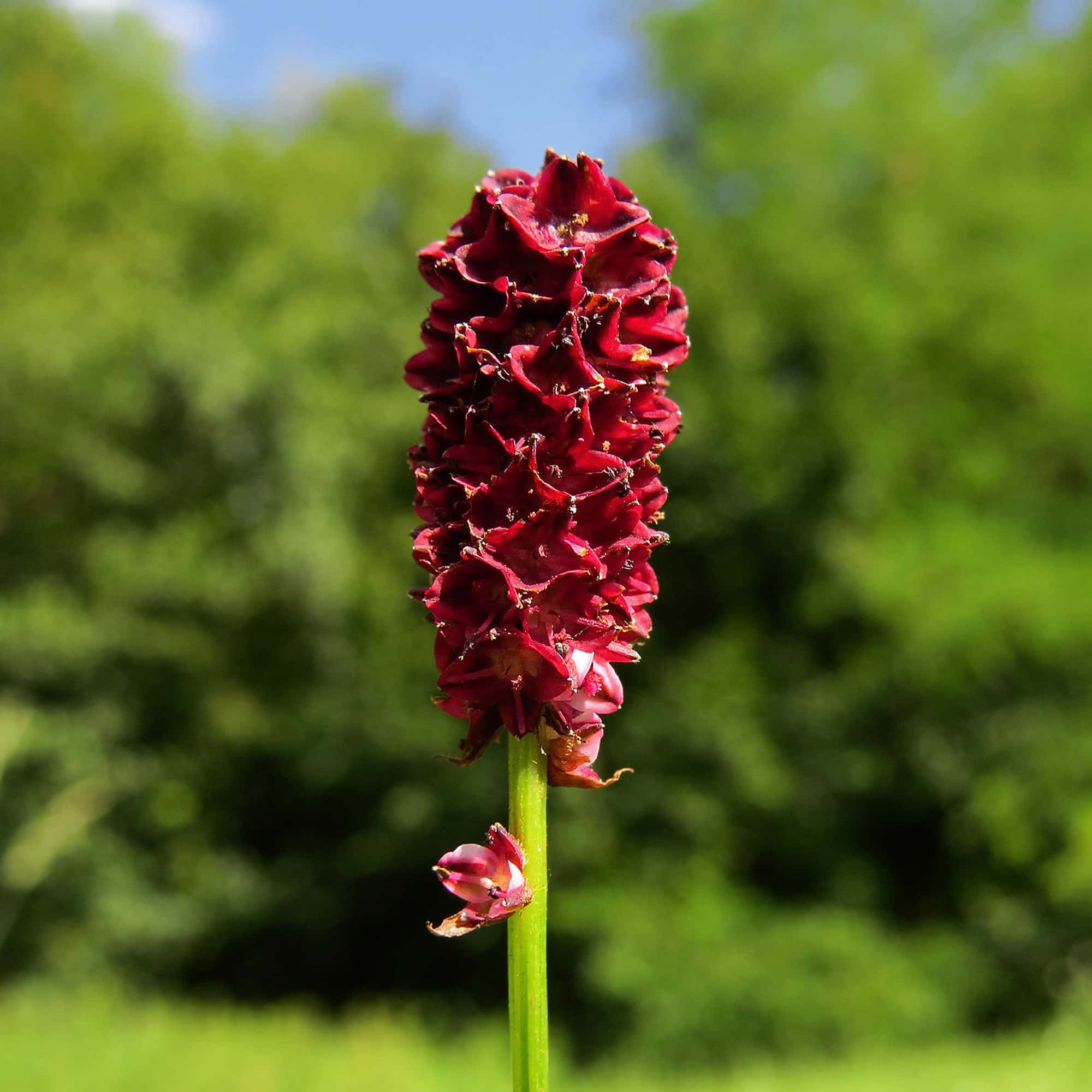
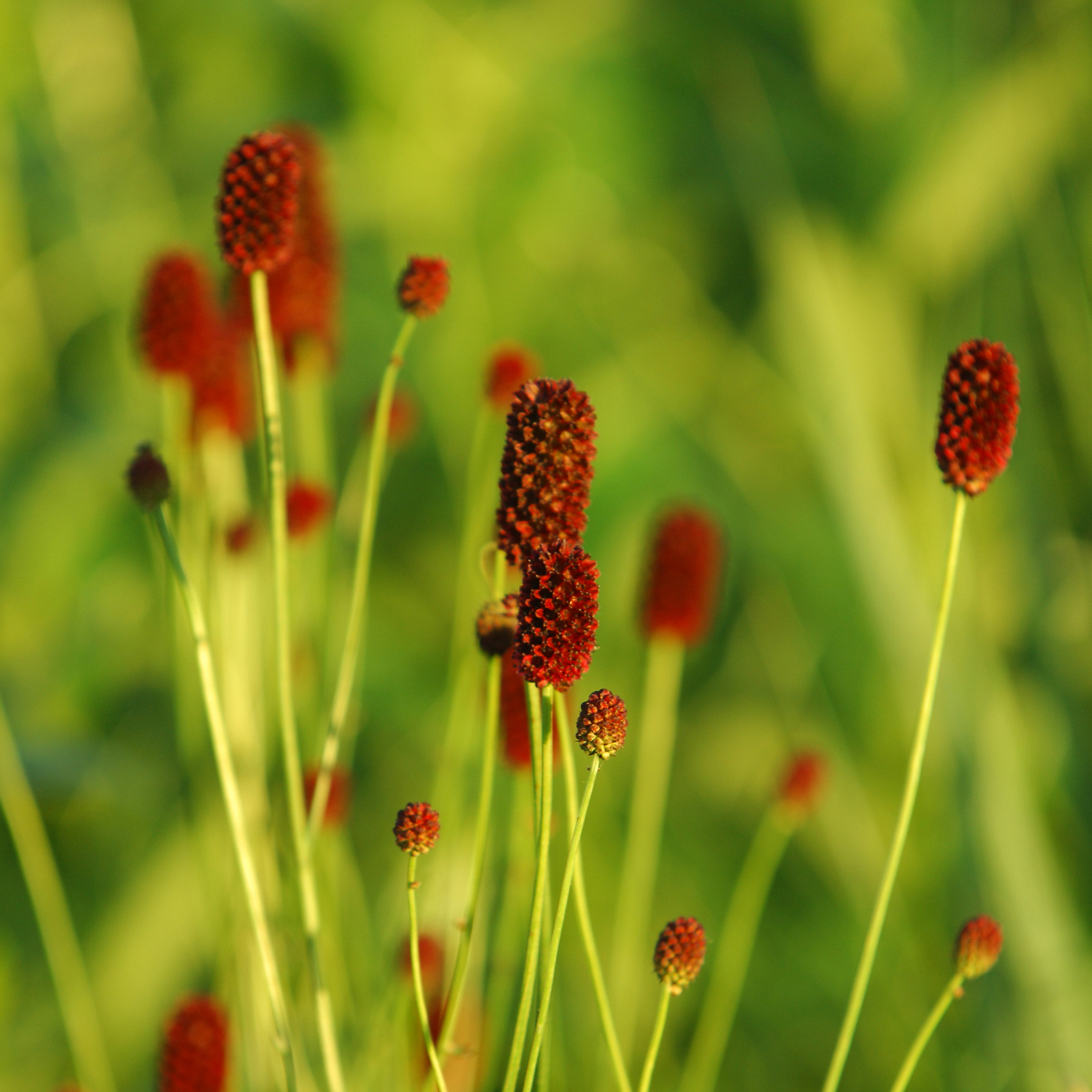
Great burnet (Sanguisorba officinalis) is a clump-forming perennial, 1–1.5 m tall, with dense maroon flower spikes from summer into early autumn. Its seed needs no cold stratification, according to the one study we have on file.
Also known as: Grande pimprenelle (French), Großer Wiesenknopf (German), Pimpinela mayor (Spanish), Salvastrella maggiore (Italian), Krovokhlyobka, Di yu (Chinese), Waremokō (Japanese), Poterium officinale (synonym).
Does it need chilling before sowing?
Probably not. A Native Plants Journal study of burnet species including S. officinalis found germination needed no special pretreatment, and 1 week to 5 months of cold at 4 °C followed by 21 °C in light did not improve it. This is one study on one seed lot, so treat it as approximate.
Sowing and growing
- Step 1Sow in pots in a cold frame in spring or autumn (Royal Horticultural Society advice).
- Step 2Plant out in full sun or partial shade, in moist but well-drained soil of almost any type.
- Step 3Established plants are hardy below −20 °C.
Local names
Grote pimpernel, punaluppio, blodtopp, Great Burnet, Grande pimprenelle, Großer Wiesenknopf, Pimpinela mayor, Salvastrella maggiore, Krovokhlyobka, Di yu, Waremokō, Poterium officinale.
Common names of Sanguisorba officinalis
All 59 names, languages and regions
Local names
| Belgium | |
|---|---|
| Dutch | Grote pimpernel |
| Finland | |
| Finnish | punaluppio |
| Norway | |
| Norwegian Nynorsk | blodtopp |
| United Kingdom | |
| English | Great Burnet |
| Other places | |
| French | Grande pimprenelle, Sanguisorbe officinale, sanguisorbe |
| German | Großer Wiesenknopf, Grosser Wiesenknopf |
| Spanish | Pimpinela mayor, niéspola |
| Italian | Salvastrella maggiore, Meloncello |
| Chinese | Di yu, 虫莲 (Chónglián) |
| Japanese | Waremokō, ワレモコウ (Waremokō) |
| Latin | Poterium officinale |
| English | official burnet, burnet bloodwort, salad burnet, sanguisorba |
| Icelandic | Blóðkollur |
| Welsh | Bwrned Mawr |
| Azerbaijani | Dərman sincanotu |
| Polish | Krwiściąg lekarski |
| Zhuang | Maxlienzan |
| Lithuanian | Vaistinė kraujalakė |
| Czech | krvavec toten |
| Estonian | Ürt-punanupp |
| Arabic | مرقئة مخزنية (Marqa makhzaniyya) |
| Bashkir | Ҡырҡҡолас (Qırqqolas) |
| Bulgarian | лечебна динка (Lechebna dinka) |
| Danish | Læge-Kvæsurt |
| Upper Sorbian | Wulki wohenčk |
| Hungarian | Őszi vérfű, öszi vérfű |
| Armenian | Արյունախմիկ դեղագործական (Aryunakhmik deghagortsakan) |
| Korean | 오이풀 (Oipul) |
| Latvian | Ārstniecības brūnvālīte, arstniecibas brunvalite |
| Erzya | Верь лоткавтыця тикше (Ver lotkavtyts tikshe) |
| Yakut | Ымыйах (Ymyiakh) |
| Slovak | Krvavec lekársky |
| Slovenian | Zdravilna strašica, zdravilna strašnica |
| Swedish | Blodtopp |
| Ukrainian | Родовик лікарський (Rodovyk likarskyi) |
| Simplified Chinese | 地榆 (Dìyú), 黄爪香 (Huángzhuǎxiāng), 玉札 (Yùzhá), 山枣子 (Shānzǎozi) |
| Traditional Chinese | 地榆 (Dìyú) |
| Chinese (Taiwan) | 地榆 (Dìyú) |
| Basque | Gaitun sendagarri |
| Catalan | Pimpinella major |
| Turkish | çayır düğmesi |
| Vietnamese | Địa du |
| Serbian | Јарчија трава (Jarchija trava) |
| Krovokhlyobka, Großer Wiesenknopf (DE); Great Burnet, Official burnet (EN), Wulki wohenčk, di yu, Верь лоткавтыця тикше (Ver lotkavtyts tikshe), Ымыйах (Ymyiakh), 오이풀 (Oipul) | |
Where it fits and what to watch
The plant spreads by rhizomes, so site it where a widening clump is welcome. In the wild it favours floodplain meadows, which hints at its liking for moisture; the flower heads are crimson to maroon and open from June to September.
We have no tested germination percentage or emergence time for this lot and do not state one.
FAQ
Should I put the seed in the fridge first?
The available study found no gain from chilling, so it is not required. Sowing in a cold frame still follows standard practice.
How tall does it get?
1–1.5 m according to the Royal Horticultural Society; wildlife-trust sources give up to 1.2 m.
Will it take over the bed?
It is rhizomatous and can spread readily, so leave room or divide it in spring or autumn.