Visit deodar-seeds.in


About this variety
Tea seed dies if it dries out
Tea seed is recalcitrant: it cannot be dried or frozen like most seed. A Tea Research Institute of Sri Lanka study found that fresh seed left in open dishes at room temperature was no longer viable within two weeks, that seed dried to about 13% moisture was inviable, and that temperatures below freezing kill it. The best storage in that study was moist seed sealed in polythene at 5–7 °C, which kept fresh seed alive for 9 months. Keep the packet moist and cool, and sow soon after it arrives.
Sowing
Soak the seed for 24 hours and sow it about 2.5 cm deep in a free-draining, acidic mix, with the pale scar (hilum) lying sideways. A Hawaii tea-growing guide plants seed once a crack shows in the coat and suggests keeping seeds that sink and watching those that float separately. Sri Lankan nursery trials at about 23–27 °C saw the first seedlings in the second week and the last by about week 8; seed with a cracked coat reached 90% by week 6, while uncracked seed took 8 weeks.
Soil and climate
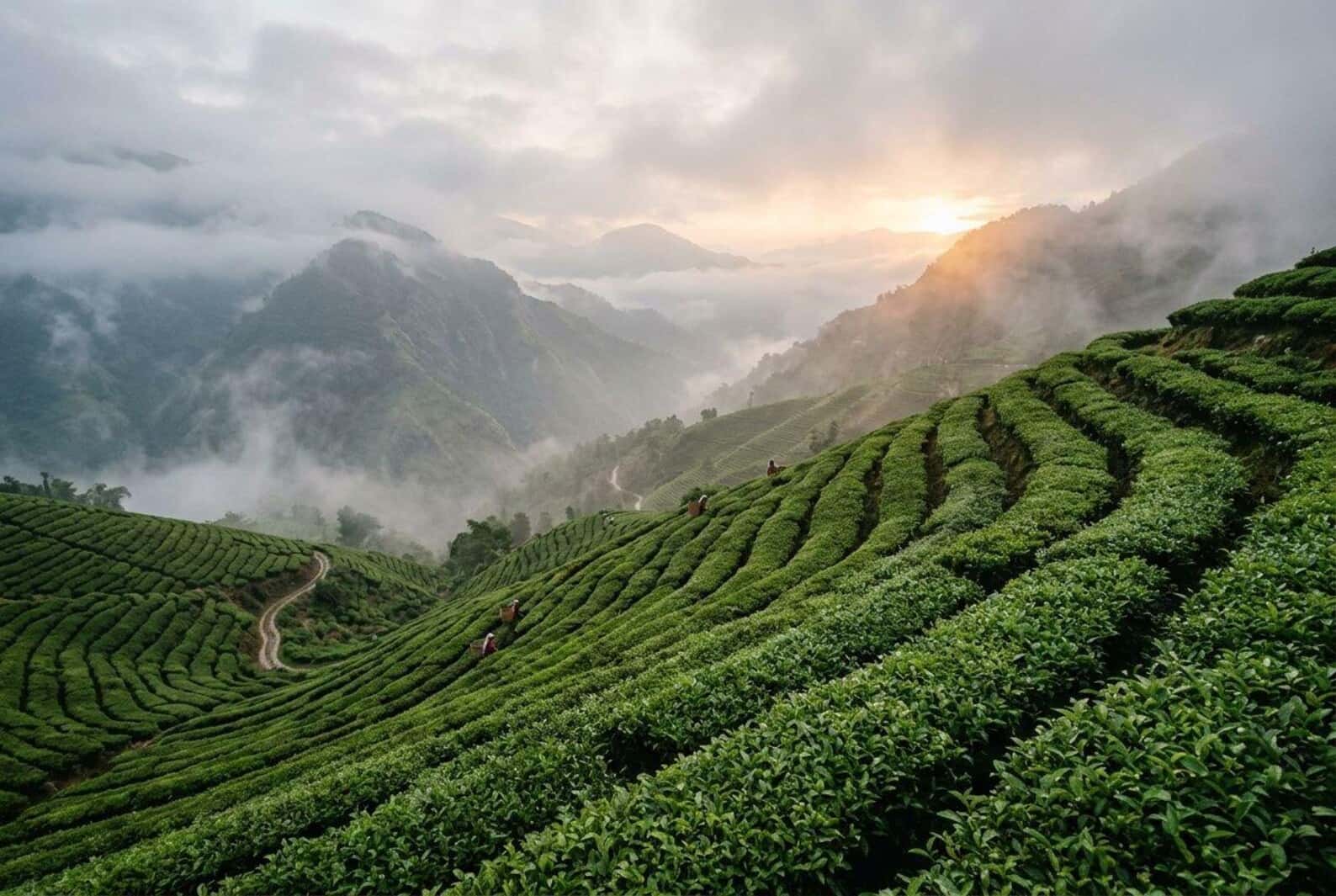
Tamil Nadu Agricultural University gives tea soil as well-drained and rich in organic matter, at pH 4.5–5.5 (4.5–4.8 for nursery soil), an optimum temperature of 20–27 °C, and good performance at 1000–2500 m. The Hawaii guide shades new seedlings under 80% shade cloth, reduces this to 30–40% after three to four leaves, and moves plants gradually to full sun before transplanting at about 30 cm tall.
What the packet is
Camellia sinensis is the accepted tea species, native from the eastern Himalaya to southern China and northern Indo-China. Seed-grown plants vary and do not reproduce a named tea cultivar; unlabelled seed is not assigned to a variety. The packet holds 5 or 10 seeds. No germination percentage is claimed.
Also known as: Tea plant, Tea shrub, Chai, Chá, Té, Thé, Teestrauch, Çay, Thea sinensis and Camellia thea.