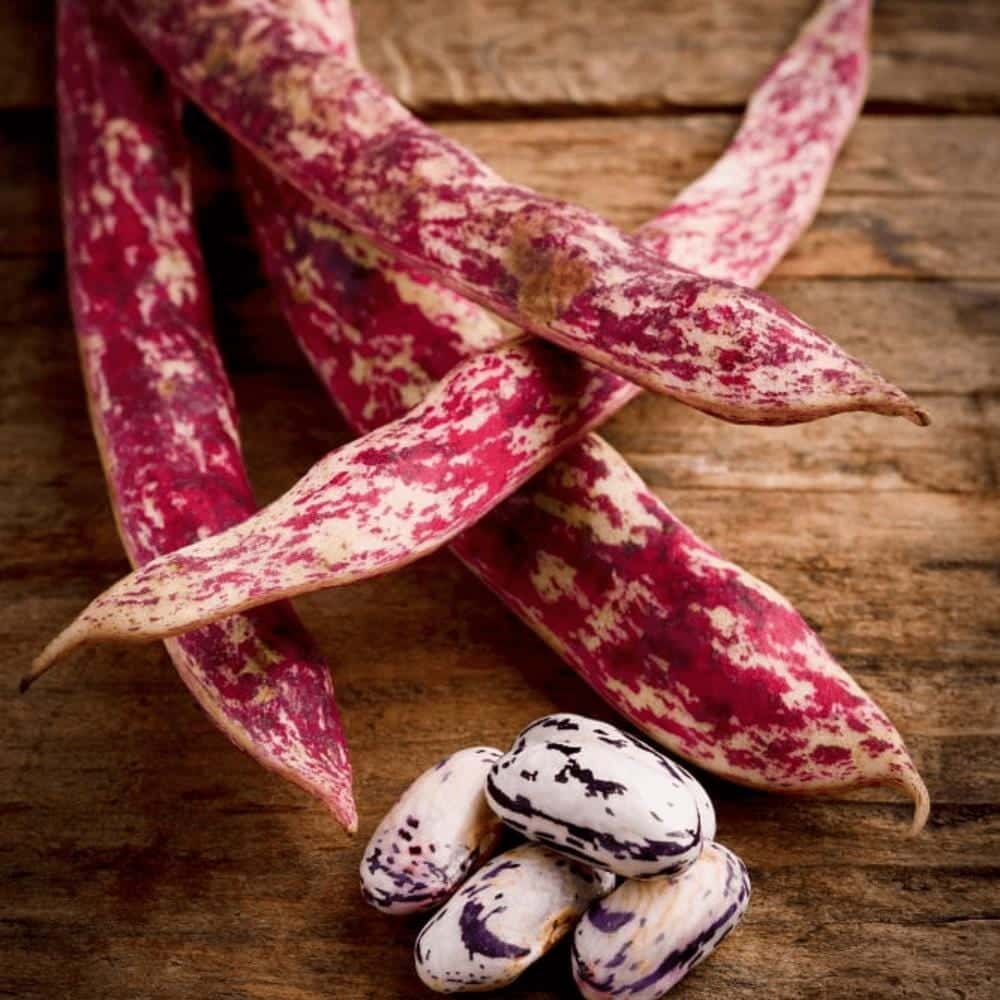


About this variety
Product Overview: Fire Tongue Bush Bean is offered as a bush form of the common bean, Phaseolus vulgaris. This packet contains 10 seeds for planting. Common beans are warm-season annuals, so they perform best when sown into warmed soil rather than cold, wet ground. The accepted botanical name is Phaseolus vulgaris L., a member of the Fabaceae family.
- Botanical name: Phaseolus vulgaris
- Plant type: Warm-season bush bean
- Packet quantity: 10 seeds
- Supplied as: Seeds only; plant, pot, and growing media are not included
Growing from Seed
When to sow: Direct sow after the danger of frost has passed and the soil has warmed to about 16°C / 60°F or above. Beans can germinate poorly in cold, saturated soil, so wait for settled conditions instead of sowing too early. Where the outdoor season is short, use the warmest suitable part of the garden and avoid disturbing the roots during any transplanting.
Sowing depth and spacing: Sow about 2.5 cm / 1 inch deep. Space seeds roughly 5-8 cm / 2-3 inches apart, with rows about 45-60 cm / 18-24 inches apart. Local climate, soil fertility, and airflow can justify wider spacing. Keep the seedbed evenly moist during germination, but do not leave it waterlogged.
Position and soil: Choose a full-sun position with fertile, well-drained soil. Work mature compost or other finished organic matter into poor soil before sowing. Avoid heavy nitrogen feeding, which can encourage leafy growth at the expense of flowers and pods. A light mulch applied after the soil has warmed can help conserve moisture and reduce weeds.
Water and support: Water consistently, particularly while plants are flowering and developing pods. Aim water at soil level when practical and avoid repeatedly soaking the foliage. Bush beans are generally compact and self-supporting, although light support may be useful in exposed sites or if growth becomes top-heavy.
Harvest and Food Safety
Harvest timing depends on the intended use and the way the plants develop in your conditions. For dry beans, allow pods to mature and dry before shelling, then finish drying the beans thoroughly before storage. Inspect all harvested beans and discard any that are damaged or mouldy. Mature common beans should not be eaten raw or undercooked: naturally occurring phytohaemagglutinin can cause illness, and proper cooking is required before serving.
What You Receive
You receive one labelled packet containing 10 Fire Tongue Bush Bean seeds for planting. Germination speed and final performance vary with seed handling, temperature, moisture, soil, weather, and local growing practice.
Frequently Asked Questions
When should I sow bush bean seeds?
Sow after frost danger has passed and the soil is at least about 16°C / 60°F. Warm soil supports more reliable germination than cold, wet conditions.
Do bush beans need a trellis?
Bush beans are usually self-supporting and normally do not require a tall trellis. A short stake or low support can still help in windy sites.
Can mature common beans be eaten raw?
No. Raw or undercooked common beans may contain harmful levels of lectins. Cook mature beans properly before eating and follow established food-safety guidance.