

About this variety
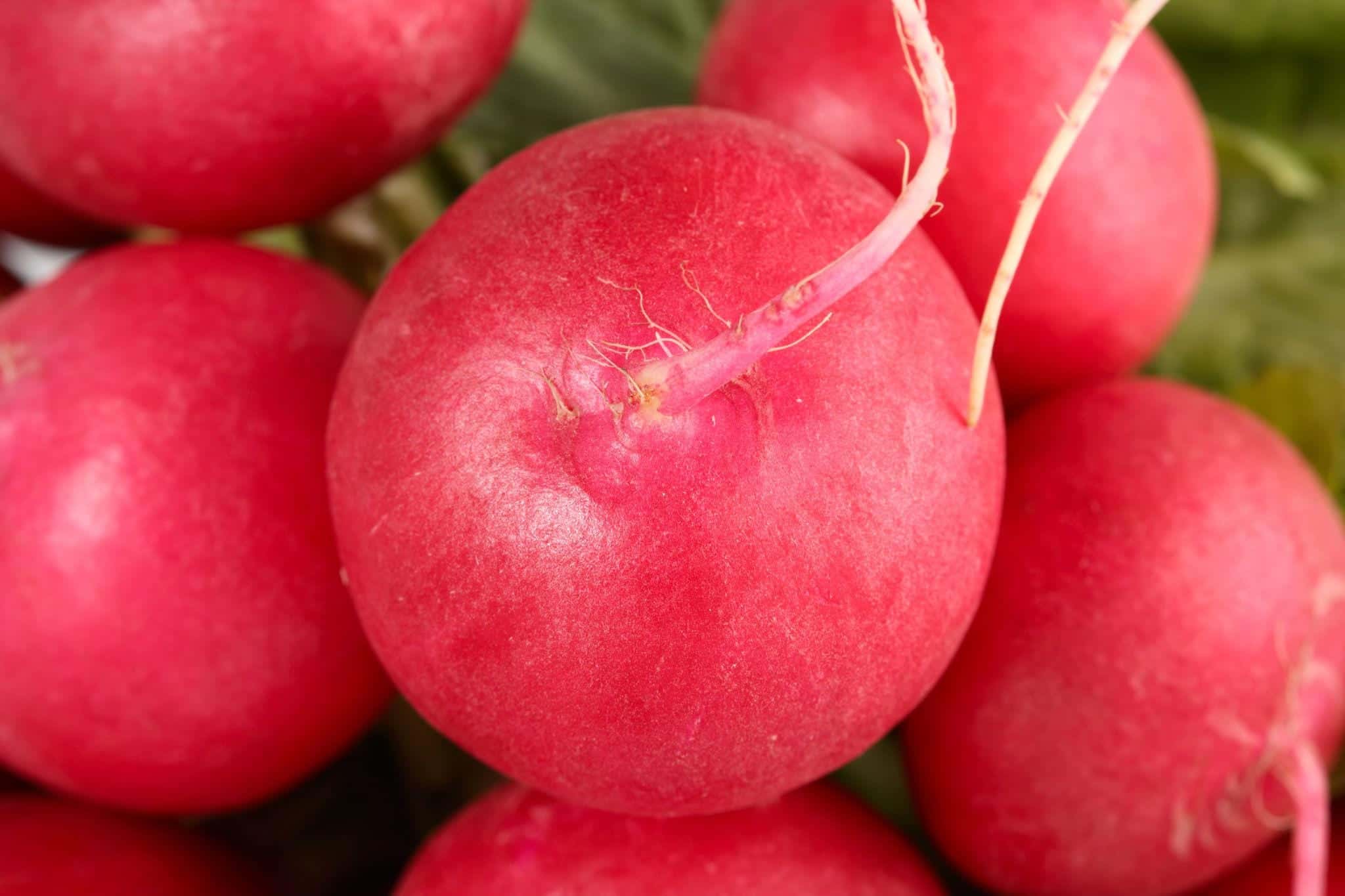
Product Overview: Grow cherry-style red round radishes from this packet of 100 seeds. The crop is botanically identified as Raphanus sativus, an accepted species in the Brassicaceae family. This is a red, round salad-radish type whose growing time and final root size will reflect local conditions and care.
- Botanical name: Raphanus sativus L.
- Family: Brassicaceae
- Crop type: Cool-season root vegetable
- Root type: Cherry-style red and round
- Packet quantity: 100 seeds
Growing from Seed
Sowing time: Radishes grow best in cool weather. Sow directly outdoors in an early spring or autumn window suited to your climate, avoiding the hottest part of the season. Utah State University Extension notes that high temperatures can encourage flowering and reduce root quality. A sunny position supports compact growth, while light shade can be useful where the cool season turns warm quickly.
Soil preparation: Prepare fertile, loose, well-drained soil so the developing roots are not forced through hard clods or compacted layers. Remove stones and break up the surface before sowing. Heavy soil can be improved with well-finished organic matter, but fertilizer choices should follow a soil test or local guidance rather than a fixed universal dose. A container can also work when it has drainage holes and enough depth for the root zone.
Sowing depth and spacing: Sow about 1/2 inch (1.25 cm) deep and keep the surface evenly moist until seedlings establish. Thin seedlings to roughly 1-2 inches (2.5-5 cm) apart, with approximately 10-12 inches (25-30 cm) between conventional rows. Crowded seedlings compete for light, water, and root space, so timely thinning helps individual roots develop. Small batches can be sown at intervals during suitable cool weather for a staggered harvest.
Water and care: Water regularly enough to keep growth steady, but do not leave the bed saturated. Large changes between dry and wet conditions can contribute to cracking and poor texture. Apply water to the soil when practical and keep weeds from competing with young plants. A light mulch can help conserve moisture once seedlings are established, provided it does not bury the crowns or keep the bed waterlogged.
Harvest: Check the shoulders of the roots as they enlarge and lift a sample when it reaches a useful salad-radish size. Do not rely on a fixed maturity promise, because temperature, spacing, moisture, soil structure, and the individual seed lot all influence development. Roots left too long during warm weather can become coarse, pithy, or strongly flavoured. Harvest promptly when the roots have reached the size and texture you want.
Kitchen use: Wash harvested roots thoroughly and trim damaged material. Red round radishes are commonly sliced for salads, served as a crisp garnish, or used in quick pickles. Handle the crop as fresh produce and follow normal food-hygiene practices. The seeds in this packet are supplied for planting, not for direct consumption.
What You Receive: One labelled packet containing 100 Cherry Red Round Radish seeds. This listing supplies seeds only, not seedlings or harvested radishes. Germination speed, root size, flavour, and harvest timing vary with climate, soil temperature, moisture, spacing, and care.
Frequently Asked Questions
When is the best time to sow?
Choose a cool-weather window in spring or autumn that fits your local climate. Avoid relying on a universal month, because frost dates and the arrival of hot weather vary by region.
Can these radishes be grown in a container?
Yes. Choose a container with drainage, loose growing medium, and enough surface area to maintain practical spacing. Monitor moisture frequently because containers can dry faster than garden beds.
Why are the seedlings thinned?
Thinning reduces crowding and gives each developing root more room. Utah State University Extension recommends approximately 1-2 inches between radish plants, with spacing adjusted for the desired harvest size.
When should the roots be harvested?
Lift a sample once the root shoulders have expanded to a useful size. Harvest time varies, and checking the roots is more reliable than promising one fixed number of days.