

About this variety
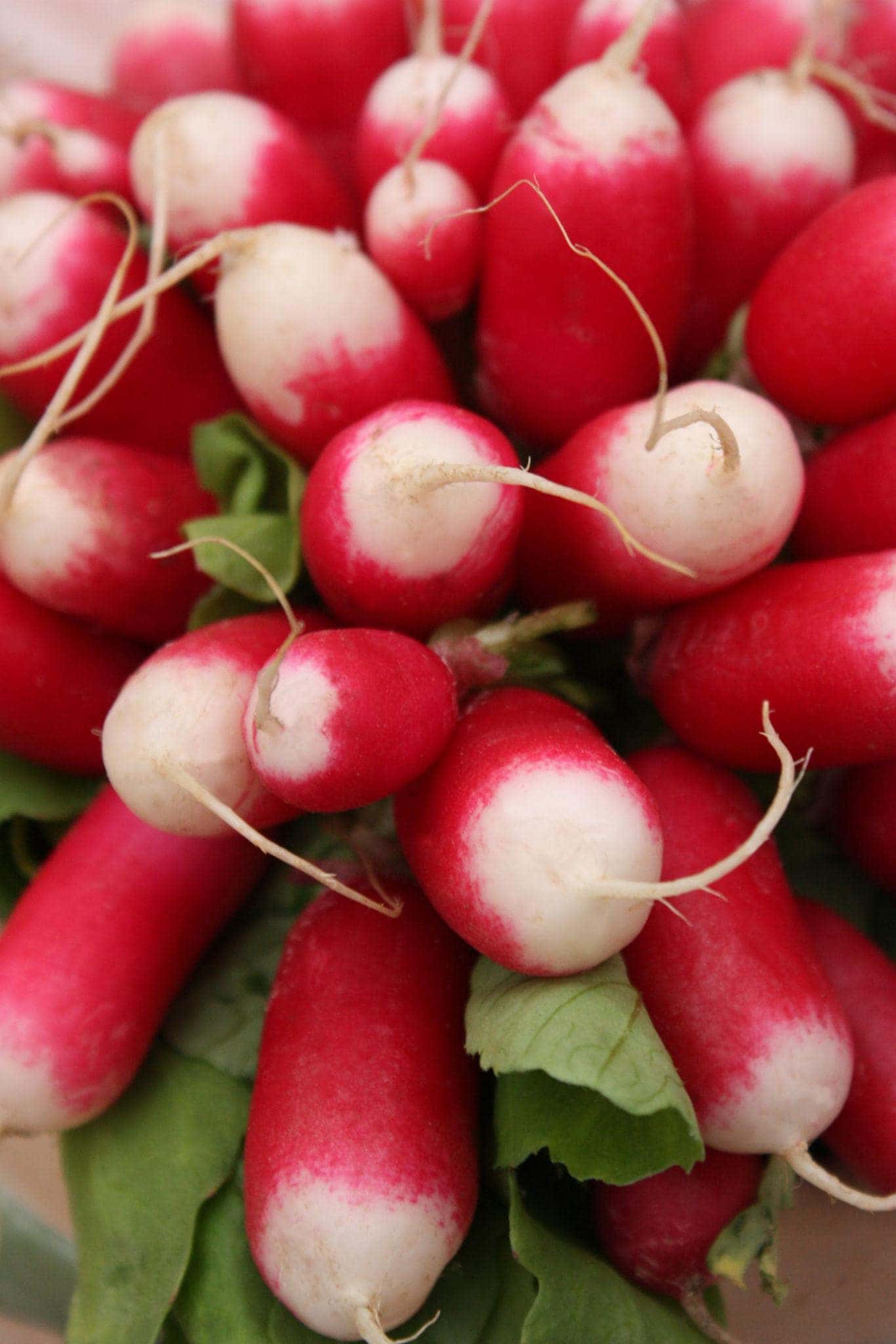
Grow an unnamed half-red garden radish from this packet of 100 seeds. The familiar botanical name is Raphanus sativus, a member of the Brassicaceae family; Kew treats that name as a synonym of the accepted Raphanus raphanistrum subsp. sativus. The source record identifies this lot only as Half Red Radish. It does not document French Breakfast or another named cultivar, so this page does not promise a cultivar-specific root length, exact white-tip proportion, flavour, or maturity date.
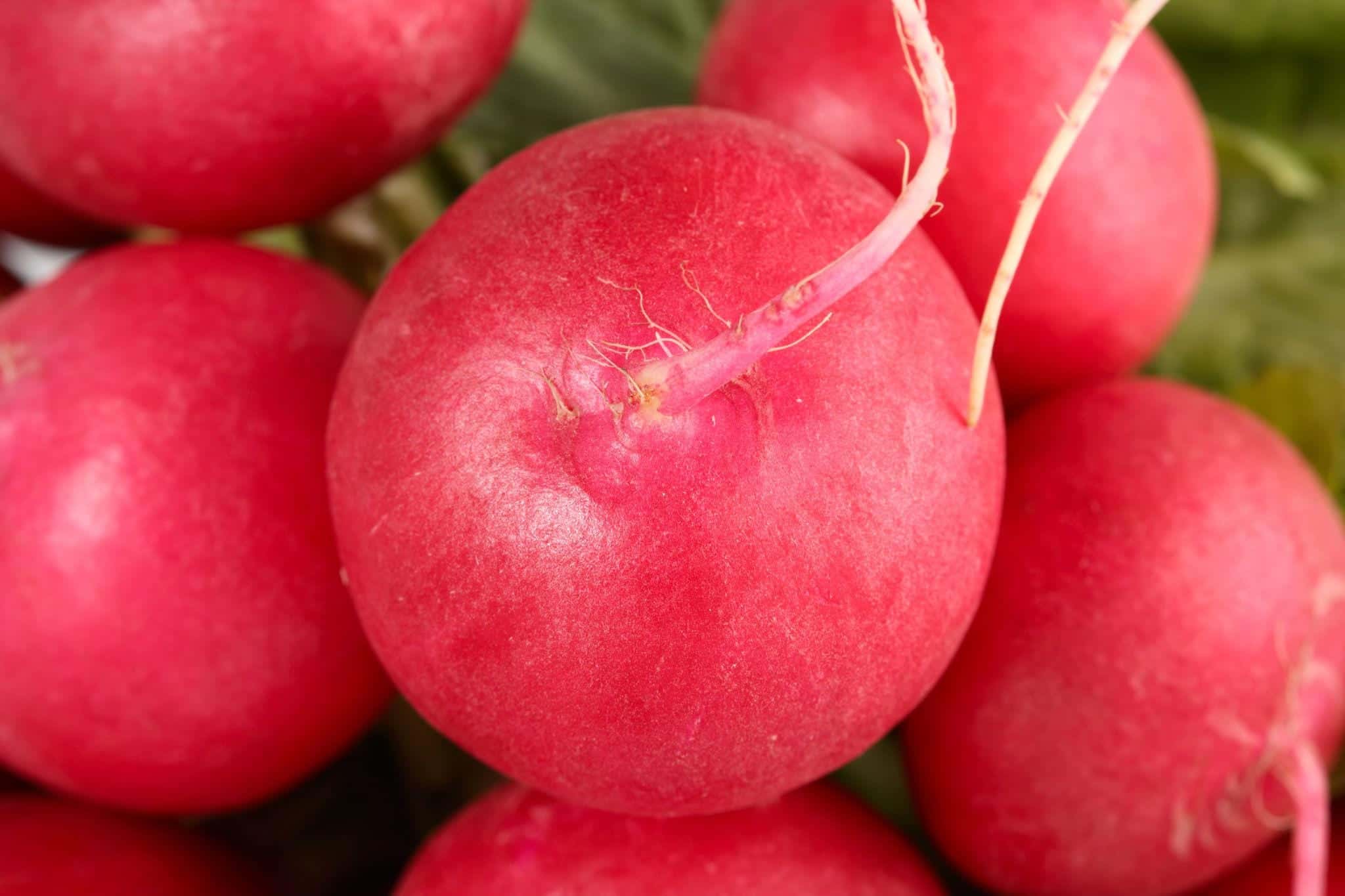
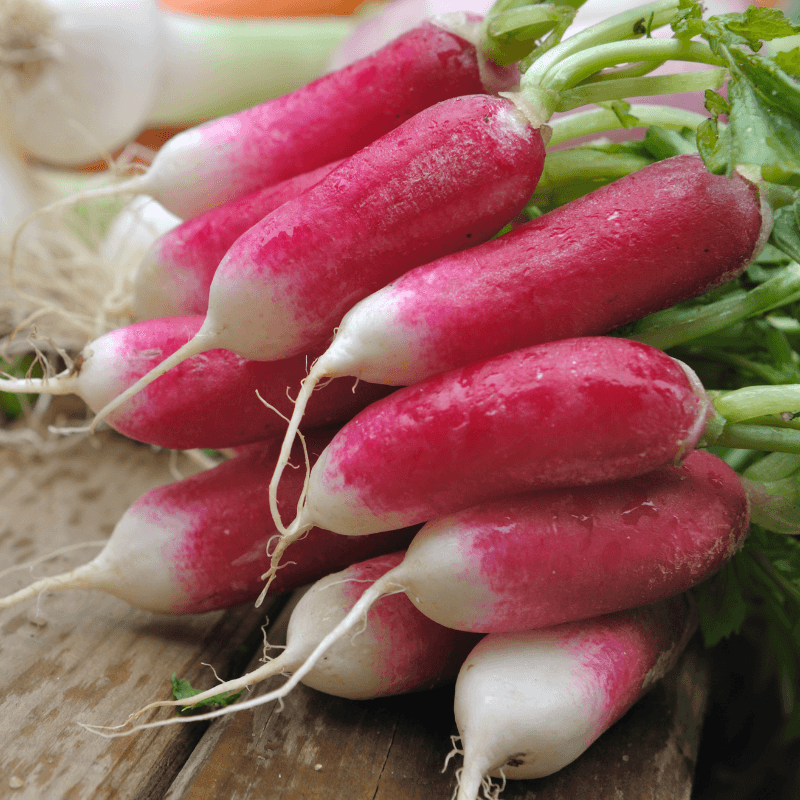
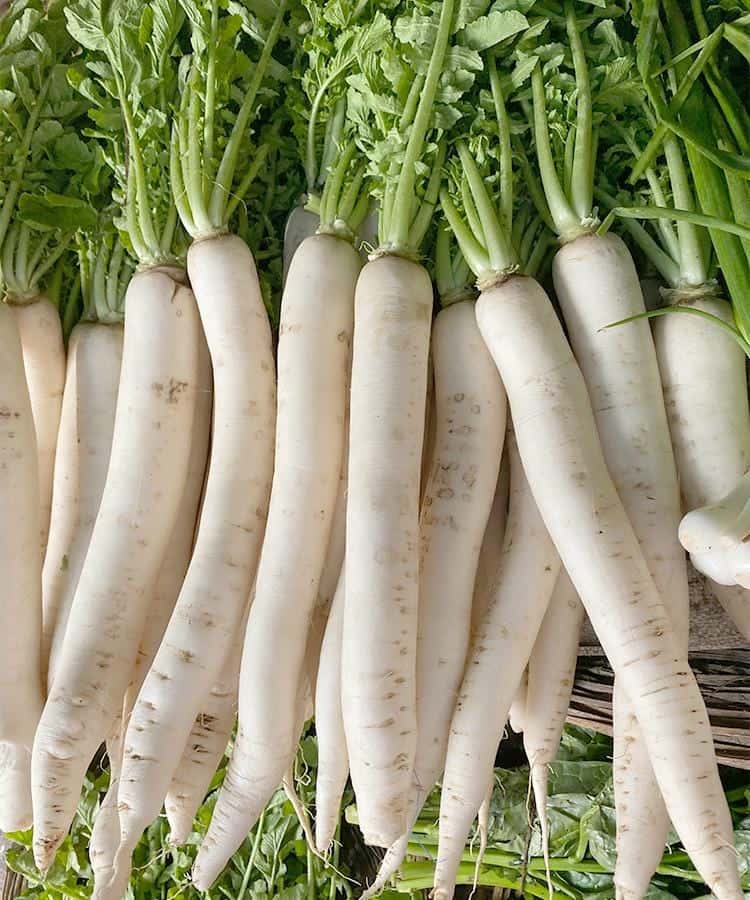
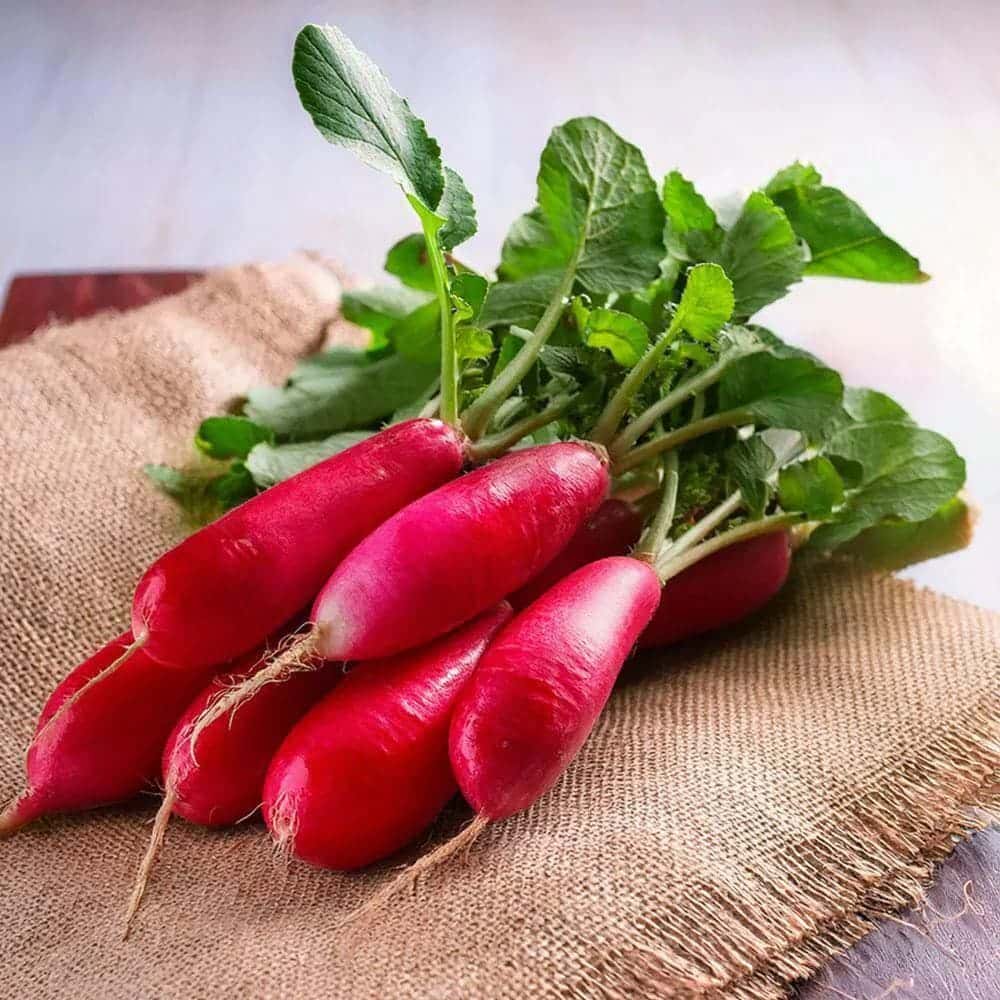
Product Overview: Radishes are cool-season root vegetables grown for their enlarged roots. “Half red” describes the marketed red-and-white root type, but individual colour balance and shape can vary with genetics, soil, temperature, moisture, and harvest stage. The licensed gallery is deliberately labelled at reference-taxon level: it illustrates radish roots in the ground, radish seed, and the flowering stage, but it does not photograph this seed lot or prove a cultivar identity.
- Botanical context: Raphanus sativus
- Family: Brassicaceae
- Crop type: Cool-season root vegetable
- Market type: Unnamed half-red or red-and-white radish
- Packet quantity: 100 seeds
Growing from Seed
Site and soil: Choose a sunny garden position with fertile, deep, well-drained soil. Remove stones and break up hard clods before sowing because compacted or obstructed soil can interfere with root development. Utah State University recommends preparing soil with organic matter and working the seedbed so it is loose enough for roots to expand. Avoid fresh, excessive fertiliser applications that encourage leafy growth at the expense of useful roots.
Direct sowing: Radishes are normally sown where they will grow. Utah State guidance recommends sowing seed about 1/2 inch deep. Make a shallow drill, place the seed, cover with fine soil, and water gently so seed is not displaced. Soil can support germination from about 40°F (4°C), while the cited guide reports best germination around 55–75°F (13–24°C). Emergence speed still depends on local conditions, moisture, and seedbed quality.
Spacing: Thin seedlings after emergence so roots are not forced to compete. Utah State recommends approximately 1–2 inches (2.5–5 cm) between radish plants, with rows about 10–12 inches (25–30 cm) apart. Keep the strongest well-positioned seedlings and remove crowded extras carefully. Consistent spacing encourages more even root development and improves airflow through the foliage.
Water: Maintain even moisture through germination and root enlargement. The Utah State guide warns that alternating wet and dry conditions can contribute to cracked roots. Water deeply enough to moisten the active root zone, then check the bed rather than following a fixed calendar. Sandy beds and containers may dry faster than heavier garden soil, while cool or cloudy periods reduce demand.
Temperature and succession: Radish performs best as a cool-season crop. Prolonged hot weather can make roots more pungent or bitter, encourage hollow texture, and trigger bolting. Plan sowings for the cool part of the local growing season and use local frost guidance. For a continuing harvest, Utah State suggests small succession sowings about every ten days rather than sowing the entire packet at once.
Care: Keep weeds small so they do not compete with the shallow developing crop. Cultivate carefully to avoid damaging roots. Check leaves regularly for locally common brassica pests and use locally approved controls only when needed. If plants begin flowering before useful roots form, heat, crowding, stress, or delayed harvest may be involved; a fresh cool-season sowing may perform better.
Harvest: Inspect a few roots once their shoulders become visible and harvest when they reach a useful table size. Do not leave mature roots indefinitely, because texture and eating quality may decline. Loosen dry or firm soil before pulling to reduce breakage. Remove tops if storing briefly, wash away soil, and keep harvested roots cool. Exact harvest timing is not stated because this lot has no verified cultivar record.
Kitchen use: Radish roots can be washed, trimmed, and sliced for salads, sandwiches, pickles, and vegetable plates. Young clean leaves may also be cooked where radish greens are customarily used. Flavour and texture depend on temperature, moisture, root age, and preparation, so this page does not promise a fixed heat level.
What You Receive: One packet containing 100 Half Red Radish seeds. Seed count is the offer quantity; the photographs are licensed botanical references and not pictures of the packet contents. Cultivar identity, germination timing, root dimensions, and harvest date are not guaranteed beyond the documented unnamed half-red type.
Frequently Asked Questions
Is this French Breakfast radish?
No named cultivar is documented for this lot. A gallery image may resemble an elongated French Breakfast market type, but it is used only as a reference-taxon growth-stage image and must not be read as cultivar evidence.
Should I transplant radishes?
Direct sowing is preferred because the harvested root develops where the seed is placed. Prepare a fine, loose seedbed and thin seedlings after emergence.
Why are even moisture and cool weather important?
Utah State guidance notes that fluctuating moisture can contribute to cracking, while hot weather may increase bitterness, hollowing, and bolting. Small cool-season sowings make moisture and harvest timing easier to manage.