

About this variety
About Connecticut Broadleaf
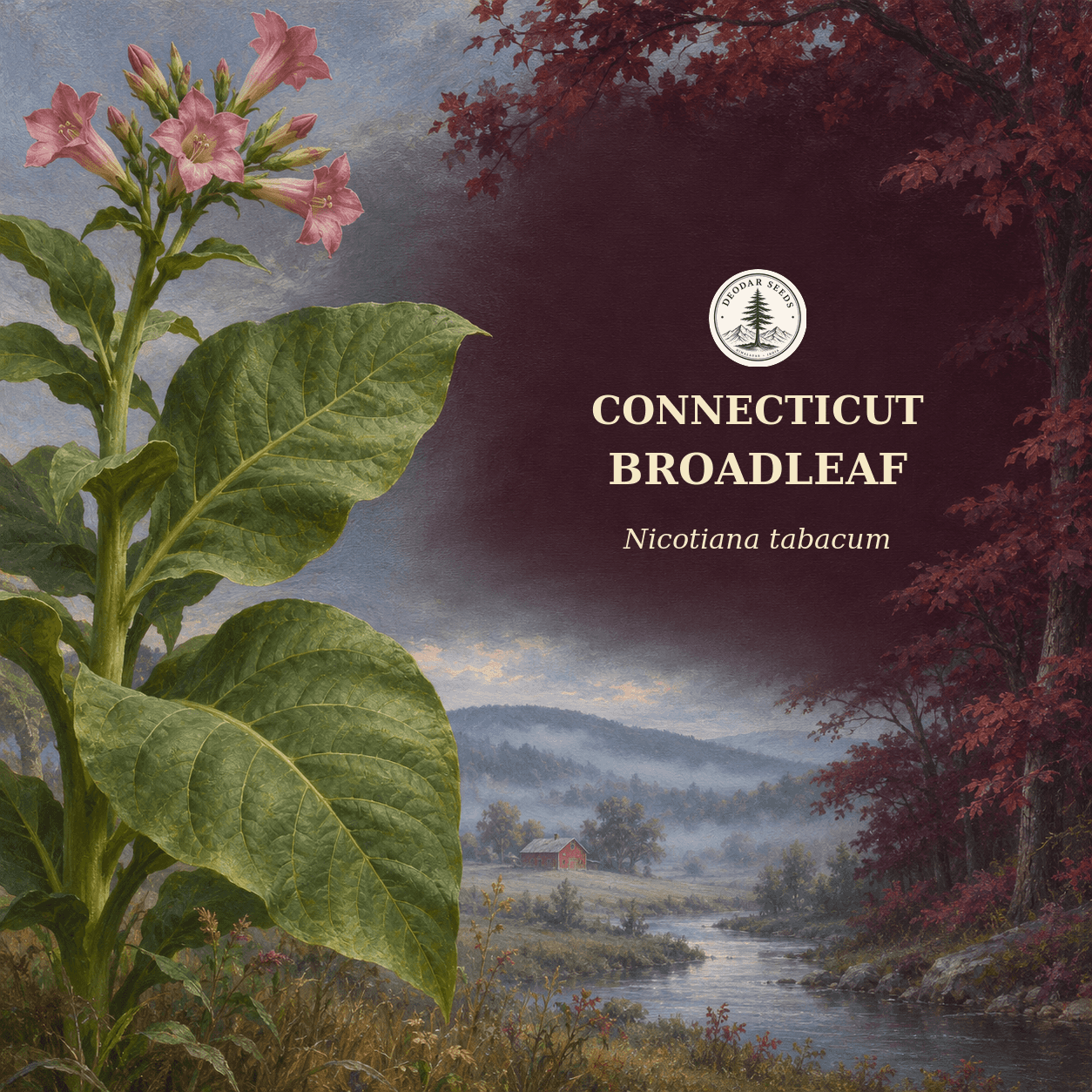
Connecticut Broadleaf is offered as Nicotiana tabacum seed. It is a broad-leaved tobacco type traditionally associated with the Connecticut River Valley, and is distinct from Connecticut Shade. USDA Plant Inventory 200 records Connecticut Broadleaf as a cultivar name; that record does not identify the source of this seed lot.
Names and identification
Connecticut Broadleaf is the complete label on this listing. It does not specify a numbered breeding selection or establish disease resistance. Keep the full name when comparing it with other Connecticut tobaccos.
Species names: common tobacco, tabac (French), Tabak (German), tabaco (Spanish and Portuguese) and tütün (Turkish) refer to Nicotiana tabacum. They are not synonyms for this particular cultivar or selection.
Soil and spacing
University of Kentucky guidance describes faster seedling and field growth than many burley and dark types. It recommends good internal soil drainage, a soil pH of 6.2–6.6 and avoiding land with a history of black shank. Its field layout uses about 61–66 cm between plants in rows about 102–107 cm apart. Treat these as regional production guidance, not a guaranteed crop result or a universal garden prescription.
Sowing and growing
- Step 1Sow the fine seed thinly on moist seed compost and leave it at the surface. RHS recommends about 18°C for species-level propagation.
- Step 2Keep the tray bright and evenly damp, with drainage. Water gently so the seeds remain in place; avoid a saturated seedbed.
- Step 3Grow seedlings on with room for their roots. Harden them off gradually before moving them outdoors after frost risk has passed.
- Step 4Choose fertile, moisture-retentive but well-drained soil and a sheltered, sunny position. Leave space for the foliage and water as needed during dry weather.
Local names
Buchici, Virginsk tobak, virginiantupakka, Tabac commun, Tabac de Virginie, Herbe à Nicot, hakee, maimai, pake omana, pake, ’ava’ava, tembakau, tabako, Lobaka, Tibaku, virginiatobakk.
Common names of Nicotiana tabacum
All 45 names, languages and regions
Local names
| Colombia | |
|---|---|
| Buchici | |
| Denmark | |
| Danish | Virginsk tobak |
| Finland | |
| Finnish | virginiantupakka |
| France | |
| French | Tabac commun, Tabac de Virginie, Herbe à Nicot |
| French Polynesia | |
| hakee, maimai, pake omana, pake, ’ava’ava | |
| Indonesia | |
| tembakau, tabako | |
| Malaysia | |
| tembakau | |
| Mayotte | |
| Lobaka, Tibaku | |
| Norway | |
| Norwegian Bokmål | virginiatobakk |
| Philippines | |
| tabaco | |
| Sweden | |
| Swedish | tobak |
| United States | |
| English | Cultivated tobacco |
| Vietnam | |
| thuốc lá | |
| Other places | |
| Spanish | Tabaco, gandul |
| French | Tabac |
| German | Tabak, Echter Tabak |
| Turkish | Tütün, Delitutun, Hasankeyf |
| English | tobacco, Virginian tobacco, Tabacco, Virginia tobacco |
| Portuguese | tabaco, erva-da-rainha |
| Welsh | Baco, Ffwgws |
| Dutch | Echte tabak |
| Italian | Tabacco Virginia |
| Korean | dambae |
| Greek | kapnos |
| Hungarian | közönséges dohány |
| Czech | tabák virginský |
| Chinese | yan cao |
| Common tobacco, Cultivated tobacco, Tambaku, Tanbaku, Tabacco, American tobacco, Tabaco (ES); Tobacco (EN), Tabaku, Virginischer Tabak (DE), dambae, tobacco, yan cao, 담배 (dambae) | |
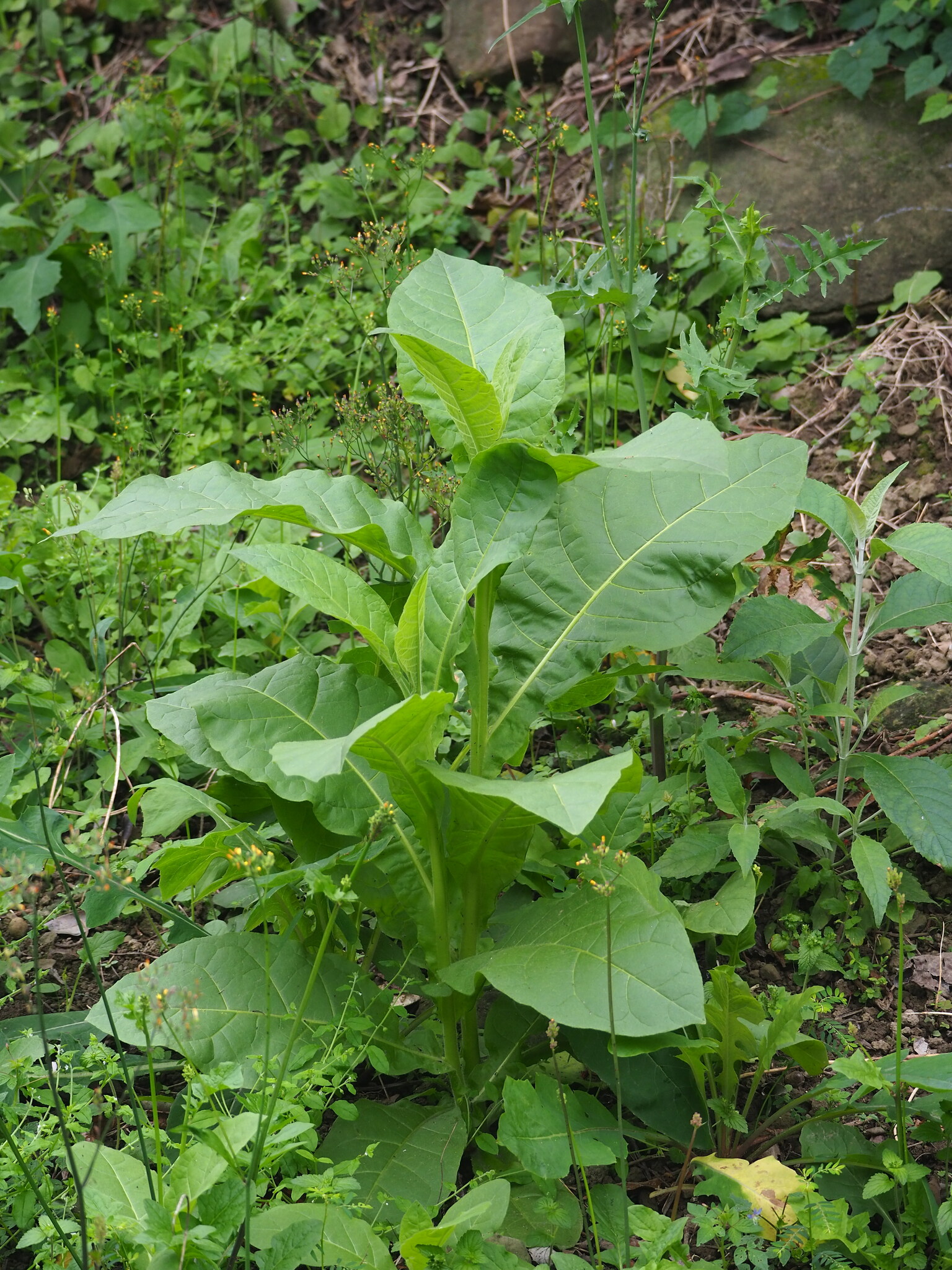
These are general growing instructions. Choose sowing dates for your local weather rather than a fixed month. Germination time and final plant size depend on conditions and the seed lot.
Handling and plant labels
Nicotiana is harmful if eaten. Wear gloves when handling plants and keep seeds and foliage away from children and pets. Images marked as species references or illustrations do not establish cultivar identity or the appearance of the current seed lot.
Sources
- USDA Plant Inventory 200, Part 2
- University of Kentucky: Connecticut Broadleaf production
- RHS: Nicotiana tabacum cultivation
- EPPO: Nicotiana tabacum names
- RHS: sowing seeds indoors
Check the rules for importing seeds and growing tobacco plants in your destination before ordering.