About this variety
About tamarind
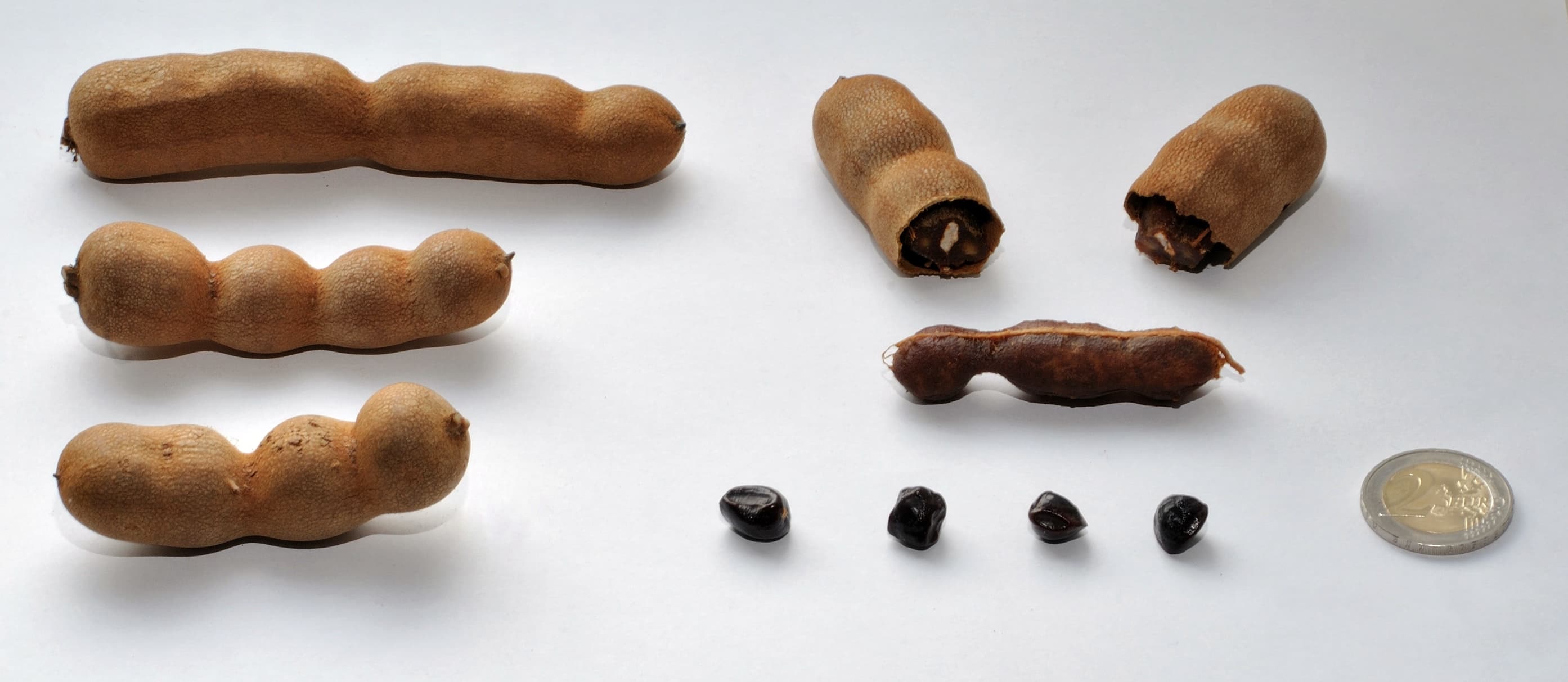
Tamarindus indica is an accepted species in the legume family Fabaceae. It is a substantial tropical tree with a broad crown, small paired leaflets, flowers and brown pods containing firm seeds surrounded by pulp. Kew places its native range in Comoros and Madagascar, while the tree has a long history of cultivation elsewhere.
Sowing guide
- Use a clean, free-draining sowing mix and a pot deep enough for early root growth.
- To help water reach the hard seed coat, lightly nick or abrade one small area without cutting into the embryo, then soak in room-temperature water.
- Sow about one seed-width deep, water and keep warm.
- Maintain even moisture and good air circulation; never leave the pot waterlogged.
Seed-lot age and coat hardness create natural variation. Some sound seeds start promptly while others take longer.
Growing on
Move seedlings into brighter light gradually. Tamarind responds to warmth and sun, but tender young plants should be protected from cold and abrupt exposure. Pot on before the primary root becomes tightly coiled and use a stable container with drainage.
Seed-grown trees are a long-term project and may vary from the parent. Where outdoor conditions are unsuitable, plants can be raised in containers during their early years. Always plan for the eventual scale of a tropical tree.
Seed note: Seeds are living material. Germination speed and percentage vary with seed age, temperature, moisture and local growing conditions. Keep a small record of sowing date and treatment so you can adjust the next batch.