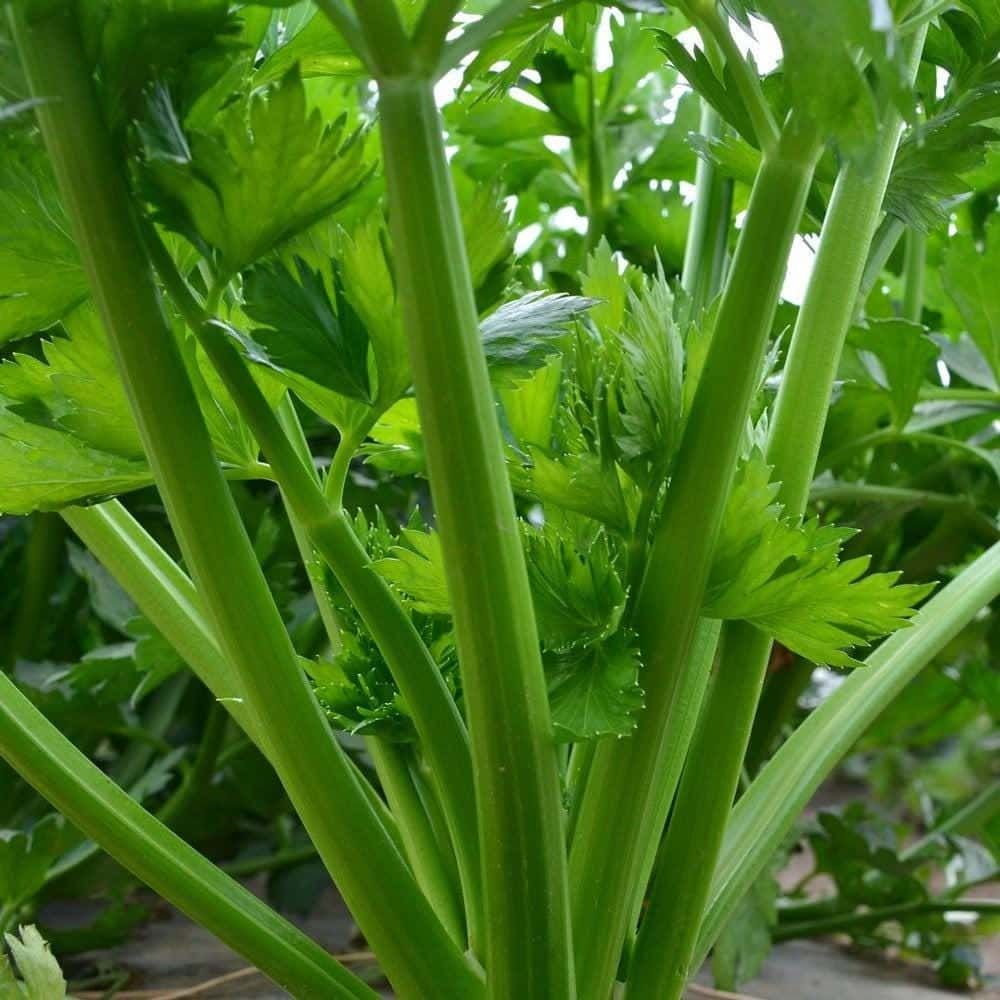



About this variety
Product Overview: Grow Tall Utah Celery from this packet of 500 seeds. Celery belongs to the parsley family, Apiaceae, and its accepted botanical name is Apium graveolens L. Tall Utah is a recognized cultivated celery name, while several numbered Tall Utah strains also exist. Because this packet is labelled simply Tall Utah, the guidance below applies to cultivated stalk celery without promising the maturity, height, color, or disease resistance of a particular numbered strain.
- Botanical name: Apium graveolens L.
- Family: Apiaceae
- Crop type: Long-season, cool-weather stalk vegetable
- Packet quantity: 500 seeds
Starting Celery from Seed
Sowing: Celery is usually started indoors because the crop develops slowly and needs a long growing season. Sow about 10-12 weeks before the intended transplanting period for your location. Place seeds on prepared seed-starting mix and cover only lightly, up to about 1/4 inch (6 mm). Keep the mix consistently moist while the small seedlings emerge; do not allow it to become waterlogged.
Seedling care: Give emerged seedlings bright light and steady moisture. Thin crowded seedlings or move them carefully once they are large enough to handle. Before planting outdoors, harden the young plants gradually so they adjust to sun, wind, and outdoor temperature changes. Prolonged exposure to low temperatures can encourage premature flowering, so use local frost guidance rather than transplanting by a fixed calendar date.
Planting and Ongoing Care
Position and soil: Choose a sunny site with fertile, well-drained soil rich in organic matter. Celery has a relatively shallow root system and does not compete well with weeds. Prepare the bed before transplanting, keep cultivation shallow around the plants, and use mulch where useful to conserve moisture and suppress weeds.
Spacing: A practical garden layout is about 12 inches (30 cm) between plants and about 24 inches (60 cm) between rows. Closer or wider arrangements may be appropriate for containers, raised beds, or local production systems, but plants still need dependable light, airflow, water, and access for harvest.
Water: Consistent watering is central to celery care. Utah State University Extension recommends about 1-2 inches of water per week from rainfall or irrigation during the growing season, applied thoroughly enough to moisten the root zone. Containers may need more frequent checks. Avoid repeated drying, because moisture stress can reduce stalk quality.
Temperature: Celery is best treated as a cool-weather crop. Utah State University Extension gives an ideal growing range of approximately 55-65°F (13-18°C). In warmer conditions, monitor the soil closely and water as needed to limit stress. Local climate, soil, and planting date will affect growth and harvest timing.
Harvest and Packet Details
Harvest: Outer stalks can be removed individually when they reach a useful size, allowing the center to continue growing. Alternatively, harvest the whole plant by cutting it near the soil line. Harvest quality depends on temperature, soil fertility, moisture, spacing, and care, so no fixed maturity date is promised for every garden.
What You Receive: One labelled packet containing 500 Tall Utah Celery seeds. This listing is for seeds only, not live plants, harvested stalks, or a numbered Tall Utah strain.
Frequently Asked Questions
Is Tall Utah an herb or a vegetable?
This product is cultivated for celery stalks and is presented as a vegetable seed. The species belongs to Apiaceae, the same botanical family as parsley, carrot, dill, and fennel.
Can celery be direct sown?
Direct sowing is possible where the season is sufficiently long, but transplanting is the usual garden method. Starting indoors gives the slow seedlings time to develop before outdoor planting.
Does this packet identify a numbered Tall Utah strain?
No numbered strain is stated for this lot. The product is therefore described only as Tall Utah Celery, without transferring strain-specific maturity, color, size, or resistance claims from other Tall Utah selections.