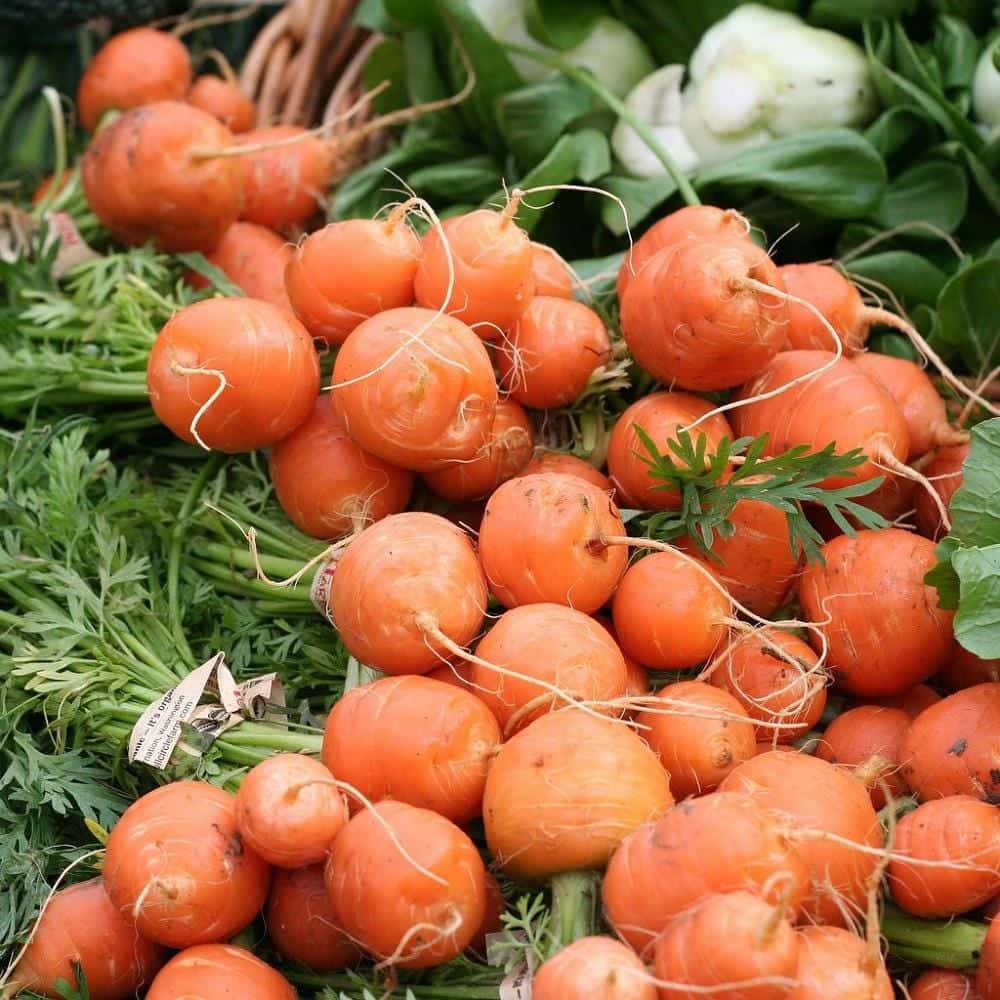


About this variety
Grow a compact round-type carrot from this packet of 100 Paris Market carrot seeds. Cultivated carrot belongs to Daucus carota in the Apiaceae family; Kew notes that subsp. sativus is the cultivated form selected for its enlarged storage root. The Paris Market name is used here as a market-type identity. It does not claim that this seed was produced in France or that every root will reach one fixed size or shape.
Product Overview: Paris Market types are useful where gardeners want a short, rounded carrot rather than a long tapering root. The Royal Horticultural Society specifically includes round carrots, described as Paris-market types, among mini-vegetable choices. RHS also notes that small, round-rooted carrots can be suitable for containers. Root development still depends on spacing, soil texture, moisture, weather, and crop care, so this page does not borrow a precise maturity day, diameter, or flavour claim from another supplier's named strain.
- Botanical identity: Daucus carota subsp. sativus
- Family: Apiaceae
- Crop type: Cool-season root vegetable
- Market type: Paris Market round carrot
- Packet quantity: 100 seeds
Growing from Seed
Where to sow: Choose a sunny position with fertile, well-drained soil. Utah State University Extension describes carrot as a cool-season crop that grows best in sunny locations and deep, loose ground. Paris Market types have a shorter root form than many standard carrots, but stones, compacted clods, and saturated soil can still interfere with even root development. For a container, use one deep enough to hold the root zone and drainage layer without keeping the compost waterlogged.
How to sow: Direct-sow in the final growing position because carrot is raised for its taproot. Utah State University Extension recommends sowing about 1/4 inch (6 mm) deep, while RHS gives approximately 1 cm (1/2 inch); both sources emphasise shallow sowing and steady surface moisture. A practical approach is to make a shallow drill in prepared soil, distribute seed thinly, cover lightly, and water with a gentle spray so the seed is not displaced.
Spacing: Thin seedlings after they are large enough to handle. RHS advises final spacing of about 5–7.5 cm (2–3 inches), and Utah State University Extension similarly recommends 2–3 inches between plants. Rows can be about 15–30 cm apart depending on the growing system. Remove competing weeds carefully, since pulling a large weed beside a young carrot can disturb the root.
Water: Keep the seedbed consistently moist during germination. Once plants are established, water deeply enough to moisten the active root zone but avoid repeated swings between very dry and very wet soil. Utah State University Extension warns that alternating wet and dry periods can contribute to cracking. RHS also notes that irregular watering can split roots. Mulch may help conserve moisture after seedlings are established, but do not bury tiny emerging plants.
Season and succession: Use local soil temperature and frost patterns rather than a universal calendar. In many climates carrots are sown in cool spring weather, with later sowings possible where temperatures and daylight permit. Small successive sowings can spread the harvest, but do not promise a fixed harvest date for this unverified lot. Observe root shoulders and lift a sample to judge development.
Harvest: Harvest when the roots have reached a useful size for your kitchen or container plan. Loosen the soil if necessary rather than pulling hard enough to snap the root. Root roundness can vary because the marketed type interacts with soil and cultivation. Wash harvested roots and handle them as fresh produce using normal food hygiene.
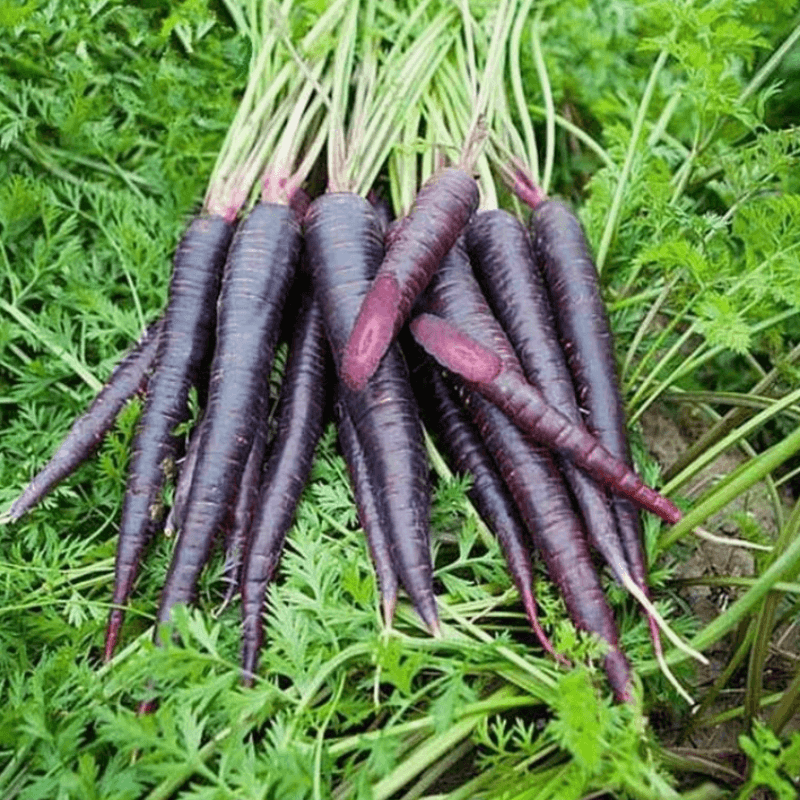
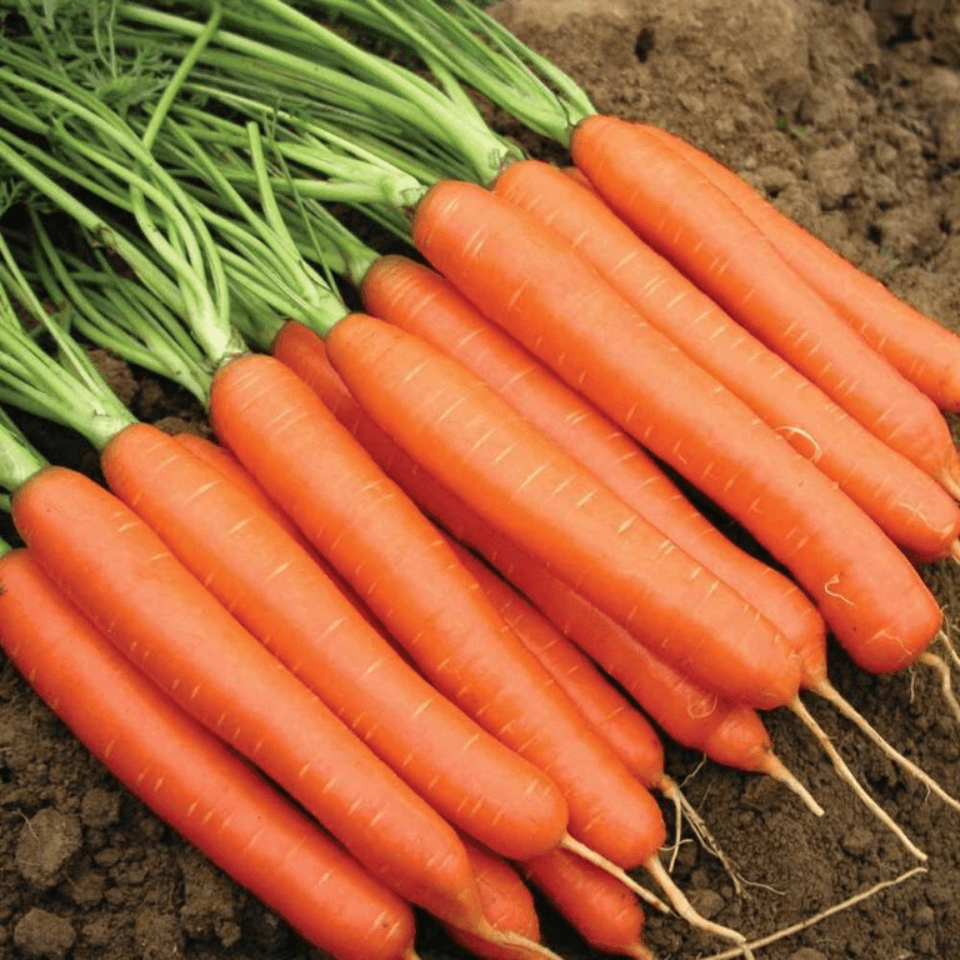
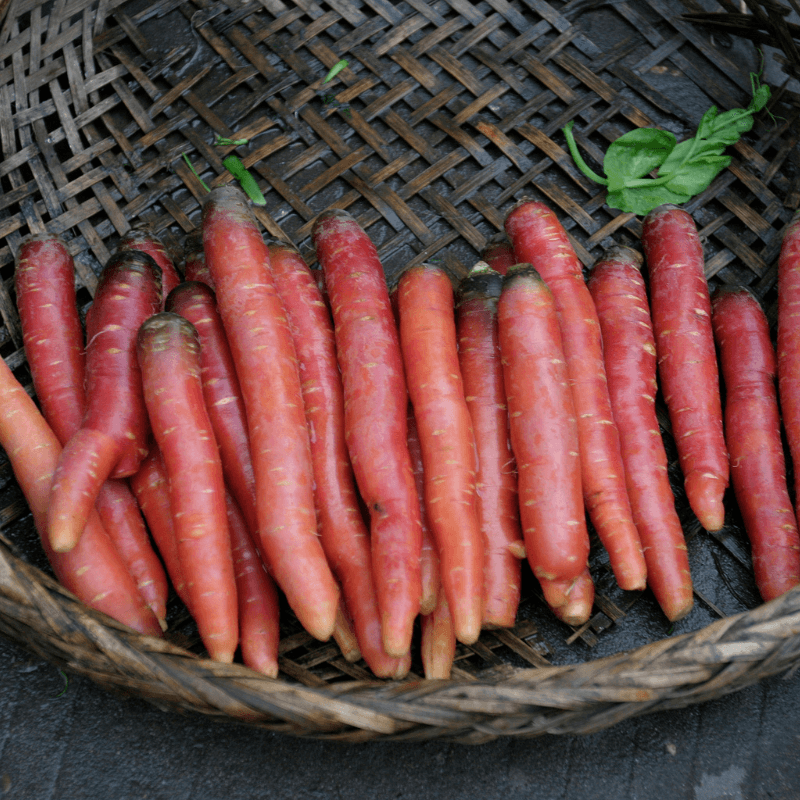
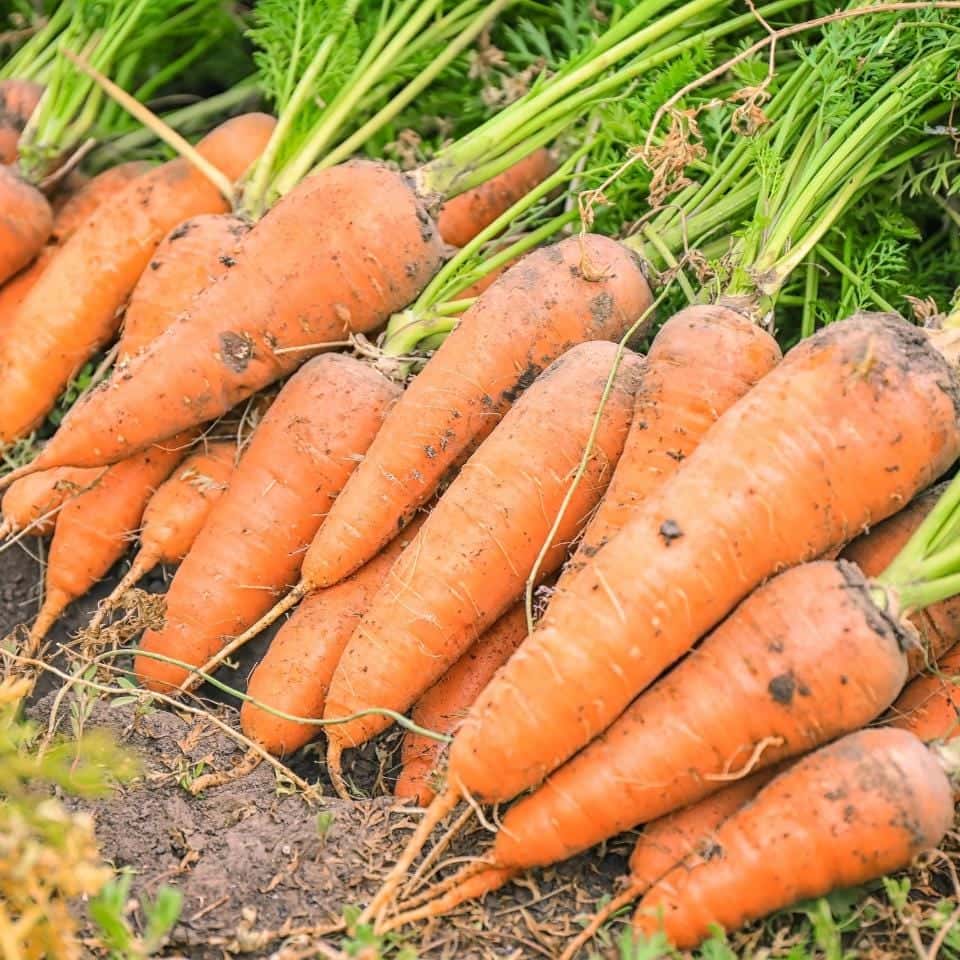
What You Receive: One packet containing 100 Paris Market Round Carrot seeds. The licensed gallery shows cultivated carrot seed, seedlings, and foliage at reference-taxon level. It does not show this seed lot and is not evidence of an exact harvested-root phenotype.
Frequently Asked Questions
Can Paris Market carrots be grown in containers?
Yes. RHS identifies small, round-rooted carrots as suitable choices for containers. Use loose, well-drained growing medium, sufficient depth, even moisture, and final spacing that prevents crowding.
Should carrot seedlings be transplanted?
Direct sowing is the standard approach because the edible crop is a taproot. Sow shallowly in the final position and thin the seedlings instead of moving them.
Why do carrot roots split or become misshapen?
Stones, compacted soil, crowding, and uneven moisture can affect root development. Prepare a loose seedbed, thin seedlings, and avoid strong dry-to-wet swings.