About this variety
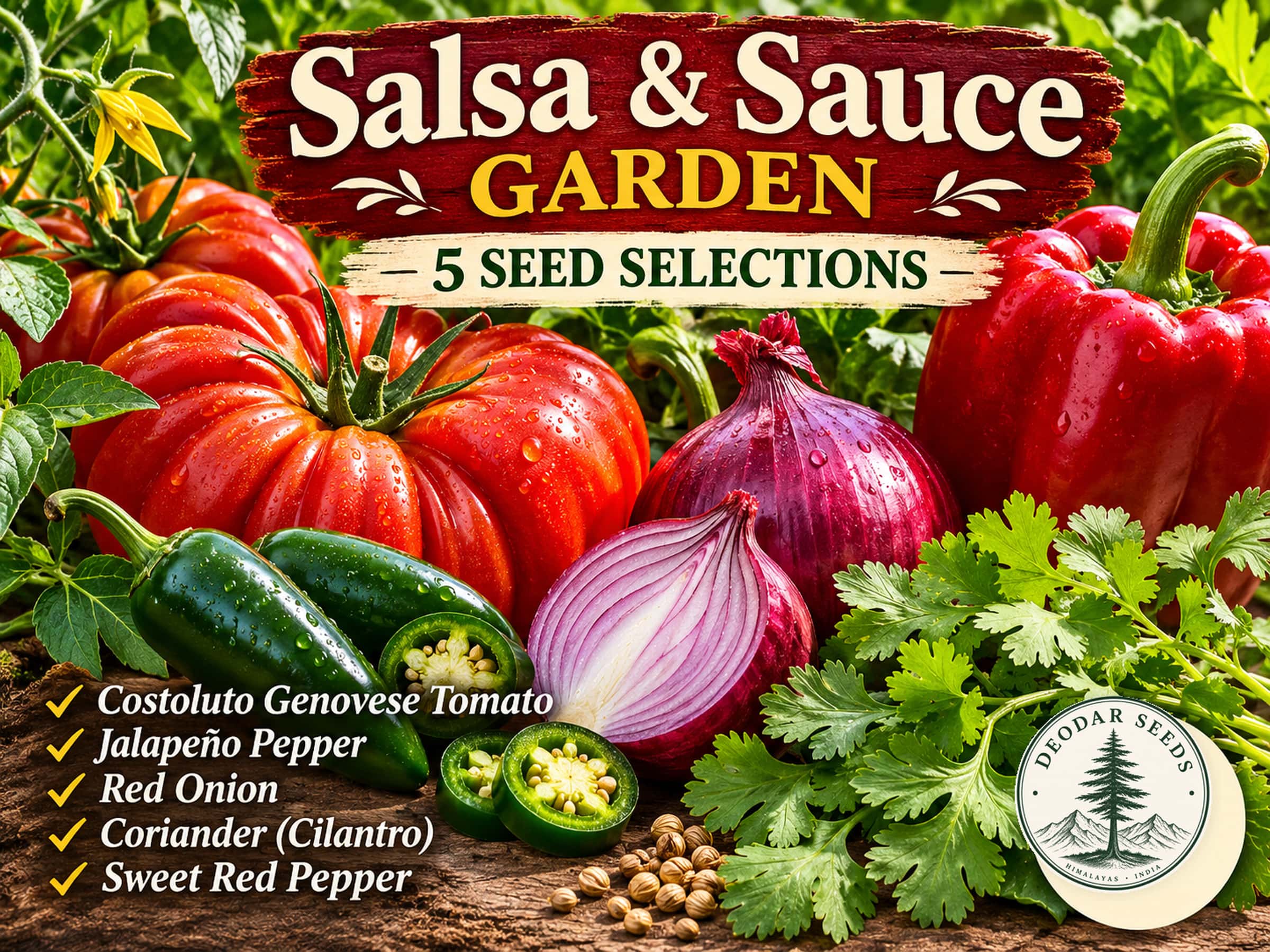
Salsa & Sauce Garden — 5 Seed Selections
The best part of a summer sauce can begin months before the chopping board: a seedling on a bright windowsill, the first pepper, a handful of fresh coriander. This collection follows that slow path from a garden plan to a meal made your way.
Five seed selections for a salsa-and-sauce kitchen garden: Costoluto Genovese tomato, jalapeño, red onion, coriander and sweet red pepper. Grow complementary ingredients while keeping each crop separate and clearly labelled.
What is included
240 seeds across 5 individually labelled seed selections. Supplied as seeds for sowing, not live plants or harvested ingredients.
| Selection | Botanical identity | Seeds |
|---|---|---|
| Tomato Costoluto Genovese | Solanum lycopersicum | 10 |
| Jalapeño pepper | Capsicum annuum | 10 |
| Red onion | Allium cepa | 50 |
| Coriander | Coriandrum sativum | 150 |
| Sweet red pepper | Capsicum annuum | 20 |
The idea behind the collection
This is a growing collection, not prepared food or a promise that every ingredient will ripen together. Tomatoes and peppers need warmth, while coriander often performs better in a cooler growing period. Red-onion bulb formation depends on local day length and variety response, so plan the crops around your conditions.
Sowing and growing
Keep every selection separate and labelled. Use clean containers with drainage and an appropriate seed-sowing medium. Select sowing dates for your climate rather than a single calendar date for the whole set. Where pretreatment is needed, stratification means a controlled moist period to help break seed dormancy, not freezing dry seed.
- Tomato Costoluto Genovese: Start in warm seed compost under protection and provide bright light after emergence. Harden off before planting into warm, sunny conditions. Give plants generous root space and support; water consistently as fruits develop.
- Jalapeño pepper: Start in protected warmth and maintain strong light after germination. Transplant only when nights are reliably warm, into a sunny, sheltered position. Water evenly and label clearly so hot peppers cannot be confused with the sweet selection.
- Red onion: Sow in modules or a fine prepared seedbed, then thin or transplant young plants without burying the growing point. Bulb development depends on day length and climate; a specific day-length adaptation is not confirmed for this selection, so use local onion-growing timing rather than assuming universal performance.
- Coriander: Direct sow in the final position, preferably in a cooler growing window, and keep the seedbed moist. Sow small batches at intervals for a longer leaf-harvest period. Heat and stress can encourage early flowering.
- Sweet red pepper: Start under warm protection and provide bright light. Plant outside only after cold risk has passed and nights are warm. Give a sunny, sheltered position, even watering and support if needed; allow fruit to reach mature colour for red peppers.
Your growing project
Use a sunny vegetable area for tomatoes and peppers, plus a separate onion row and small successive sowings of coriander. Keep hot and sweet peppers clearly labelled. Harvest only the appropriate edible parts when ready; wash produce before preparing a fresh sauce. If you preserve or can a sauce, use a tested preservation recipe rather than judging its safety by taste.
Important safety and growing notes
The supplied seeds are for sowing, not eating or sprouting for food. Tomato and pepper foliage is not a food ingredient. Jalapeño fruits are hot: wear gloves when cutting them, avoid touching eyes and keep them away from children who may mistake them for sweet peppers. Heat level, yields and harvest dates vary with growing conditions.
Check local planting and import rules before ordering or growing unfamiliar species. Germination, mature appearance and performance depend on the seed and growing conditions; counts are not a promise of an equal number of established plants. Pots, compost, tools and other display items are not included.
About the images
The cover is a botanical illustration of the collection. Gallery photographs are references to individual plants, not photographs of the delivered seed packets or a guaranteed future harvest.