

About this variety
Product Overview: Start Mary Washington asparagus from this packet of 25 seeds. The botanical identity is Asparagus officinalis L., an accepted perennial species in the Asparagaceae family. University of Minnesota Extension lists Mary Washington among open-pollinated asparagus varieties. Asparagus is a long-term vegetable crop, so careful site selection and patient establishment are more important than a quick first harvest.
- Botanical name: Asparagus officinalis L.
- Variety: Mary Washington
- Variety type: Open-pollinated
- Plant type: Perennial vegetable crop
- Packet quantity: 25 seeds
Growing from Seed
Starting seeds: Mississippi State University Extension describes starting asparagus in individual pots or containers, placing the seeds about 1 inch (2.5 cm) deep. Keep the growing medium evenly moist while seedlings establish, without leaving it waterlogged. Seed-starting time should be planned around the local transplanting season rather than a universal calendar.
Transplant stage: The same extension guide notes that seed-grown plants may be ready for garden planting after roughly 12-14 weeks under suitable conditions. Growth rate will vary with warmth, light, moisture, and root space, so use a sturdy root system and active top growth as the practical signs of readiness.
Permanent position: Choose the planting location carefully because asparagus develops a lasting crown and root system. University of Minnesota Extension recommends full sunlight, good drainage, and access to irrigation, especially during establishment. Avoid low areas where water collects and control perennial weeds before transplanting, as later digging can damage established crowns.
Spacing: Mississippi State University Extension advises treating established seedlings like one-year crowns, with plants about 12-15 inches (30-38 cm) apart and rows about 4-5 feet (1.2-1.5 m) apart. This generous spacing leaves room for the crowns to expand and for the tall fern growth that supports the plant after the spear season.
Care during establishment: Keep young plants evenly watered and reduce weed competition. Spears that are not harvested develop into fern growth. University of Minnesota Extension explains that the ferns photosynthesize and return stored energy to the crowns, supporting growth in the following season. Let healthy ferns develop rather than cutting them while they are green.
Harvesting an Established Bed
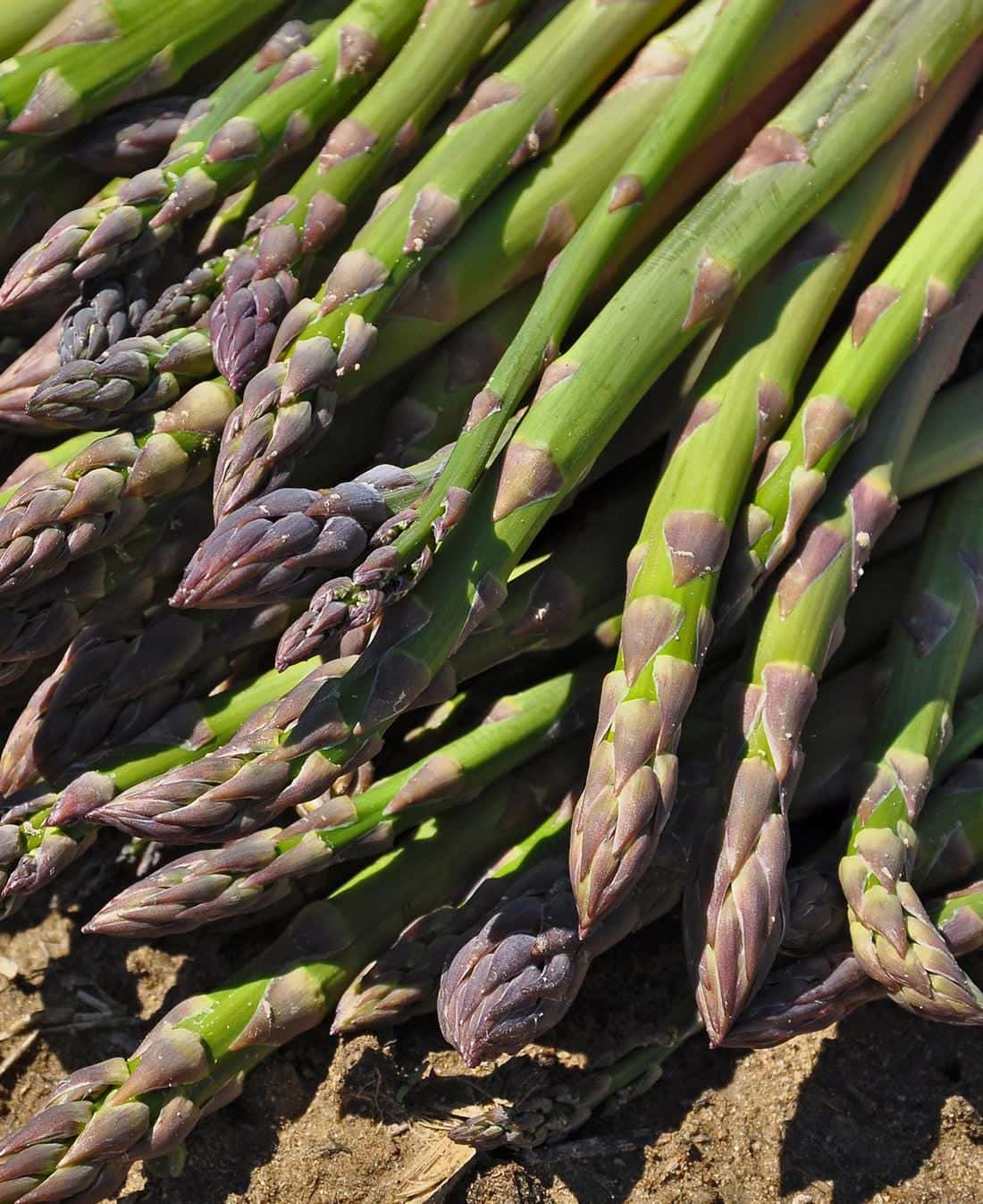
Seed-grown asparagus needs time to build a strong crown. University extension guidance recommends waiting until the third year before beginning harvest. In the first harvest season, keep the picking period short so the young crowns can continue developing. Mississippi State University Extension advises harvesting spears when they are about 6-8 inches (15-20 cm) tall and before the tips begin opening.
After the planned harvest period, allow the remaining spears to grow into ferns. Continue watering and weed control so the plants can rebuild reserves. When the fern growth has fully browned at the end of the season, it can be removed according to locally appropriate garden practice. Avoid deep cultivation around the crowns.
What You Receive: One labelled packet containing 25 Mary Washington Asparagus seeds. This product contains seeds only, not crowns, seedlings, or harvested spears.
Frequently Asked Questions
Is Mary Washington a hybrid asparagus?
No. University of Minnesota Extension lists Mary Washington as an open-pollinated asparagus variety. Seed-grown plantings can therefore include both male and female plants, unlike all-male hybrid plantings.
Can asparagus be started in containers?
Yes. Start individual seeds in pots with drainage and enough depth for root growth. Move sturdy plants to their permanent bed when local conditions are suitable and the roots are established.
When can seed-grown asparagus be harvested?
Allow the plants to establish before cutting spears. Extension guidance recommends beginning in the third year from seed and keeping the first harvest period limited.
Why should the ferns be left after harvest?
The ferns capture light and replenish energy stored in the crown. Healthy fern growth supports future spear production, so it should remain until it naturally browns.