Where Are the Gaps in Your Garden’s Bloom?
On a warm morning, take five minutes to watch one patch of flowers. What opens, what gets a visit, and which bed is already going to seed? Write the date beside what you saw. A few of these notes show more about your garden than a planting calendar for a different climate.
On this page
Week by week, record what is actually open
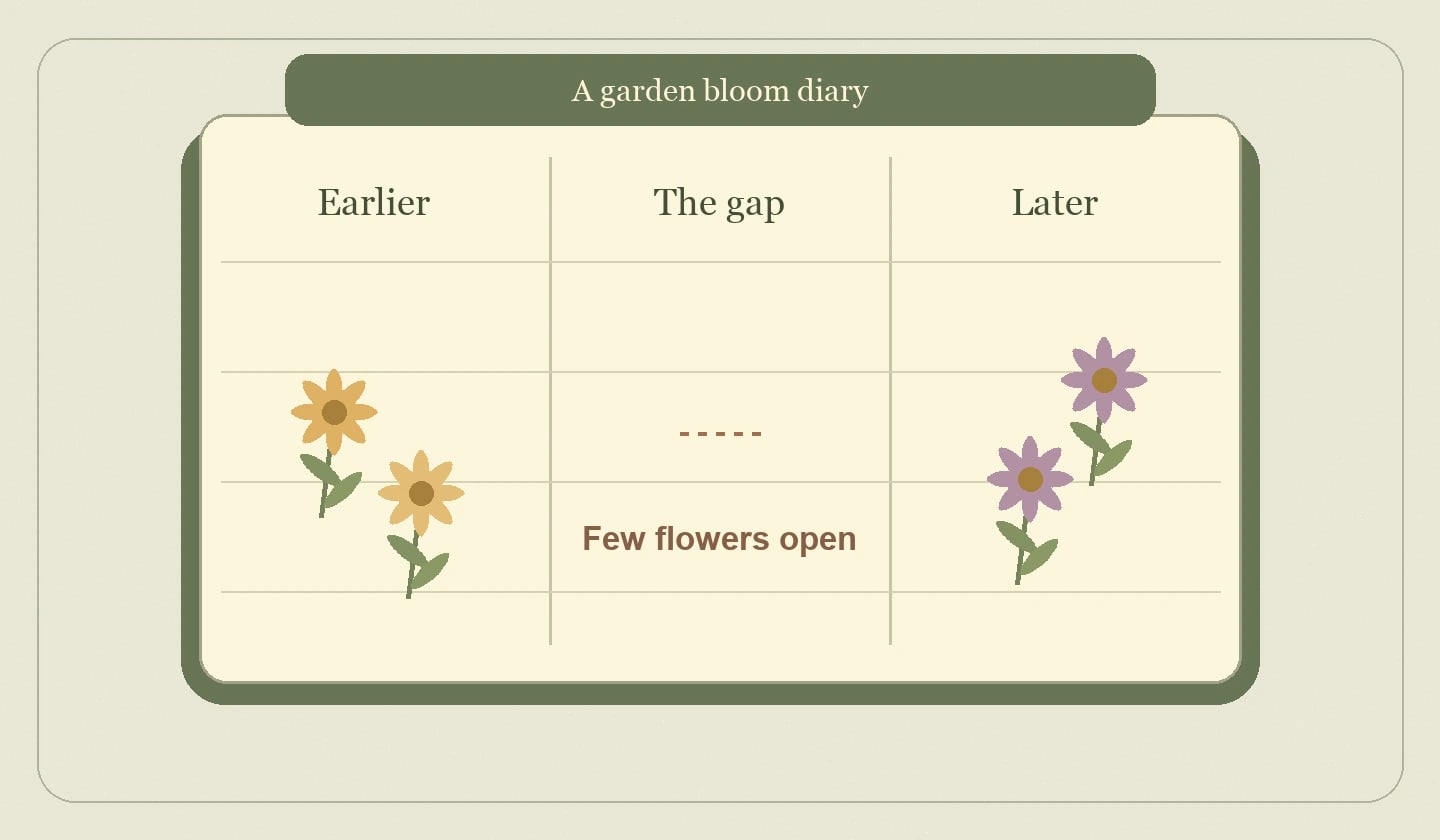
Divide a notebook page into weeks, then write down which plants have open flowers on each visit. Use your own growing season as the frame. In a garden with a long dry spell or a wet monsoon, the gap may fall at a different time from one in a temperate garden. Start with the empty weeks and mark weeks with only one kind of flower as well.
Describe the visit you can see
You do not need to name every insect. Note a large bee, a small bee, a fly or a butterfly if you recognise the group. Watch whether it lands on the flower and where it spends its time. Use a similar time and observation period on successive visits if you want a more comparable record. A quiet five minutes gives you one observation, not a count of everything using the garden.
Fill one gap with plants suited to your place
Choose plants that usually bloom during the gap you found. Include locally native species suited to your soil and moisture where you can. Different flower shapes and flowering times give a wider range of visitors places to forage. Check that a candidate fits the space and is appropriate for your locality before you plant it.
Leave room for the rest of the life cycle
Flowers provide food, while nesting and shelter need space of their own. Where it is suitable and safe, keep a small patch of undisturbed ground or retain some dry stems away from busy paths. Some bees nest in soil and some use cavities or stems. Observe the patch over time before deciding what else your garden needs.
Conclusion
Repeat the same five-minute walk after your new plants flower. The simplest success to look for is a week that used to have very little in bloom and now has flowers you can record.
Illustrations